
Tariff Turbulence: Navigating Supply Chain Risks and Finding Defensive Winners
The U.S. tariff regime of 2025, led by President Trump's sweeping trade policies, has upended global supply chains with unprecedented volatility. Sudden shifts in tariffs—from the 30% baseline for EU countries to 34% for China—have left manufacturers scrambling, while creating opportunities in sectors insulated from geopolitical whims. For investors, the chaos presents a clear playbook: focus on logistics, regional supply chain alternatives, and domestic industries as defensive plays. Here's how to capitalize.
The Tariff Tightrope: A Timeline of Chaos
The administration's tariff strategy has been marked by abrupt changes, legal battles, and delays. Key milestones include:
- May 2025: A federal court suspended tariffs on Canada, Mexico, and China, but the stay was overturned, leaving businesses in limbo.
- July 2025: Threats to raise baseline tariffs to 15–20% and a 50% tariff war with Brazil over digital services taxes (DSTs) added to uncertainty.
- Sector-Specific Hits: Aluminum (50% non-UK imports), critical minerals (proposed 200% tariffs), and semiconductors face ongoing investigations under Section 232.
The legal back-and-forth has created a "wait-and-see" environment, paralyzing long-term planning for industries like automotive and tech.
Supply Chain Disruptions: The New Normal
Trade analysts warn that the current volatility is structural, not temporary. “There is no single 'best solution' in such a complex market—it is a case of each shipper understanding their own supply chains, assessing the risks, and using data to gain insights,” says Emily Stausbøll, Senior Analyst at Xeneta.
Key disruptions include:
1. Rerouting Costs: Companies like HasbroHAS-- are shifting production to Vietnam and India to avoid China's 34% tariffs, while U.S. firms import directly into Canada to dodge double taxation.
2. Inventory Overload: Retailers are spacing replenishment to quarterly waves to hedge against demand and policy shifts.
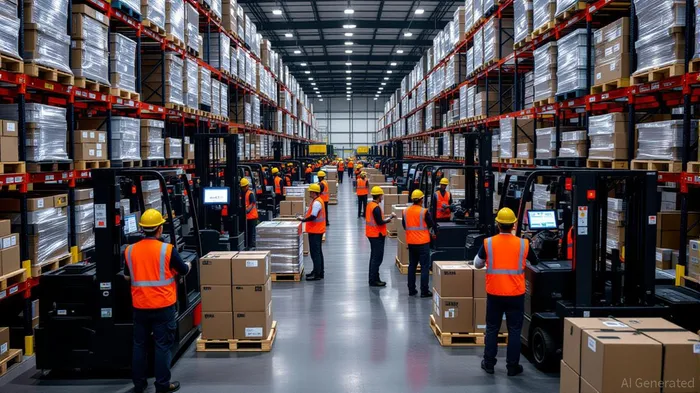
3. 3PL Dominance: Third-party logistics firms (e.g., C.H. Robinson, XPOXPO-- Logistics) are leasing 41% of seaport warehouses, capitalizing on firms' need for flexible inventory management.
Defensive Sectors: Where to Invest
The chaos has created clear winners in sectors that thrive on disruption:
1. Logistics & 3PLs
These firms are the first responders to tariff shifts. Their scalable infrastructure and global networks allow them to reroute shipments, adjust storage, and optimize costs.
Investment Pick: C.H. Robinson (CHRO) has seen a 20% YTD rise, outperforming broader markets as clients lean on its global network to navigate tariffs.
2. Regional Alternatives to China
Countries like Vietnam, Bangladesh, and Mexico are gaining favor as “safer” sourcing hubs.
Investment Pick: Wesco InternationalWCC-- (WCC), a U.S. supplier of electrical and safety products, benefits as companies nearshore production to avoid tariffs.
3. Domestic Industries
U.S. companies with localized supply chains (e.g., food, utilities) face less tariff exposure.
Investment Pick: NextEra EnergyNEE-- (NEE) offers a 2.5% dividend yield, appealing to investors seeking stability amid trade wars.
Historical Precedent: The 2018–2019 Tariff Wars
The last U.S.-China trade war offers a blueprint. Tariffs on $360 billion in Chinese goods forced companies to diversify suppliers and reshore production. Investors who bet on logistics (e.g., JB Hunt) and regional manufacturers (e.g., Taiwan's TSMC) saw gains of 30–50%.
“The global supply chain is in one of its most resilient stages, but stability depends on whether current disruptions are temporary or permanent,” notes Brian Wenck, CEO of Flat World Global Solutions.
Actionable Strategies for Investors
- Buy Logistics: Add 3PL stocks (CHRO, XPO) to hedge against supply chain bottlenecks.
- Diversify Geographically: Invest in companies with exposure to Vietnam (e.g., Phu Tai Textile) or Mexico (e.g., Grupo Mexico).
- Avoid Tariff-Exposed Sectors: Steer clear of auto manufacturers (e.g., Ford, GM) and tech firms reliant on Chinese semiconductors.
- Use ETFs: The iShares Transportation ETF (IYT) or FlexShares Kitces Supply Chain (SCAT) offer diversified exposure.
Conclusion
President Trump's tariffs have turned supply chains into a minefield—but also a goldmine for investors who bet on resilience. Logistics firms, regional alternatives, and domestic industries are the defensive anchors in this storm. As trade wars persist, the mantra is clear: adapt or be disrupted.
This article is for informational purposes only. Always consult a financial advisor before making investment decisions.





Comentarios
Aún no hay comentarios