
Tariff Turbulence: Why Deckers' Forecast Withdrawal Signals a Sector Reckoning—and Where to Find Resilience
The global footwear and apparel sector is bracing for a reckoning as trade wars escalate, and Deckers OutdoorDECK-- (DECK) has become the poster child of this turmoil. The company’s abrupt withdrawal of its 2025 financial forecasts—citing “unpredictable tariff-related headwinds”—spotlights a systemic vulnerability across the industry. For investors, this is not just a warning signal but an opportunity to separate the resilient from the fragile. Let’s dissect the risks, evaluate mitigation strategies, and identify where to position capital in this storm.
The Tariff Tsunami: Why Deckers’ Forecast Pullback Matters
Deckers’ retreat from its 2025 guidance isn’t an isolated incident. The company’s 37% year-to-date stock plunge mirrors broader sector pain, with peers like Skechers (-22%) and Nike (-15%) also reeling. At the heart of the crisis: China’s chokehold on manufacturing. Deckers sources nearly all its shoes from China and Vietnam, while 36% of its revenue comes from international markets—regions now facing retaliatory tariffs that could balloon production costs by over 15%.
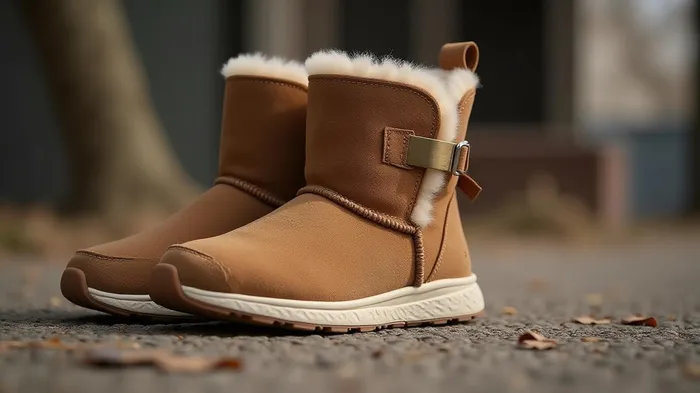
The 145% tariff on Chinese imports, paired with a 10% duty on Vietnam, has created a “domino effect” of uncertainty. As Deckers CFO noted, “Margins are under siege, but the real threat is the lack of clarity.” This isn’t just about costs—it’s about supply chain fragility. Companies reliant on Asia’s factories are now playing a high-stakes game of tariff roulette.
Supply Chain Vulnerability: Who’s at Risk?
To gauge exposure, we must map out the sector’s manufacturing footprints:
- Deckers: 100% of shoes from China/Vietnam.
- Nike: ~60% of production in Vietnam, 15% in China.
- Under Armour: 85% of footwear from Vietnam/China.
- Crocs: 80% of production in China.
The data tells a stark story: companies with heavy Asian exposure (like Deckers and Crocs) have underperformed the S&P 500 by 20–30% since tariffs surged. Meanwhile, Nike’s gradual shift toward regional hubs (e.g., Mexico, Indonesia) has insulated it somewhat—but not entirely.
Mitigation Strategies: Can Companies Adapt?
The playbook for survival is split between cost absorption and relocation:
Price Hikes: Deckers and Under Armour have already raised prices by 5–8% on key brands like Ugg and Hoka. The risk? Demand destruction in price-sensitive markets.
Regional Diversification:
- Nike: Investing $300M in Vietnam and Mexico to reduce China dependency.
Deckers: Exploring Thailand and Mexico for production, though scale remains limited.
Tariff Lobbying: Over 70 companies, including Deckers, are pressuring the U.S. government to exempt footwear from retaliatory duties. Success here could be a game-changer.
The Investment Playbook: Winners and Losers
While Deckers’ brand equity (Ugg is a winter staple; Hoka dominates running shoes) and $2.2B cash war chest offer a floor, its valuation (still 4.5x sales vs. a historical average of 2x) leaves little margin for error. For investors, the better bets lie elsewhere:
Crocs (CROX): Despite China exposure, its “value” pricing and 25% gross margins make it a cheaper alternative.
On Holding (ON): With 12% of production in China and rapid EMEA growth (28% sales target), it’s the sector’s growth darling.
Nike (NKE): Its scale and diversified supply chain give it a cushion—though its stock is still down 15%, it’s the safest long-term bet.
Final Call: Act Now Before the Dust Settles
The trade war isn’t going away. Investors must ask: Can Deckers navigate a 15% cost hike without sacrificing margins or market share? The jury’s out, but its withdrawal of guidance suggests management sees risks beyond its control.
For aggressive investors, DECK could be a “buy the dip” opportunity at its current 37% discount—provided tariffs ease. For the cautious, ON and NKE offer better risk-adjusted upside.
Action Items:
- Short DECK if tariffs remain elevated.
- Buy ON for growth resilience.
- Accumulate NKE as a core holding.
The era of Asia-dependent supply chains is ending. Those who adapt fastest—and have the balance sheets to weather the storm—will dominate the next decade. The time to act is now.
Note: This analysis assumes tariffs remain a key variable. Monitor geopolitical developments and corporate guidance revisions closely.





Comentarios
Aún no hay comentarios