
Tariff Truce or Tipping Point? How US-China Trade Moves Shape Ocean Freight and Supply Chains
The 90-day US-China tariff reduction announced in May 2025 has injected a dose of volatility into global trade, with immediate implications for ocean container shipping. While the temporary truce promises to spark a Q3 2025 peak season surge in freight demand, persistent structural barriers—30% tariffs, geopolitical tensions, and lingering non-tariff measures—will accelerate the long-term reshaping of supply chains. For investors, this dynamic creates a window to profit from short-term freight rate spikes while positioning for the next era of global logistics.
The Q3 Surge: Tariff Relief Meets Fragile Optimism
The tariff reduction's immediate effect is clear: lower tariffs on Chinese goods (e.g., furniture, consumer electronics) and US agricultural products have reignited demand for trans-Pacific shipping. The 145% to 30% drop in US tariffs on Chinese goods and China's retaliatory cuts from 125% to 10% have created a “buy now, pay later” scenario for importers. Retailers and manufacturers are rushing to stock up ahead of the holiday season, betting that the temporary truce will hold.
This rush is already visible in freight rates. show sharp upticks as carriers anticipate a return to pre-pandemic demand levels. The Port of Los Angeles, a key gateway for US-China trade, reported a 15% year-over-year increase in May imports—a harbinger of Q3's peak.
But the rally is fragile. Remaining tariffs—such as the 20% “fentanyl tariff” and China's 10–15% duties on US agricultural goods—limit the upside. For instance, furniture exporters like Zuo Modern face 55% tariffs on some items, forcing them to absorb costs or pass them to consumers. Meanwhile, logistical bottlenecks loom: 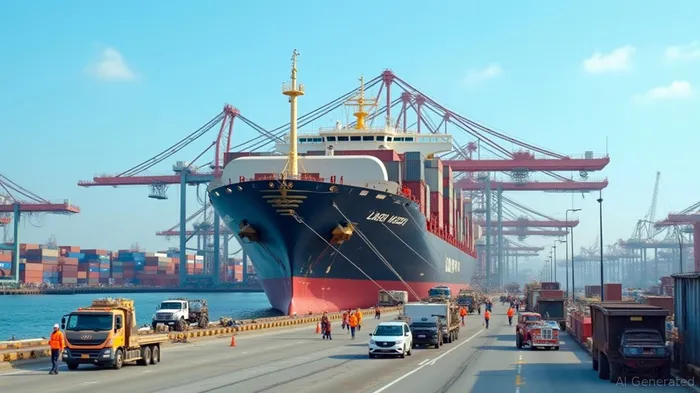 . Port congestion and rising freight costs could temper the boom.
The Long Game: Why Supply Chains Are Diversifying—and Why It's Permanent
While the tariff truce creates a temporary tailwind for ocean carriers, the bigger story lies in the irreversible shift toward supply chain diversification. Even with reduced tariffs, companies are increasingly wary of overexposure to US-China trade risks. Three factors are driving this:
Persistent Baseline Tariffs: The 10% “fair baseline” tariffs retained by both nations ensure that no sector escapes trade friction entirely. For manufacturers, this means cost pressures will persist, pushing them to seek lower-cost alternatives in Southeast Asia, Mexico, or even the US itself.
Non-Tariff Barriers: China's April restrictions on rare earth exports and US tech export controls remain unresolved. These measures disproportionately impact industries like semiconductors and automotive parts, forcing firms to rewire their supply chains.
Geopolitical Uncertainty: The US court ruling deeming Trump-era tariffs “unlawful” adds legal chaos to the mix. Companies cannot rely on stable policies; instead, they're hedging bets by spreading production and logistics networks.
Investment Playbook: Bet on Diversification, Not the Tariff Cycle
The lesson for investors is clear: short-term freight rate volatility is a sideshow. The real opportunity lies in companies that can thrive in a fragmented, geopolitically charged trade environment.
1. Logistics Networks with Global Reach:
Firms like Kuehne + Nagel (KN.DU) and C.H. Robinson (CHRO), which offer end-to-end supply chain solutions, are well-positioned to capitalize on diversification trends. Their ability to pivot between regions and modes of transport (e.g., rail, air, or regional sea routes) reduces reliance on any single corridor.
2. Ocean Carriers with Diversified Routes:
While Maersk and CMA CGM may benefit from Q3's surge, investors should favor carriers expanding beyond Asia-US routes. For example, Hapag-Lloyd (HLAG.DE)'s investments in trans-Atlantic and intra-Asia routes offer insulation against US-China trade whims.
3. Manufacturing Exposure Outside China:
Companies like Flex Ltd. (FLEX), which operate factories in Mexico and Vietnam, or Tapestry (TPR) (parent of Coach), which has reduced its China reliance, are less vulnerable to tariff cycles. Similarly, tech firms such as Western Digital (WDC), which sources components from Thailand and Malaysia, face fewer geopolitical headwinds.
The Bottom Line
The 90-day tariff truce is a tactical pause in a strategic conflict. While Q3's freight boom offers a near-term trading opportunity, the long-term narrative is clear: supply chains are fracturing, and investors must align with companies that can navigate both tariff volatility and geopolitical realignment. The winners will be those that bet on diversification—not the next tariff deal.
Investment advice: Consider a basket of logistics stocks (e.g., Kuehne + Nagel, CH Robinson) and manufacturers with non-China exposure (e.g., Flex, Tapestry). Avoid pure-play US-China trade beneficiaries unless valuations reflect tariff uncertainty.







Comentarios
Aún no hay comentarios