
Tariff Tensions: A Crucible for Retail’s Global Supply Chains
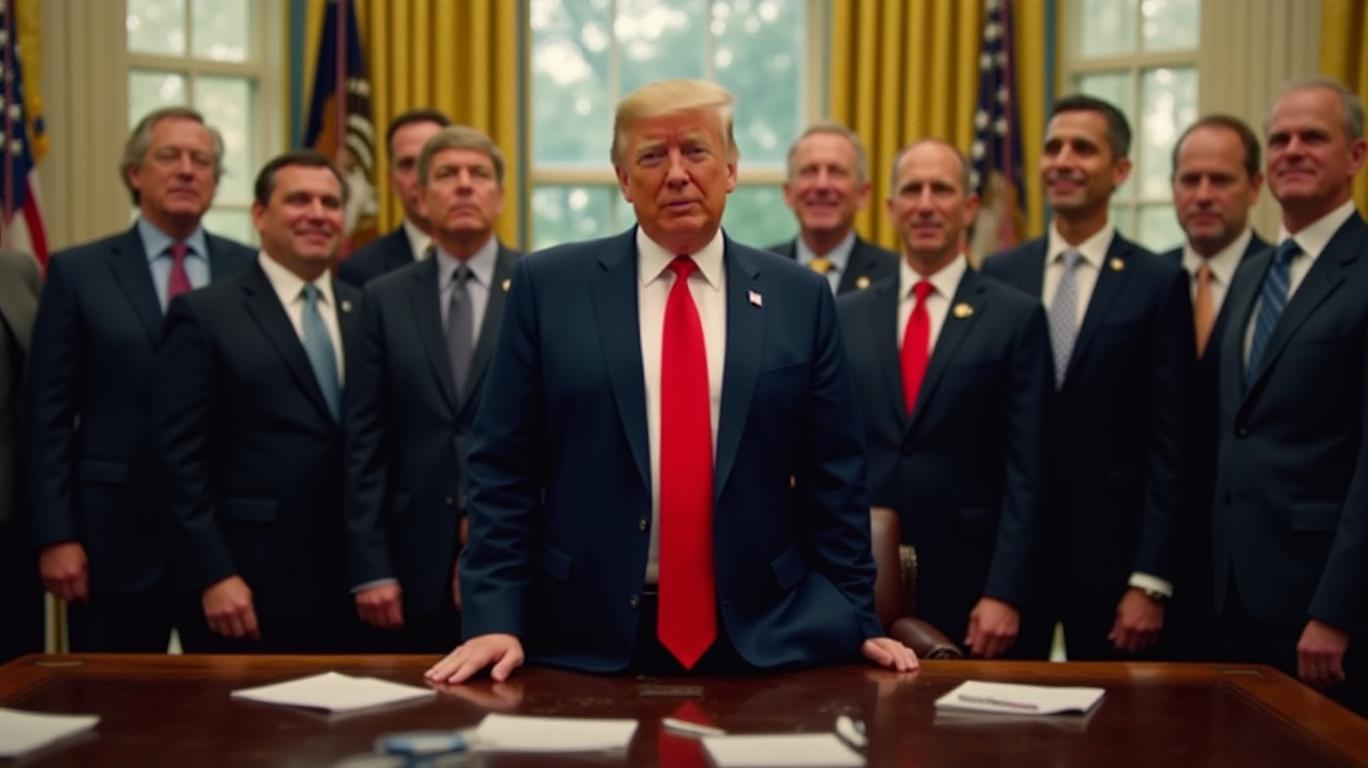
The White House meeting between President Donald Trump and executives from WalmartWMT--, Target, and Home Depot underscored a pivotal clash between protectionist trade policy and the fragile underpinnings of global retail supply chains. The gathering, part of an escalating battle over tariffs, revealed stark vulnerabilities for companies reliant on imported goods—and investors now face a critical question: Can these retailers weather the storm, or will their stocks continue to falter in the face of economic uncertainty?
The Meeting: A Window into Corporate Anxiety
The Oval Office discussion, held during a 90-day tariff pause, came as tariffs on non-Chinese goods hovered at 10%, while China’s retaliatory measures surged to 125% on U.S. products. Executives from Walmart (WMT), Target (TGT), and Home Depot (HD) sought clarity on how prolonged trade conflicts might disrupt their operations. Yet the White House’s opaque stance—coupled with Trump’s insistence on “flexibility” in negotiations—left businesses scrambling to plan for an unpredictable future.
Walmart’s CEO Doug McMillon highlighted the retailer’s resilience, noting two-thirds of its U.S. products are sourced domestically, with China and Mexico covering the remainder. But Target’s Brian Cornell faces a steeper challenge: nearly half its merchandise is discretionary, imported from regions now enmeshed in tariff disputes. The NRF’s warning—that tariffs would hike prices on sneakers and furniture—adds to the pressure, as stagnant sales at Target (projected 1% growth this fiscal year) signal consumer caution.
Market Reactions: A Mixed Bag of Uncertainty
The stock market’s response to the meeting revealed a split between retailers with diversified supply chains and those more exposed to tariffs.
Walmart shares dipped slightly, reflecting investor wariness about its China-Mexico reliance. Home Depot’s decline—despite sourcing over half its goods in North America—stems from its exposure to construction materials, a sector sensitive to inflation and trade barriers. Target, however, edged up modestly, perhaps on hopes its dialogue with Trump could yield exemptions.
The Bigger Picture: Consumers and the Fed
The NRF’s stark warning—that tariff hikes would “disproportionately burden U.S. families”—is not hyperbole. Retail sales surged 1.4% in March, the largest jump in two years, as consumers rushed to buy ahead of potential price hikes. Yet this “pre-tariff” buying spree masks deeper risks: auto sales drove the spike, but discretionary goods like furniture and apparel remain vulnerable.
Meanwhile, Trump’s public sparring with Federal Reserve Chair Jerome Powell has added another layer of uncertainty. The Fed’s interest rate hikes—designed to combat inflation—now risk stifling consumer demand, even as tariffs squeeze profit margins.
Conclusion: Navigating the Tariff Crossroads
Investors must weigh two competing forces: the short-term volatility caused by tariff uncertainty and the long-term structural challenges facing retailers. Walmart’s domestic sourcing gives it an edge, but its reliance on China—where tariffs remain at 145%—remains a risk. Target’s narrow sales growth (1%) and heavy reliance on imported discretionary goods make it a higher-risk play, despite its slight stock uptick.
Home Depot’s North American focus offers relative stability, but its exposure to construction materials—prone to inflation—leaves it exposed. Meanwhile, the 90-day pause has not calmed markets: the 1.4% retail sales surge in March was unsustainable, and the NRF’s warnings about price hikes loom large.
In this environment, investors might favor companies with diversified supply chains and pricing power, such as Walmart, while staying cautious on Target until tariff clarity emerges. The White House meeting may have been “constructive,” but until the fog of trade policy lifts, retail stocks will remain hostage to uncertainty—and investors must tread carefully.





Comentarios
Aún no hay comentarios