
Tariff Talks and the ID. Buzz: Why German Automakers' Fate Hangs in the Balance
The Volkswagen ID. Buzz, the electric minivan hailed as a "retro-futurist" marvel, is now emblematic of European automakers' struggles in the U.S. market. Poor sales, halted exports, and recalls have exposed vulnerabilities in pricing, marketing, and manufacturing—challenges that could amplify if EU-U.S. tariff negotiations fail. With tariffs on European autos looming at 25% and a July 9 deadline for trade talks, investors face a high-risk, high-reward scenario. A resolution could unlock growth for Volkswagen (VWAGY) and peers, while a breakdown could send European auto stocks into a tailspin. Here's why now is the time to position.
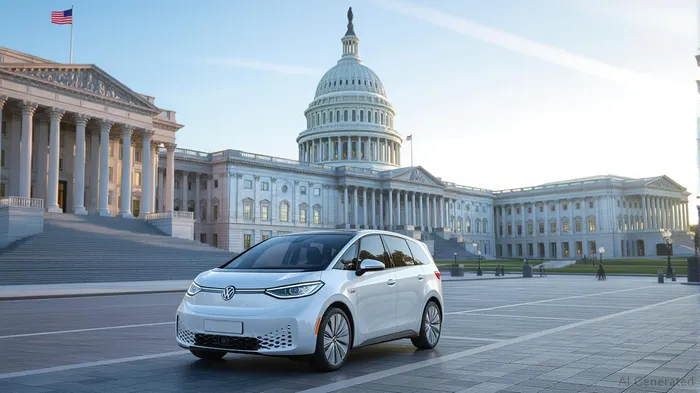
The ID. Buzz: A Microcosm of European Auto Challenges
The ID. Buzz's U.S. missteps reveal systemic issues plaguing German automakers in the EV race:
Pricing Powerlessness:
The ID. Buzz starts at $61,545, far exceeding rivals like the Chevrolet Equinox EV ($39,995). Its German-built origin disqualifies it from the $7,500 U.S. EV tax credit, pricing it out of reach for many buyers. This reflects a broader problem: European EVs, often assembled abroad, struggle to compete with domestically manufactured U.S. competitors eligible for subsidies.Production Pitfalls:
A recall over faulty door latches (affecting the ID.4 SUV) triggered supply chain chaos, delaying ID. Buzz deliveries. Dealers received only 1–2 units initially, exacerbating scarcity. This highlights reliance on complex global supply chains—vulnerable to tariffs and logistical bottlenecks.Marketing Myopia:
The ID. Buzz's late U.S. launch (nearly three years after Europe) and niche positioning as a "luxury" vehicle alienated mainstream buyers. Meanwhile, U.S. rivals like TeslaTSLA-- (TSLA) and Ford (F) have mastered mass-market appeal.Technical Trade-offs:
Features like the lack of bidirectional charging and cramped rear seating underscore a disconnect with American consumers' needs. The ID. Buzz's 234-mile range also lags behind rivals like the Lucid Gravity (470 miles), amplifying range anxiety.
These flaws are not isolated to VW. BMW (BMWYY) and Mercedes (DAI.GY) face similar challenges: high prices, delayed U.S. launches, and supply chain bottlenecks. The ID. Buzz's struggles are a warning: European automakers must adapt or risk being left behind.
Tariff Talks: The Elephant in the Dealership
The EU and U.S. are racing to avert a July 9 deadline, where U.S. tariffs on EU autos could jump to 25%, adding $15,000 to the cost of a $60,000 ID. Buzz. Simultaneously, EU retaliatory tariffs on $115 billion of U.S. goods—potentially including cars, steel, and spirits—hang in the balance.
A deal hinges on two factors:
1. Standstill Clause: The EU seeks a pause on further tariff hikes, while the U.S. demands concessions on subsidies and regulations. A temporary truce could stabilize markets, giving automakers breathing room to restructure supply chains.
2. Auto Sector Exemptions: A carve-out for vehicles meeting U.S.-Mexico-Canada Agreement (USMCA) rules of origin could exempt compliant EVs from tariffs. For VW, this would require shifting production to North America—a costly but necessary move.
The Risk/Reward Trade:
- Deal Scenario: A 10% tariff baseline (instead of 25%) would boost European auto stocks by reducing costs and enabling competitive pricing. VW shares, trading at a 40% discount to pre-pandemic highs, could rally 20–30% on optimism.
- No-Deal Scenario: Higher tariffs would slash EU auto exports to the U.S. by up to €26 billion annually, hitting VW's margins and depressing valuations.
Why Investors Should Watch Q3 Closely
The next three months will test European automakers' resilience:
- Earnings Reports: VW's Q3 results (due late October) will reveal whether recalls and tariffs have dented profits. Weak numbers could pressure shares further, while a beat might signal operational turnaround.
- Production Shifts: StellantisSTLA-- (STLA) and BMW are already moving production to the U.S. to avoid tariffs. VW's progress in localizing supply chains (e.g., battery plants in Tennessee) will be critical.
- Trade Deal Clarity: By mid-September, investors should have visibility on tariff outcomes, unlocking pent-up demand for auto stocks.
Positioning for the Pivot
Bull Case: Overweight European auto stocks if a tariff deal emerges. Key plays:
- Volkswagen (VWAGY): Leverage its scale and EV tech, but monitor execution risks.
- BMW (BMWYY): Strong brand equity and a faster U.S. production shift.
- Daimler (DAI.GY): Mercedes' luxury pricing power may insulate it from tariff impacts.
Bear Case: Avoid European autos if tariffs rise. Focus instead on U.S. EV leaders like Tesla and RivianRIVN-- (RIVN), which benefit from subsidies and domestic supply chains.
Final Take: The Reckoning is Nigh
The ID. Buzz's U.S. missteps are a symptom of European automakers' broader identity crisis: Can they pivot from premium, export-driven models to mass-market, tariff-resilient EVs? With tariffs and trade talks at a crossroads, investors must decide: Is now the time to bet on a turnaround—or exit before the reckoning?
The July 9 deadline and Q3 earnings will provide clarity. For those willing to bet on a resolution, European auto stocks could offer asymmetric upside. But with recalls, pricing gaps, and geopolitical risks lingering, this is no time for complacency.
The ID. Buzz's story isn't over—it's a cautionary tale turned opportunity. Investors who act now could position themselves to profit as the dust settles.







Comentarios
Aún no hay comentarios