
U.S. Tariff Policy and Singapore's Economic Resilience in 2025: Navigating Risks and Opportunities in a Trade-Dependent Economy
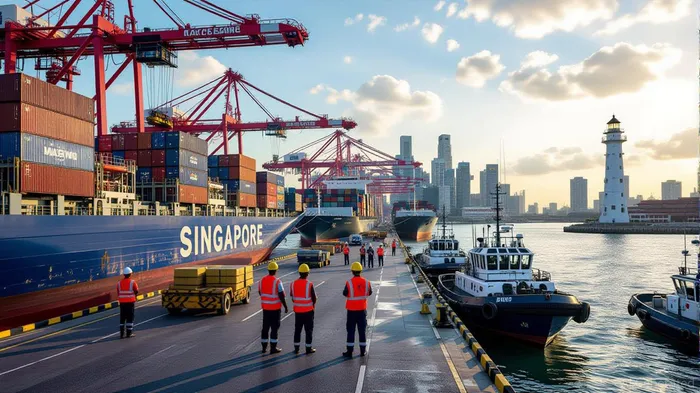
The imposition of a 25% ad valorem U.S. tariff on Singaporean imports in 2025 marks a pivotal moment in the city-state's economic trajectory. As part of the Trump administration's America First Trade Policy, this reciprocal tariff—coupled with potential additional levies due to Singapore's role in purchasing Venezuelan oil—has introduced unprecedented uncertainty for a trade-dependent economy. For investors, the challenge lies in balancing the risks of disrupted trade flows and sector-specific vulnerabilities with opportunities arising from Singapore's strategic adaptability and long-standing resilience.
The Tariff Landscape: A Double-Edged Sword
The U.S. tariffs, announced in March 2025 and effective from April 2, are part of a broader reciprocal framework targeting countries with trade imbalances or non-compliance with U.S. foreign policy objectives. Singapore's 25% rate—higher than the baseline 10% applied to most countries—reflects its perceived trade surplus and geopolitical stance. While the Trump administration has left the door open for negotiations, its non-committal posture, as noted by Singapore's Deputy Prime Minister Gan Kim Yong, has left businesses and policymakers in a holding pattern.
Sectoral Vulnerabilities and Adaptive Strategies
1. Financial Services: A Pillar Under Pressure
Singapore's financial sector, contributing 13.5% of services exports in 2024, faces indirect risks as U.S. investors rebalance portfolios amid tariff-related uncertainty. The Monetary Authority of Singapore (MAS) has responded by subtly easing the slope of the S$NEER (Singapore dollar nominal effective exchange rate) band in early 2025, aiming to stabilize export competitiveness. However, prolonged trade tensions could erode investor confidence, particularly in fund management and cross-border services.
2. Manufacturing: A Race for Resilience
Export-oriented manufacturing—especially electronics and high-tech components—accounts for a significant portion of Singapore's trade with the U.S. The 25% tariff threatens profit margins and export competitiveness. While Singapore's advanced infrastructure and skilled workforce remain competitive, the risk of production relocations to lower-cost jurisdictions looms. Prime Minister Lawrence Wong has acknowledged this challenge, emphasizing innovation hubs like Jurong Innovation District as critical to maintaining relevance.
3. Logistics: The Transshipment Conundrum
As the world's busiest transshipment port, Singapore's logistics sector is uniquely exposed. A decline in trans-Pacific shipping activity due to U.S. import contractions could reduce revenue for port operators and freight forwarders. Yet, the city-state's 25 free trade agreements, including the CPTPP and RCEP, offer alternative pathways to sustain growth. Investments in digital trade infrastructure and automation further position Singapore to adapt to shifting trade patterns.
Central Bank Inaction: A Calculated Cautiousness
MAS's decision to maintain the S$NEER policy band unchanged in July 2025—despite earlier easings—reflects a calculated balance between supporting trade sectors and preserving price stability. Core inflation remains subdued at 0.6% year-on-year, providing flexibility to respond to evolving conditions. However, the central bank's reluctance to adjust the exchange rate band more aggressively underscores its reliance on structural resilience over short-term stimulus.
Investment Risks and Opportunities
Risks to Consider
- Export Shocks: A prolonged U.S. tariff regime could reduce Singapore's non-oil domestic exports by 5–10%, impacting manufacturing and logistics revenue.
- Currency Volatility: The Singapore dollar's 5.3% year-to-date appreciation against the U.S. dollar may compress margins for exporters.
- Sector-Specific Headwinds: Financial institutionsFISI-- with U.S. exposure and logistics providers reliant on U.S. re-exports face earnings pressures.
Opportunities to Capitalize
- Diversification Gains: Singapore's extensive trade agreements and ASEAN integration (projected GDP of $4.3 trillion by 2025) offer alternative growth avenues.
- Innovation and Automation: Investments in productivity-enhancing technologies, particularly in Jurong and Seletar, could offset tariff-related costs.
- Resilient Financial Infrastructure: Singapore's role as a global fund management hub remains intact, with demand for hedging tools like FX derivatives likely to rise.
Strategic Investment Recommendations
- Sector Rotation: Overweight equities in Singapore's logistics and digital trade infrastructure, which benefit from regional integration and automation.
- Currency Hedges: Consider hedging against SGD strength through forward contracts or derivatives, particularly for U.S.-bound exporters.
- Long-Term Positioning: Invest in innovation-driven manufacturing firms and fintech platforms that align with Singapore's productivity-first strategy.
Conclusion: A Test of Resilience
Singapore's economy faces a critical juncture as U.S. tariffs test its adaptability. While short-term risks are tangible, the city-state's strategic location, advanced infrastructure, and policy agility provide a strong foundation for long-term resilience. For investors, the key lies in balancing caution with confidence, capitalizing on structural strengths while hedging against sector-specific vulnerabilities. As global trade dynamics evolve, Singapore's ability to pivot will define its economic trajectory—and with it, the opportunities for those who navigate the challenges with foresight.







Comentarios
Aún no hay comentarios