
U.S. Tariff Policy Resilience: Why Investors Should Avoid Overreacting to Short-Term Fears
Investors often react with alarm to sudden shifts in U.S. tariff policy, fearing prolonged market instability. However, a historical analysis of tariff-driven market disruptions reveals a consistent pattern: while short-term volatility is inevitable, long-term resilience and adaptation prevail. By examining past trade conflicts and their economic aftermath, investors can avoid overreacting to transient policy shocks and instead focus on strategic, forward-looking strategies.
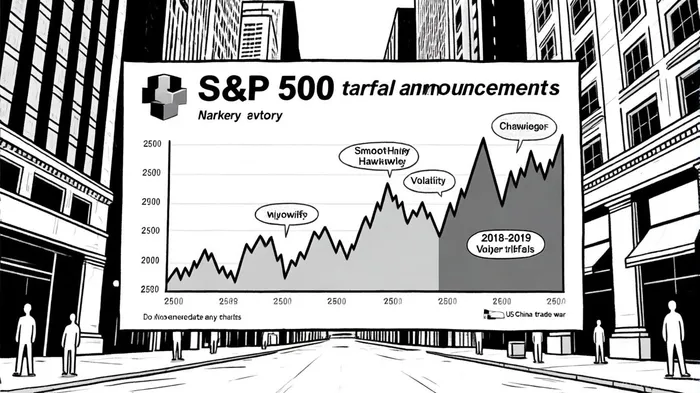
Historical Precedents: Lessons from Smoot-Hawley and Trump-Era Tariffs
The Smoot-Hawley Tariff Act of 1930, which raised U.S. import duties to an average of 45%, is a cautionary tale of protectionism's immediate and long-term consequences. While the act did not directly cause the Great Depression, it exacerbated global trade collapse, reducing U.S. trade with Europe by two-thirds between 1929 and 1932, according to Britannica. The stock market, already reeling from the 1929 crash, plummeted further as retaliatory tariffs triggered a global trade war. By 1933, world trade had contracted by 60%, deepening economic hardship, according to a CFA Institute blog.
Decades later, the Trump-era tariffs of 2025-often termed "Liberation Day" policies-mirrored this pattern. A 10% base tax on all imports, with some rates exceeding 54%, aimed to address trade imbalances but instead raised consumer costs and disrupted supply chains. For instance, tariffs on lumber and steel inflated construction expenses, while the U.S.-China trade war strained global value chains, according to a VAC Development analysis. Yet, despite initial GDP forecasts being slashed from 2.3% to 1.7% in 2025, markets eventually stabilized as businesses adapted. The S&P 500, which fell 11% in two days following the April 2025 tariff announcement, rebounded by May, as noted in a BIS analysis.
Short-Term Volatility vs. Long-Term Resilience
Tariff announcements consistently trigger investor overreactions. For example, the 2025 tariffs led to a 17.6% drop in the S&P 500 and a 22.8% decline in the NASDAQ, reflecting fears of inflation and reduced corporate profits, according to a ScienceDirect study. However, historical data shows that markets typically recover within months to years. During the 2018–2019 U.S.-China trade war, the S&P 500 lost 4.2% by year-end 2018 but surged 31.2% in 2019 as trade tensions eased, according to U.S. News. Similarly, post-Smoot-Hawley recoveries, though delayed, eventually restored market equilibrium as companies reconfigured supply chains and trade relationships normalized, as discussed in a Postalley article.
The key to understanding this resilience lies in the adaptability of businesses and financial markets. Firms like Lovesac and Krimson Klover mitigated tariff impacts by shifting production to Vietnam, Malaysia, and Portugal within 12–18 months, avoiding import taxes while maintaining growth, according to Substack case studies. Such strategic adjustments highlight how short-term pain can catalyze long-term innovation and efficiency.
Investor Strategies: Diversification and Supply Chain Resilience
To navigate tariff-driven uncertainty, investors should prioritize diversification and supply chain flexibility. Academic analyses emphasize that firms with diversified operations-both geographically and sector-wise-are better positioned to weather trade shocks. For instance, companies leveraging multi-shoring (spreading manufacturing across multiple regions) reduced exposure to single-country risks during the 2020–2025 trade wars, according to Global Trade Magazine. Similarly, tariff engineering-reclassifying products or redesigning them to minimize duty exposure-became a critical tool for cost management, as outlined in a Trade Council guide.
Financial diversification is equally vital. Portfolios incorporating low-volatility equities, real assets (e.g., real estate), and uncorrelated investments have historically outperformed during trade conflicts, according to a ScienceDirect paper. For example, during the 2025 tariff selloff, Treasury yields initially dipped but rebounded to 4.34% as investors sought safe-haven assets before shifting back to equities, according to an OFGLTD newsletter. This underscores the importance of balancing risk tolerance with long-term growth objectives.
Conclusion: Staying the Course in a Shifting Trade Landscape
While U.S. tariff policies will continue to generate short-term turbulence, history demonstrates that markets are remarkably resilient. The Smoot-Hawley era and Trump-era tariffs both caused immediate pain but ultimately gave way to adaptation and recovery. Investors who avoid panic selling and instead focus on diversification, supply chain agility, and macroeconomic trends are likely to outperform in the long run. As the global economy evolves, the ability to distinguish between transient noise and enduring value will remain the hallmark of successful investing.







Comentarios
Aún no hay comentarios