
U.S. Tariff Policy and Its Impact on Key Sectors: Navigating Short-Term Volatility and Long-Term Strategic Positioning
The 2025 U.S. tariff policy shifts, characterized by sharp increases in import duties and negotiated sectoral agreements, have created a dual challenge for global markets: immediate volatility in pricing and supply chains, and the need for long-term strategic repositioning. For investors, understanding these dynamics across key sectors—pharmaceuticals, automotive, and consumer goods—is critical to identifying both risks and opportunities.
Pharmaceuticals: Cost Pressures and Domestic Manufacturing Gambles
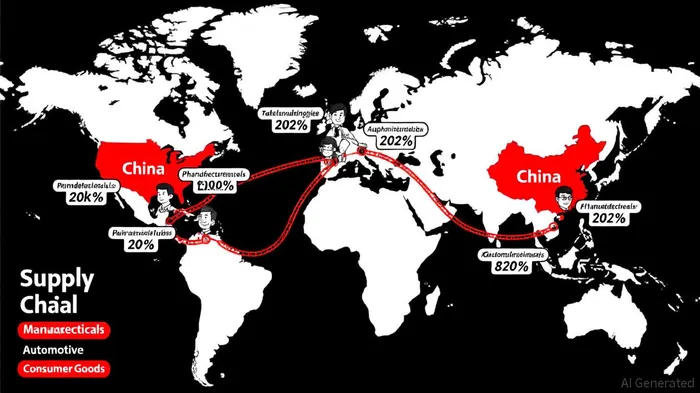
The Trump administration's 100% tariff on imported branded drugs and 245% tariff on Chinese active pharmaceutical ingredients (APIs) have triggered immediate cost inflation and supply chain fragility. According to a report by WTW, these measures could strain patient access to essential medications, particularly generics, while forcing pharmaceutical firms to accelerate domestic production[1]. AstraZenecaAZN--, Roche, and Eli LillyLLY-- have responded with multi-billion-dollar investments in U.S. manufacturing facilities, aiming to reduce reliance on foreign APIs and secure a share of the Strategic API Reserve (SAPIR) initiative[2]. However, these efforts face headwinds: higher production costs and the complexity of global supply chains may limit their ability to offset tariff-driven price hikes. For investors, the sector's long-term viability hinges on whether these domestic manufacturing bets can stabilize supply without exacerbating healthcare inflation.
Automotive: Tariff Negotiations and Reshoring Imperatives
The automotive sector has seen a mix of punitive tariffs and strategic trade deals. While the U.S.-Japan and U.S.-EU agreements capped tariffs at 15% for most goods, the administration's 25% tariffs on Canadian and Mexican medical devices underscored the sector's vulnerability[3]. Automakers like Ford, Nissan, and Stellantis are recalibrating their strategies: 62% of executives plan to reshore operations within 12 months, despite challenges like higher labor costs[4]. KPMG notes that 81% of automakers are passing tariff costs to consumers via price hikes (1–50%), while diversifying supply chains to mitigate single-country dependencies[5]. These moves reflect a broader shift toward nearshoring and vertical integration, but their success will depend on balancing cost efficiency with geopolitical uncertainties.
Consumer Goods: Price Pass-Through and Innovation Constraints
The consumer goods sector has borne the brunt of broad-based tariffs on electronics, toys, and household items. Tariffs on Chinese-made toys, for instance, have pushed prices up by 20%, forcing companies like Schylling Inc. to delay product launches and reallocate resources to tariff compliance[6]. A Richmond Fed analysis estimates that the average effective tariff rate now stands at 17%, compounding operational costs[7]. While 77% of firms have passed on 50% of tariff costs to consumers, this strategy risks eroding demand for premium products, as seen in the shift toward private-label alternatives. Meanwhile, R&D investments have been deprioritized, with companies like Learning Resources diverting 25–30% of staff to tariff-related tasks[8]. For investors, the sector's resilience will depend on its ability to innovate within these constraints, leveraging AI-driven productivity tools to offset margin pressures.
Strategic Implications for Investors
The 2025 tariff landscape demands a nuanced approach. In the short term, volatility in pricing and supply chains will persist, particularly in pharmaceuticals and consumer goods. However, long-term opportunities lie in companies that proactively reshore operations, diversify supply chains, and invest in domestic manufacturing. For example, AstraZeneca's $50B U.S. manufacturing push and Ford's nearshoring initiatives signal a pivot toward self-sufficiency, albeit with elevated costs. Conversely, firms unable to adapt—such as those reliant on single-country sourcing or rigid pricing models—face heightened risks.
Investors should also monitor geopolitical developments, as retaliatory tariffs or further trade agreements could reshape sectoral dynamics. The pharmaceutical sector's reliance on SAPIR and the automotive industry's exposure to U.S.-China tensions are particularly critical.
Conclusion
The 2025 U.S. tariff policies have created a complex interplay of challenges and opportunities. While short-term volatility is inevitable, the long-term winners will be those that embrace strategic repositioning—whether through domestic manufacturing, supply chain diversification, or technological innovation. For investors, the key lies in discerning which companies are best positioned to navigate this new era of protectionism while maintaining profitability and resilience.





Comentarios
Aún no hay comentarios