
U.S. Tariff Policy and Its Impact on Inflation and Markets
The Tariff Tightrope: National Security vs. Economic Costs
Bessent has positioned tariffs as a "core component" of the administration's economic strategy, framing them as a matter of national security. This stance is underpinned by the reimplementation of aggressive tariffs on imports from China, Vietnam, Mexico, and South Korea, targeting sectors such as industrial machinery, electronics, and raw materials. According to a report by Whiteshore Funding, these tariffs have driven of 2% to 4.5% in tariff-exposed industries, creating a "dual dynamic" among manufacturers. Some firms are scrambling for short-term working capital to offset rising costs, while others are delaying expansion or reducing output until the trade landscape stabilizes. This divergence reflects the tension between the administration's long-term goals of and the immediate economic pain of higher prices and disrupted supply chains. 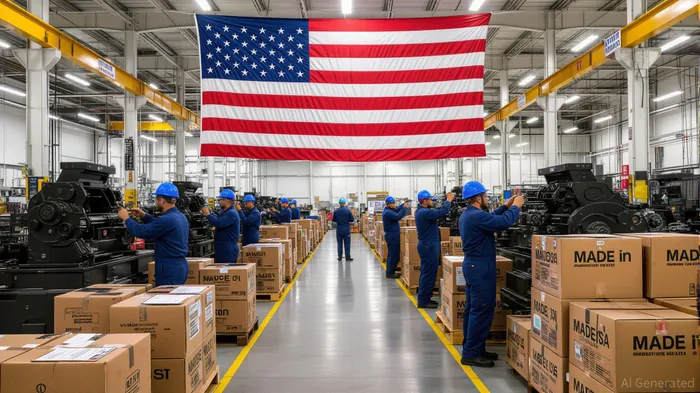
Bessent's confidence in the legal durability of these tariffs-rooted in the (IEEPA) and contingency plans under Section 122 of the Trade Act of 1974-has not quelled concerns about their economic fallout according to reports. Critics argue that the tariffs exacerbate , particularly in sectors reliant on imported components. Yet, Bessent has dismissed these worries, attributing inflation primarily to the services economy and expressing optimism that easing interest rates and tax cuts will drive "" by 2026.
Investor Sentiment: A Market Split Between Caution and Opportunity
The uncertainty surrounding U.S. tariff policy has reshaped investor sentiment, with strategies reflecting a mix of caution and opportunism. In the manufacturing sector, the immediate impact has been stark: companies facing higher input costs are prioritizing liquidity management, leading to a surge in . Conversely, firms with less exposure to tariff-sensitive goods are adopting a , pausing until the policy framework stabilizes. This bifurcation has created a environment, where are increasingly driven by trade exposure rather than broad macroeconomic trends.
have also shown signs of recalibration. The S&P 500's 10% rebound since the November 2024 election-partly attributed to Bessent's efforts to de-escalate -has been tempered by recent weakness in job growth and consumer spending. Meanwhile, remain sensitive to the administration's fiscal policies, including its push for a increase and its proposed use of tariff revenues for rebate checks according to financial analysts. These developments highlight a broader dynamic, where investors balance the potential for long-term against near-term volatility.
The Legal and Geopolitical Chessboard
The Supreme Court's upcoming hearing on the legality of the tariffs adds another layer of complexity. Bessent's personal involvement in the case underscores the administration's determination to defend its trade policies, even as legal challenges threaten to disrupt the status quo. If the court strikes down the tariffs, the administration's fallback strategies-including reliance on Section 338 of the Tariff Act of 1930-could further fragment the regulatory landscape, complicating for businesses and investors alike.
Geopolitically, the administration's approach to trade negotiations with China and its allies has introduced additional variables. While Bessent has highlighted progress in cooling inflation and securing according to recent reports, the broader decoupling of U.S. and Chinese semiconductor markets-exemplified by on advanced chips-has created ripple effects across global supply chains as documented by industry analysts. These tensions are not only reshaping trade flows but also influencing , as investors reassess the risks of overexposure to regions caught in the crossfire of .
Conclusion: Navigating the New Normal
The U.S. tariff policy under Scott Bessent represents a high-stakes experiment in economic nationalism, with outcomes that will reverberate across markets for years. For investors, the key challenge lies in balancing the administration's long-term vision of a with the short-term costs of adjustment. must remain agile, hedging against regulatory uncertainty while capitalizing on sectors poised to benefit from . As Bessent and the Trump administration continue to refine their approach, the interplay between , inflation dynamics, and investor behavior will remain a critical barometer of -and a test of the administration's ability to deliver on its promises.







Comentarios
Aún no hay comentarios