
The Tariff-Driven Inventory Crisis in US Retail: Strategic Opportunities Amid Puma's Dilemma
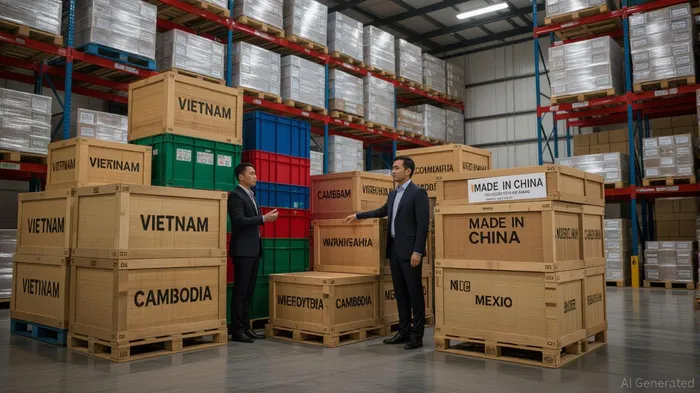
The U.S. tariff landscape in 2025 has become a seismic force reshaping inventory management, pricing strategies, and supply chain dynamics across global consumer goods. With the average effective tariff rate soaring to 22.5%—the highest since 1909—the ripple effects are evident in everything from back-to-school shopping trends to the financial health of brands like PumaPULM--. For investors, this crisis presents a duality: peril for overextended retailers and emerging opportunities in logistics innovation and strategic repositioning.
The Tariff-Driven Retail Reset
U.S. tariffs have directly inflated consumer prices, with apparel rising 17% and motor vehicles up 8.4% since 2024. Retailers are scrambling to adapt. The National Retail Federation reports that two-thirds of Americans with school-aged children began back-to-school shopping in July 2025—two months earlier than typical—to avoid anticipated price hikes. Discounting strategies have intensified, with WalmartWMT-- and Target slashing prices on essentials, while Amazon's July Prime event saw a 175% surge in school supply sales.
Yet the deeper challenge lies in inventory. As tariffs push up costs, retailers are depleting pre-tariff stockpiles, forcing a delicate balancing act between overstocking and understocking. This volatility has led to a 9.7% increase in inventory levels for companies like Puma, which now faces a $2.2 billion stockpile burden.
Puma's Perfect Storm
Puma's plight epitomizes the sector's struggles. The German sportswear giant has slashed its 2025 EBIT forecast to a loss, a stark contrast to its earlier target of €445–525 million. Tariffs alone are expected to cut €80 million from its gross profit, even as it shifts 62% of North American production to Vietnam, Cambodia, and Indonesia. However, this pivot has backfired: elevated inventory levels and delayed pricing adjustments have exacerbated financial strain.
Puma's strategic response—price hikes starting October 2025 and the “nextlevel” cost-cutting program—risks alienating price-sensitive consumers. Its reluctance to lead pricing in the U.S. market, coupled with frontloaded deliveries to avoid tariffs, has created a self-inflicted inventory overhang. Meanwhile, CEO Arthur Hoeld's brand reset, including collaborations with FerrariRACE-- and K-pop star Rosé, aims to re-engage Gen Z but faces an uphill battle against rivals like NikeNKE-- and Adidas.
Logistics as the New Frontier
Amid this chaos, logistics and supply chain innovators are thriving. Nearshoring to Mexico and reshoring to the U.S. have become strategic priorities, with 40% of U.S. firms planning to relocate supply chains to North America by 2026. Companies like FordF-- and Walmart are absorbing 10–15% higher logistics costs to sidestep Chinese tariffs, driving demand for infrastructure upgrades and AI-driven inventory systems.
Investors should note the surge in automation and compliance tech. Maersk's blockchain solutions, for instance, cut documentation errors by 20%, while AI adoption in supply chains has reduced inventory costs by 15% for early adopters. Logistics giants like UPSUPS-- and DHL are capitalizing on U.S.-centric distribution contracts, with FedExFDX-- expanding domestic shipping routes to meet shifting trade flows.
Strategic Opportunities for Investors
- Logistics and Supply Chain Innovators: Firms enabling nearshoring, AI-driven inventory optimization, and customs automation (e.g., DHL, FedEx) are well-positioned to benefit from the $330 billion in U.S. exports targeted by retaliatory tariffs.
- Resilient Retailers: Brands pivoting to private-label products or regional sourcing (e.g., Walmart) may mitigate tariff impacts while appealing to budget-conscious consumers.
- Niche Players in Disrupted Sectors: In pharmaceuticals, companies like AmgenAMGN-- and Novo NordiskNVO--, which localize production, could outperform peers facing 200%+ tariffs on Chinese APIs.
The Bottom Line
The tariff-driven inventory crisis is a double-edged sword. For Puma and peers like Adidas, it's a test of adaptability. For investors, it's a call to identify winners in logistics and supply chain innovation. As U.S. tariffs push global trade into a new era of fragmentation, agility—not scale—will determine long-term success. The key is to invest in companies that turn constraints into competitive advantages, whether through technology, regional sourcing, or bold brand repositioning.
The market's reaction to Puma's 18% stock plunge and Adidas' 2% decline underscores the urgency. But in this turmoil, the most resilient players—those leveraging AI, nearshoring, and strategic partnerships—will emerge not just unscathed, but stronger. For investors, the question isn't whether to act, but how swiftly to capitalize on the reshaping of global retail.





Comentarios
Aún no hay comentarios