
J&J's Tariff Deal: A Tactical Win or a Costly Concession?
The immediate catalyst here is operational. JohnsonJNJ-- & Johnson is the latest major pharma firm to sign on, becoming the 15th to agree to a Most-Favoured Nation pricing deal with the Trump administration. The deal secures tariff exemptions, but the real near-term impact begins this month with the launch of the government-backed TrumpRx.gov direct-to-patient platform. That's when the new, lower pricing regime for J&J's medicines will start to flow through the system.
This isn't a theoretical agreement. It follows a clear pattern: nine other large drugmakers have already announced similar deals, and J&J is now joining them. The mechanism is straightforward. By participating in TrumpRx, J&J commits to selling its medicines at significantly discounted rates to millions of American patients. This directly operationalizes the "most-favored-nation" pricing framework that President Trump has pushed since July.
For J&J, this creates a clear, near-term cost headwind. The company is locking itself into a new, lower pricing structure for a portion of its U.S. sales. While the exact medicines and discount levels remain undisclosed, the launch of TrumpRx this month is the event that turns this commitment into a realized financial impact. It's a tactical concession to secure tariff relief, but it's a concession that starts hitting the books immediately.
The Trade-Off: Exemption vs. Pricing
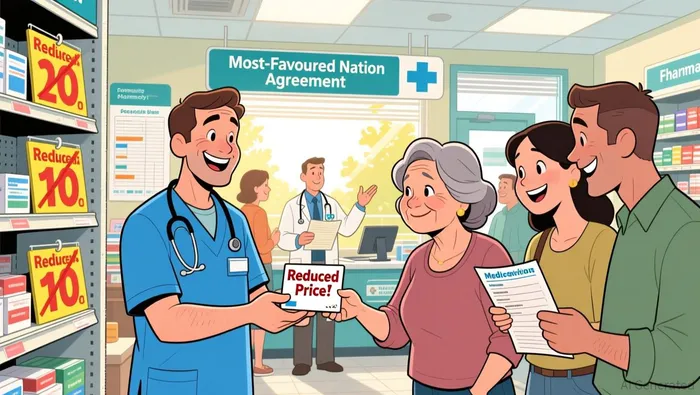
The deal's mechanics are a classic trade-off. Johnson & Johnson is exchanging a new, lower pricing structure for a portion of its U.S. sales in return for a significant cost shield: exemptions from U.S. tariffs on its pharmaceutical products. This is the core exchange. The company secures tariff relief, but it simultaneously commits to selling its medicines at significantly discounted rates through TrumpRx.gov, a government-backed direct-to-patient platform set to launch this month.
The financial impact hinges on two uncertain variables. First, the exact medicines covered and the discount levels remain undisclosed. This creates a major blind spot for investors trying to model the revenue hit. Second, the new manufacturing projects add to a pre-existing $55 billion U.S. investment plan. While these new facilities in North Carolina and Pennsylvania represent a capital commitment, they are part of an ongoing expansion rather than a new, separate outlay. The immediate financial pressure is therefore more likely to come from the margin compression on the discounted sales volume.
For now, the tariff exemption removes a tangible, potential cost. But the pricing concession starts hitting the books immediately with the TrumpRx launch. The bottom line is that J&J is locking in a lower price floor for a segment of its U.S. business, trading a known future cost (tariffs) for an immediate, uncertain revenue drag. The scale of that drag is the key unknown.
The Setup: Stock Reaction and Key Risks
The market's initial reaction has been one of relief, not celebration. J&J's stock has climbed 49% over the past 12 months, a rally that likely priced in the avoidance of a new tariff headwind. Yet, retail sentiment on platforms like Stocktwits tells a different story, showing bearish sentiment amid high message volume. This divergence is telling. The institutional move may be a tactical bet on tariff relief, while retail traders are focused on the immediate, tangible cost of the pricing concession.
The specific, watchable risk is the deal's hidden discount. Unlike some earlier agreements where details emerged, J&J provided no specifics on the medicines covered or the prices charged. This creates a major blind spot. The tariff savings are a known, future benefit. The revenue drag from discounted sales is an immediate, uncertain cost. If the undisclosed discount levels are deeper than expected, the net effect could be a negative for profitability, turning a strategic exemption into a financial loss.
Another critical watchpoint is the administration's remaining targets. With J&J now on board, only AbbVie and Regeneron are yet to reach an agreement. Their actions-and the terms they accept-will signal the deal's long-term sustainability. If those companies demand more favorable terms or walk away, it could pressure J&J and others to renegotiate, or it could validate the current structure as a workable, if costly, compromise. For now, the setup is clear: a stock that has rallied on the promise of tariff relief, but faces a near-term test on whether the pricing cost is worth the savings.





Comentarios
Aún no hay comentarios