
Target's Leadership Shake-Up and Retail Turnaround Playbook
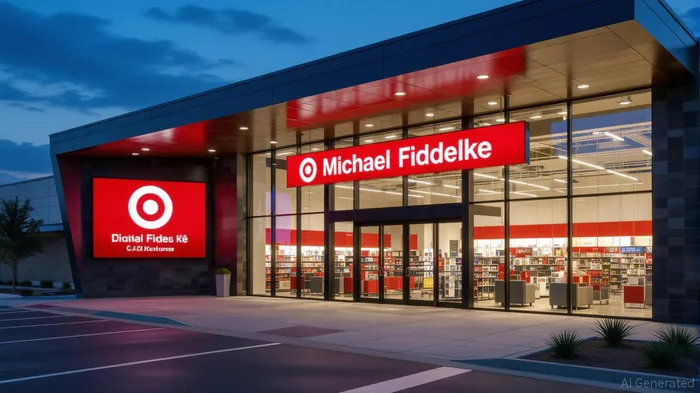
In the annals of retail history, few industries have been as fickle as the one that sells groceries, apparel, and household goods. Yet, when a company like Target—a $100+ billion retail giant—announces a leadership transition, it's not just a personnel move; it's a signal. A signal that the boardroom is recalibrating, that the playbook is being rewritten, and that investors might want to lean in.
On August 20, 2025, Target CorporationTGT-- unveiled its next chapter: Michael Fiddelke, a 20-year veteran of the company, will assume the CEO role in February 2026, succeeding Brian Cornell, who steps into the executive chair. This is not a panic move. It is a calculated, deliberate shift, one that reflects both the challenges of a maturing retail landscape and the potential for a reinvention. For investors, the question is whether this leadership change—and the strategic overhauls it heralds—can unlock value in a stock that has lost nearly 60% of its peak value since 2021.
The Case for a Turnaround
Target's recent financials tell a story of resilience and strain. In Q2 2025, the company narrowly beat earnings expectations, with revenue of $25.21 billion and EPS of $2.05. Yet these numbers mask a deeper malaise: comparable sales fell 1.9%, in-store traffic declined, and net income dropped 21.5% year-over-year. The stock price cratered 10% in pre-market trading after the CEO announcement, a reaction that underscores investor skepticism. But skepticism, in this case, may be misplaced.
Historical parallels offer hope. Consider Best BuyBBY--, which in 2013 faced a death spiral of declining sales and a stock price that had halved. Hubert Joly's leadership, paired with a $1.5 billion investment in stores, digital infrastructure, and employee training, turned the company around. By 2025, Best Buy's sales had surged to $42.9 billion, and its stock had more than doubled. Similarly, Walmart's reinvention under Doug McMillon—prioritizing e-commerce, store remodels, and talent retention—allowed it to counter Amazon's dominance. These cases share a common thread: a CEO with deep institutional knowledge, a willingness to disrupt the status quo, and a focus on operational efficiency.
Fiddelke, with his $2 billion in cost savings and his stewardship of the Enterprise Acceleration Office, fits this mold. His strategy—streamlining operations, reinvigorating merchandising, and leveraging technology—is not revolutionary, but it is pragmatic. It is the kind of playbook that works when a company is not on life support but needs to regain its edge.
Valuation: A Discounted Opportunity?
Target's stock currently trades at a P/E ratio of 11.53, significantly below its 10-year average of 16.3 and the industry average of 27.82. This discount is not arbitrary. It reflects the market's wariness of slowing sales, tariff pressures, and the erosion of Target's “Tarzhay” brand identity. Yet, for value investors, this gap between fundamentals and perception can be a goldmine.
Analysts are split on the stock's potential. B of A Securities downgraded it to “Underperform,” citing execution risks, while Truist raised its price targetTGT-- to $107. The consensus target of $105.88 implies a 2.5% upside from current levels, but the high end of $140 suggests a more bullish view. For context, GuruFocus estimates a 41.5% upside based on historical multiples and growth projections.
The key question is whether Fiddelke can deliver the operational improvements and margin expansion needed to justify a re-rating. His track record—driving $2 billion in efficiencies and leading the Enterprise Acceleration Office—suggests he has the tools. The challenge lies in execution: can he rekindle the magic of Target's private-label brands, stabilize its digital momentum, and navigate the headwinds of a post-pandemic consumer?
Strategic Overhauls: The Retailer's New Playbook
Fiddelke's three pillars—reestablishing Target as a destination for stylish, unique products; enhancing the customer experience; and leveraging technology—are not novel, but they are necessary. The company's recent struggles in categories like home goods and its reliance on markdowns highlight the urgency.
The Enterprise Acceleration Office, which Fiddelke will continue to lead, is a critical lever. By streamlining decision-making and removing operational complexity, the initiative aims to create a more agile organization. This mirrors Walmart's approach under McMillon, where speed and data-driven decisions became competitive advantages.
Moreover, Target's balance sheet remains a strength. Despite declining sales, the company has maintained a robust liquidity position, allowing it to fund strategic investments without overleveraging. This flexibility is a luxury many of its peers lack, and it could be the key to a sustained turnaround.
Risks and Realities
No turnaround is without risk. The retail sector is in a state of flux, with consumers increasingly favoring off-price retailers and online platforms. Walmart's aggressive pricing, Amazon's convenience, and the rise of dollar stores all pose threats. Additionally, Fiddelke's internal appointment, while a vote of confidence in his experience, may lack the disruptive energy of an external hire.
The market's reaction to the CEO announcement—a 10% drop in pre-market trading—reflects these concerns. Investors are betting that the status quo is not enough. For Fiddelke to succeed, he must not only execute his strategy but also rekindle the brand's emotional connection with customers.
Conclusion: A Calculated Bet
For investors, Target presents a classic turnaround scenario: a company with a strong brand, a solid balance sheet, and a new leader with the tools to fix what's broken. The stock's current valuation, while discounted, offers a margin of safety. The risks are real, but so are the rewards.
If Fiddelke can stabilize sales, reinvigorate merchandising, and drive margin expansion, Target could see a re-rating that aligns its P/E with its historical averages. For those with a 3–5 year horizon, this is a calculated bet on a company that has shown it can adapt—and a CEO who has the experience to lead the charge.
In the end, the retail apocalypse may not be as apocalyptic as it seems. For companies like Target, the right leadership—and the right strategy—can turn a crisis into an opportunity. The question is whether investors are ready to bet on the next chapter.





Comentarios
Aún no hay comentarios