
Target Hospitality's Strategic Turnaround Amid Q1 Losses: Why the Stock Is Poised for a Rebound
Target Hospitality (TH) reported a challenging first quarter, but beneath the headline losses lies a company strategically positioned to capitalize on multi-year contracts and a dramatically improved balance sheet. Investors should look past the near-term revenue dip and focus on the $386 million in secured deals—the Dilley Contract and Workforce Hub Agreement—that promise recurring EBITDA growth, paired with a debt-free trajectory. With a fortress balance sheet and tailwinds from U.S. infrastructure spending, TH is primed for a sharp recovery.
The Q1 Numbers: Pain Now, Gain Later
TH’s Q1 revenue dropped to $69.9 million, a 34% decline year-over-year, driven by the termination of two major government contracts: the Pecos Children’s Center and South Texas Family Residential Center. The net loss of $6.5 million andAdjusted EBITDA of $21.6 million (down from $53.7 million) reflect this transitional pain. However, the narrative shifts when analyzing the strategic moves that offset these losses:
- New Contracts at Scale:
- The $246 million Dilley Contract (effective March 2025) reactivates TH’s South Texas assets for U.S. government initiatives, generating ~$49 million annually once fully operationalized.
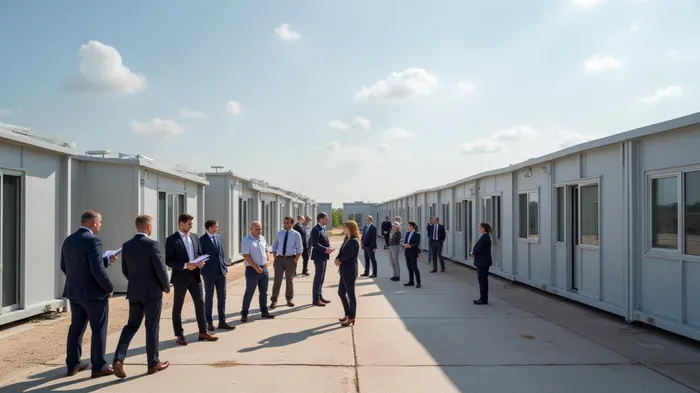
The $140 million Workforce Hub Contract (critical mineral supply chain housing) is already contributing revenue, with construction underway for a 2,000-person facility. Combined, these contracts account for $68 million in minimum 2025 revenue, rising to $209 million by 2027.
Operational Strength:
- The core Hospitality & Facilities South segment saw utilized beds rise to 5,653 (76% occupancy), up 290 beds year-over-year, signaling consistent demand.
- The "All Other" segment (Workforce Hub) revenue surged 284% to $8.1 million, proving scalability of new initiatives.
Debt Redemption: A Game-Changer
TH executed a critical financial pivot by redeeming its $181.4 million in high-interest Senior Notes (10.75%) on March 25, 2025. The $183.8 million redemption eliminated $19.5 million in annual interest costs, lowering leverage to a 0.1x net leverage ratio—one of the lowest in its sector. This move leaves TH with $169 million in total liquidity ($35M cash + $134M undrawn credit facility), enabling it to:
- Fund $15.5M in growth capital for Workforce Hub infrastructure.
- Refocus cash flows on operations rather than debt service.
Why the Stock Is a Buy Now
Underappreciated EBITDA Resilience:
Despite Q1’s headwinds, TH’s Adjusted EBITDA margin held at 30.9% ($21.6M/$69.9M), a testament to cost discipline. As new contracts scale, margins should expand further.2025 Outlook: A Turnaround Catalyst:
The company reaffirmed full-year guidance of $265–$285M revenue and $47–$57M EBITDA, with most growth expected in H2 2025 as Dilley and Workforce Hub ramp up.Valuation Tailwinds:
- TH’s stock trades at just 5.4x 2025E EBITDA, far below peers.
- With $35M in cash and no debt maturities until 2027, the balance sheet is a moat against volatility.
Risks and Opportunities
- Near-Term Risks: Delays in Workforce Hub occupancy or Dilley’s operationalization could pressure margins.
- Upside Catalysts:
- Securing additional government contracts tied to critical minerals or immigration policy.
- Higher utilization rates in hospitality segments as demand recovers.
Conclusion: A Rare Value Play in Infrastructure Growth
TH’s Q1 results are a temporary stumble, not a stumble. The company has de-risked its capital structure, secured long-term contracts with $386 million in recurring revenue, and retains liquidity to weather any headwinds. With a valuation that ignores these structural wins and a $19.5M/year interest savings windfall, this is a buy at current levels. Investors who act now can capture a rebound as TH’s strategic pivot takes hold.
Action Item: Buy TH shares ahead of Q3 2025, when Dilley and Workforce Hub contributions should begin driving EBITDA growth. The stock is a hold for 2025, but a buy for 2026’s upside.





Comentarios
Aún no hay comentarios