
Why Tapzi Is the Most Promising Skill-Based Web3 Gaming Token in 2025
A New Paradigm: The Skill-to-Earn Model
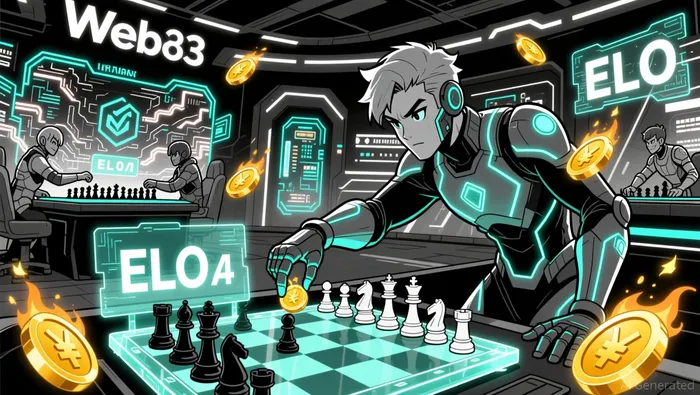 Tapzi's S2E model diverges sharply from early play-to-earn (P2E) frameworks, which often incentivized passive token inflation. Instead, Tapzi leverages AI-powered scoring systems and ELO-based matchmaking to ensure fair competition in real-time skill-based games like chess, checkers, and tic-tac-toe. Players stake $TAPZI tokens to enter tournaments, with winners receiving a share of the prize pool. This performance-driven structure eliminates artificial inflation and aligns rewards with measurable skill, fostering long-term engagement.
Traditional GameFi platforms, by contrast, have struggled with botting, cheating, and unsustainable tokenomics. Tapzi mitigates these risks through on-chain verification and BNBBNB-- Smart Chain integration, enabling gasless gameplay and developer-friendly SDKs for creating new skill-based games. This focus on fairness and accessibility has attracted both casual and professional gamers, positioning Tapzi as a bridge between Web2 and Web3 gaming.
Deflationary Tokenomics and Sustainable Growth
A critical advantage of Tapzi's model lies in its fixed token supply of 5 billion $TAPZI, designed to combat hyperinflation. Traditional GameFi tokens often suffered from uncontrolled emissions, eroding value over time. Tapzi's tokenomics include vesting schedules for team and development allocations, liquidity locks, and a distribution plan that prioritizes treasury, marketing, and development funds. This structure aligns incentives for long-term holders while maintaining economic stability.
Presale traction further validates Tapzi's potential. As of late 2025, the project has sold nearly 70 million tokens, with Stage 1 priced at $0.0035 and projected to rise to $0.01 upon listing-a potential 185% gain for early investors. Analysts suggest that if Tapzi captures just 5% of the mobile gaming crypto market, the token could reach $0.50 to $1.00 by early 2026. Such projections highlight the token's utility-driven appeal in a market increasingly skeptical of speculative assets.
Real-World Adoption and Strategic Roadmap
Tapzi's user engagement metrics underscore its growing influence. The platform's cross-platform accessibility-supporting web, iOS, and Android-has driven over 20,000 entries in its $500,000 giveaway. A free-to-play mode lowers entry barriers, enabling casual gamers to transition into the Web3 space. Meanwhile, the platform's roadmap includes esports integration, NFT avatars, and cross-chain compatibility, all of which enhance scalability and utility.
The strategic timing of Tapzi's launch during a bear market mirrors successful projects like Kraken, which leveraged market downturns to build robust infrastructure before the next bull cycle. By prioritizing transparency and real-world integration, Tapzi avoids the pitfalls of speculative assets, aligning with broader industry shifts toward utility-first models.
Conclusion: A Disruptive Force in Web3 Gaming
Tapzi's Skill-to-Earn model represents a paradigm shift in Web3 gaming, combining fair competition, deflationary economics, and real-world utility. As the market increasingly favors projects with tangible use cases over speculative hype, Tapzi's focus on skill-based rewards and sustainable tokenomics positions it as a leader in the next phase of gaming innovation. For early-stage investors, the project's presale traction, strategic roadmap, and alignment with industry trends make it a compelling opportunity in 2025.






Comentarios
Aún no hay comentarios