
Tanzania's Political Turmoil and Its Implications for Foreign Direct Investment
Political Reforms and Persistent Challenges
President Hassan's administration inherited a legacy of economic stagnation and political repression under her predecessor, John Magufuli. Early in her tenure, she pledged to liberalize the business climate, lifting bans on political rallies and initiating discussions on constitutional reforms to limit presidential powers, according to the U.S. State Department's 2025 Investment Climate Statement. However, progress has been uneven. The establishment of a Presidential Tax Reform Commission in late 2024 aimed to address arbitrary tax policies and inconsistent enforcement of investment incentives, but its recommendations remain confidential, fueling skepticism about transparency, according to the U.S. State Department's 2025 Investment Climate Statement.
The Tanzania Investment Centre (TIC) and Zanzibar Investment Promotion Agency (ZIPA) offer tax breaks and other incentives, yet the Tanzania Revenue Authority (TRA) often ignores these provisions, creating a fragmented regulatory environment, according to the U.S. State Department's 2025 Investment Climate Statement. This divergence between policy and practice is compounded by ideological divides within the government, where socialist-leaning factions clash with pro-market advocates, leading to prolonged bureaucratic delays that stall projects for years, according to the U.S. State Department's 2025 Investment Climate Statement.
Electoral Irregularities and Democratic Erosion
The 2025 general elections underscored Tanzania's democratic vulnerabilities. The African Union (AU) Election Observation Mission (AUEOM) reported widespread irregularities, including ballot stuffing, lack of identity checks, and the ejection of observers from polling stations, according to Chimpreport's AU observers call for urgent reforms in Tanzania. A nationwide internet shutdown on election day further exacerbated concerns about transparency, according to Chimpreport's AU observers say Tanzania vote violated democratic values. The U.S. State Department and the United Nations echoed these findings, warning that such practices undermine governance credibility, according to Chimpreport's AU observers say Tanzania vote violated democratic values.
These developments have significant implications for FDI. Investors are increasingly wary of operating in environments where political stability is uncertain and legal frameworks are subject to abrupt changes. For instance, the Natural Wealth and Resources (Permanent Sovereignty) Act 2017 and the Mining (Local Content) Regulations 2019-laws that allow the government to renegotiate contracts and impose local ownership requirements-have created a climate of unpredictability, particularly in the extractives sector, according to the U.S. State Department's 2025 Investment Climate Statement.
Capital Flight and Economic Volatility
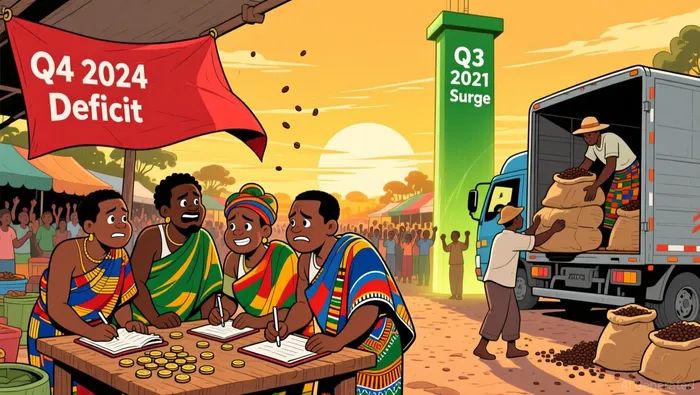
Tanzania's capital flight trends reflect the broader instability. In the fourth quarter of 2024, the country recorded a capital and financial account deficit of $32.12 million, a stark contrast to the $1.73 billion inflow in the third quarter of 2021, according to Trading Economics Tanzania capital flows data. Over the 2012–2024 period, capital flows averaged $679.03 million annually, highlighting the sector's volatility, according to Trading Economics Tanzania capital flows data. While infrastructure projects like the East African Oil Pipeline (EACOP) offer growth potential, currency depreciation and public debt concerns-Tanzania's debt-to-GDP ratio remains below the IMF threshold-add layers of risk, according to Coface Tanzania Country File.
Comparative Political Risk in African Markets
Tanzania's political risk profile is moderate compared to its peers, but it lags behind countries like Kenya and South Africa in institutional transparency. While Kenya's 2025 GDP growth of 5.3% is driven by digital innovation and agriculture, its public debt has surged to 11.3 trillion shillings, raising concerns about fiscal sustainability, according to Coface Tanzania Country File. South Africa, meanwhile, grapples with high unemployment and energy transition challenges, despite its renewable energy ambitions, according to Financial Times South Africa energy transition coverage.
However, direct comparisons are complicated by the lack of granular data on political risk indices (PRI) for the 2023–2025 period. General factors-such as corruption, civil unrest, and environmental vulnerabilities-remain critical across the continent. Tanzania's unique challenges, including Zanzibar's autonomy tensions and restrictive foreign ownership laws, further differentiate it from regional competitors.
Conclusion: Navigating the Risks
For investors, Tanzania presents a paradox: a resource-rich economy with untapped potential, yet hamstrung by governance issues and regulatory fragmentation. While the government's engagement with institutions like the World Trade Organization (WTO) and Multilateral Investment Guarantee Agency (MIGA) offers some safeguards, the slow pace of reform and democratic erosion remain red flags, according to the U.S. State Department's 2025 Investment Climate Statement.
In a region where political risk and capital flight are inextricably linked, Tanzania's trajectory will hinge on its ability to reconcile socialist ideologies with market-friendly policies. Until then, foreign investors must proceed with caution, prioritizing legal due diligence and long-term risk mitigation strategies.







Comentarios
Aún no hay comentarios