
Tangible Assets as a New Safe Haven for Crypto Wealth
In 2025, the cryptocurrency market has entered a new phase of maturation, marked by institutional adoption, regulatory clarity, and a strategic shift toward tangible assets as safe havens for crypto wealth. As volatility remains a defining feature of the digital asset landscape, investors are increasingly prioritizing ultra-scarcity and diversification strategies to mitigate risk while capitalizing on innovation. This evolution is reshaping how crypto portfolios are structured, with tokenized real-world assets (RWAs), stablecoins, and ultra-scarce digital assets emerging as critical components of a resilient investment framework.
Bitcoin's Dominance and the Rise of Institutional Allocation
Bitcoin (BTC) continues to anchor institutional crypto portfolios, with its market capitalization reaching $1.65 trillion as of November 2025, representing 65% of the global crypto market. The approval of spot BTCBTC-- ETFs, such as BlackRock's iShares Bitcoin TrustIBIT-- (IBIT), has normalized crypto as a standard asset class, attracting over $65 billion in assets under management globally by early 2025. This institutional embrace is driven by BTC's first-mover advantage, its role as a hedge against macroeconomic uncertainty, and the infrastructure now supporting its integration into traditional finance.
However, reliance on BTC alone is no longer sufficient for diversified portfolios. Institutional investors are allocating 60-70% to core assets like BTC and EthereumETH-- (ETH), 20-30% to altcoins, and 5-10% to stablecoins and tokenized RWAs according to best practices. This structure balances growth potential with risk management, particularly as regulatory frameworks like the EU's MiCA and the U.S. GENIUS Act provide clarity and reduce friction in digital asset adoption.
Ultra-Scarcity Strategies: Beyond Bitcoin
Q3 2025 has seen a surge in ultra-scarcity strategies, where investors target assets with limited supply and strong utility. The Grayscale Research Top 20 list highlights Avalanche and Morpho as prime examples, with both assets demonstrating robust on-chain activity and idiosyncratic adoption trends. Similarly, the Artificial Intelligence (AI) crypto sector has emerged as a niche yet high-potential segment, with 24 tokens collectively valued at $15 billion. Projects like BittensorTAO--, which incentivizes decentralized AI development, exemplify how scarcity and utility intersect to create long-term value according to research.
These strategies are not limited to digital assets. Tokenized commodities, such as gold and silver, have outperformed BTC during periods of market stress, offering a dual benefit of scarcity and tangible backing. Tokenized gold and silver have reached all-time highs in 2025, driven by their role as inflation hedges and their ability to provide fractional ownership and instant settlement. For instance, platforms like Phemex report that tokenized gold's liquidity and transparency make it an attractive alternative to traditional safe-haven assets.
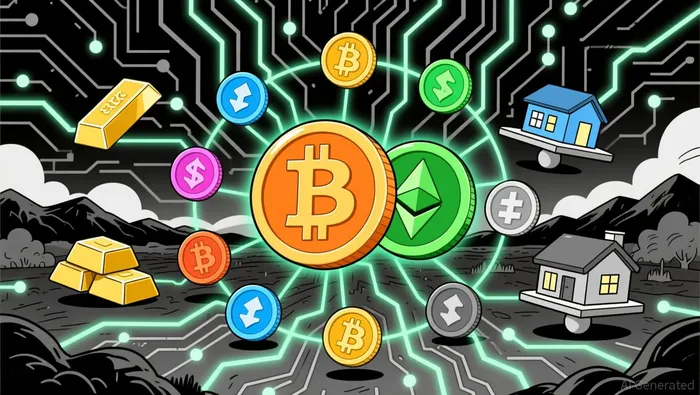
Tokenized Tangible Assets: Bridging Traditional and Digital Finance
The tokenization of real-world assets has unlocked new avenues for diversification. Real estate, for example, is being fractionalized into digital tokens, allowing investors to own shares in high-value properties starting at $1,000. This innovation democratizes access to previously illiquid markets while aligning with ultra-scarcity principles-properties in prime locations, such as Manhattan or London, are inherently scarce and retain value during economic downturns.
Commodities like gold and oil are also being tokenized, enabling seamless integration into crypto portfolios. For instance, tokenized oil contracts on Ethereum layer 2s have seen record activity, offering investors exposure to energy markets without the logistical challenges of physical storage. Similarly, private credit and debt instruments are being tokenized to streamline loan issuance and expand capital access, further diversifying institutional holdings.
Regulatory Tailwinds and Future Outlook
The regulatory environment has played a pivotal role in legitimizing these strategies. The EU's Markets in Crypto-Assets (MiCA) regulation and the U.S. GENIUS Act have created structured frameworks for digital asset integration, reducing compliance risks and encouraging broader participation. As a result, 75% of surveyed institutional investors plan to increase crypto allocations in 2025, according to XBTO.
Looking ahead, the convergence of ultra-scarcity and tangible assets is likely to accelerate. Platforms like Ethereum, Polygon, and Binance Smart Chain are enabling low-cost, high-throughput tokenization, making it easier for investors to access a diverse range of assets. Meanwhile, the rise of AI-driven crypto sectors and tokenized commodities underscores the market's adaptability in a volatile landscape.
Conclusion
As the crypto market evolves, tangible assets are redefining the concept of a safe haven. By leveraging ultra-scarcity and tokenization, investors can build portfolios that balance growth, liquidity, and risk mitigation. Whether through Bitcoin's foundational role, tokenized gold's resilience, or AI-driven altcoins, the 2025 landscape offers a blueprint for navigating uncertainty while capitalizing on innovation. For institutions and retail investors alike, the future of crypto wealth lies in strategic diversification-and the tools to achieve it are now more accessible than ever.





Comentarios
Aún no hay comentarios