
Tandem Diabetes' Stalled Momentum: Is the Market Overestimating Long-Term Resilience?
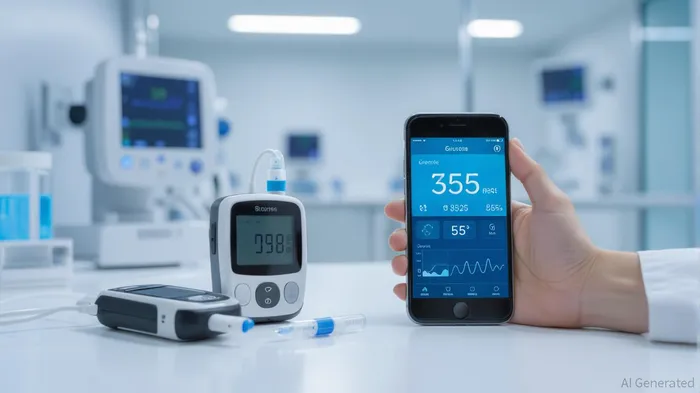
Tandem Diabetes Care (NASDAQ: TNDM) has long been a bellwether in the diabetes technology sector, celebrated for its hybrid closed-loop systems and user-centric design. Yet, as of Q2 2025, the company faces a critical juncture. Despite record sales of $240.7 million and a 8.7% year-over-year growth in U.S. pump shipments, Tandem's strategic and financial risks are mounting. The Mobi insulin pump, its flagship innovation, is grappling with weak domestic adoption, flat renewal rates, and intensifying competition. Meanwhile, the stock trades at a P/S ratio of 1x—well below its peer average of 15.3x—raising questions about whether the market is underestimating the company's challenges or overestimating its resilience.
Mobi's Mixed Performance: Growth Amid Hurdles
Tandem's Mobi platform, launched in 2024, has driven a 21% increase in new pump starts in Q2 2025 compared to the prior year. This growth is partly attributable to pent-up demand, as Q2 2024 marked Mobi's first full quarter on the market. However, the pump's adoption in the U.S. is hindered by systemic barriers. Insurance coverage for Mobi's components—such as cartridges, infusion sets, and compatible CGMs—remains inconsistent, forcing patients to navigate complex reimbursement networks. Additionally, patient education gaps persist: users must master carbohydrate counting, smartphone app integration, and real-time glucose monitoring, all of which require significant training.
While Tandem has expanded Mobi's capabilities—such as Android control and extended wear technology—these enhancements have yet to translate into broad adoption. The pump's reliance on a tightly integrated ecosystem (e.g., specific insulin types, compatible CGMs, and non-jailbroken smartphones) creates friction for users. For instance, a 2025 study at the American Diabetes Association's Scientific Sessions revealed that 30% of Mobi users reported technical issues within the first six months, citing connectivity problems and software glitches.
Renewal Rates: A Double-Edged Sword
Tandem's customer retention remains a bright spot, with renewals accounting for over 50% of U.S. pump shipments in Q2 2025. This high renewal rate underscores the loyalty of existing users to Tandem's technology, particularly its Control-IQ+ algorithm, which has demonstrated improved glycemic control in clinical trials. However, the company's ability to sustain these rates is uncertain.
Renewal trends are influenced by two key factors: device reliability and competitive alternatives. Tandem's t:slim X2 pump, though reliable, faces scrutiny over its durability in extreme conditions (e.g., radiation exposure during medical imaging). Meanwhile, rivals like MedtronicMDT-- and DexcomDXCM-- are offering more flexible solutions. Medtronic's Smart MDI system, which combines an InPen with a Simplera CGM, has attracted users seeking a less invasive alternative to pump therapy. Dexcom's 15-day CGM sensor, with its improved accuracy and lower cost, further pressures Tandem's market share.
Competitive Pressures: A Crowded Arena
Tandem's dominance in the insulin pump market is being challenged by both established players and emerging innovators. Dexcom, for example, has leveraged its CGM expertise to expand into automated insulin delivery systems. Its recent partnership with Novo NordiskNVO-- to integrate the NovoPen Echo Plus with CGM data has created a compelling alternative for Type 2 diabetes patients. Medtronic, meanwhile, has doubled down on its hybrid closed-loop technology, with its MiniMed 7 system achieving a 75% time-in-range metric in clinical trials—a figure that rivals Tandem's Control-IQ+ performance.
The threat extends beyond traditional competitors. Startups like Beta BionicsBBNX-- and Bigfoot Biomedical are experimenting with fully automated systems and AI-driven dosing algorithms, which could disrupt Tandem's market position. Additionally, regulatory shifts—such as CMS's proposed Medicare payment cuts for home health agencies—add another layer of uncertainty. Tandem's stock dropped 6.4% in response to these cuts, reflecting investor concerns about reimbursement sustainability.
Valuation Realism: A P/S Discrepancy
Tandem's current valuation appears to straddle optimism and caution. Its P/S ratio of 1x is a fraction of the industry average, suggesting the market is discounting its growth potential. However, this low multiple may not fully account for Tandem's strategic initiatives, such as its pharmacy channel expansion and international market entry. The company plans to sell t:slim supplies through pharmacies starting in Q4 2025, a move that could boost affordability and accessibility for existing users.
On the other hand, Tandem's lack of profitability—its TTM EBIT margin is -9.4%—casts doubt on its ability to justify a higher valuation. While the company projects $1 billion in 2025 sales, achieving this will require overcoming adoption hurdles and maintaining its lead in a rapidly evolving sector. Analysts' 1-year price target of $35.73 (a 135% upside from current levels) assumes a successful transition to profitability, but this hinges on resolving technical issues, expanding insurance coverage, and outpacing competitors.
Investment Implications: A Calculated Bet
For investors, Tandem presents a paradox: a company with strong fundamentals but significant headwinds. The stock's low P/S ratio offers a margin of safety, but the risks—weak Mobi adoption, flat renewals, and competitive pressures—cannot be ignored. A cautious approach is warranted.
- Short-Term (1–2 Years): Monitor Tandem's ability to resolve technical issues with Mobi and expand pharmacy channel sales. A successful rollout of these initiatives could drive revenue growth and improve margins.
- Long-Term (3–5 Years): Assess the company's capacity to innovate in a crowded market. If Tandem can integrate AI-driven features or expand into emerging markets (e.g., Asia-Pacific), it may regain its competitive edge.
- Risk Mitigation: Diversify exposure to the diabetes tech sector by pairing TNDMTNDM-- with peers like Dexcom or InsuletPODD--, which have more diversified product portfolios.
In conclusion, Tandem Diabetes' valuation appears to reflect a cautious optimism about its future. While the company's strategic moves—such as Control-IQ+ for Type 2 diabetes and international expansion—offer upside potential, the path to sustained growth is fraught with challenges. Investors should proceed with a balanced perspective, recognizing both the company's resilience and the realities of a fiercely competitive landscape.





Comentarios
Aún no hay comentarios