
Is Tamarack Valley Energy (TSX:TVE) a Contrarian Buy Despite High Debt?
A History of Earnings Resilience
Tamarack Valley Energy's earnings trajectory over the past five years has been nothing short of remarkable. In 2024, the company's annual earnings surged by 95.6%, far outpacing its five-year average of 19.9% growth, according to a Yahoo Finance report. This acceleration followed a dramatic turnaround from 2020, when TVE posted a net loss of $0.28 billion, per CompaniesMarketCap data, underscoring its ability to adapt to market cycles. By 2024, net profit margins had nearly doubled to 17.9%, reflecting operational improvements and favorable commodity pricing, as that report noted.
However, 2025 has introduced new challenges. The company reported a net loss of C$248.77 million in Q3 2025, driven by an asset write-down in its East Alberta operations, according to a Finimize article. This loss contrasts sharply with its 2024 performance, raising questions about sustainability. Yet, the broader context reveals a company that has consistently outperformed expectations in favorable conditions, even as it navigates headwinds.
Debt Concerns and Strategic Countermeasures
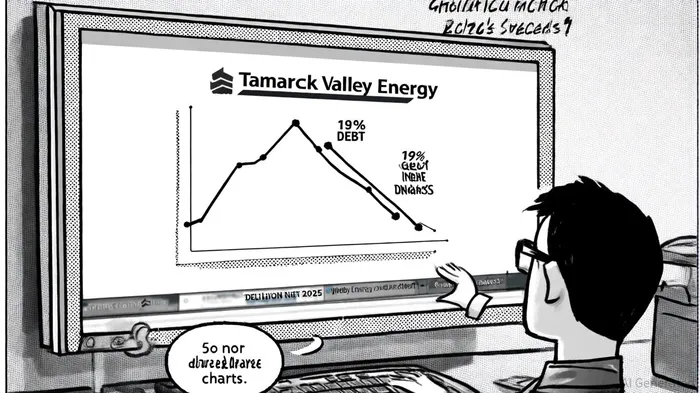
TVE's net debt of C$631.05 million as of Q3 2025, noted in the Finimize article, has drawn scrutiny, particularly against the backdrop of its recent loss. However, the company's approach to debt management suggests a disciplined strategy. Year-to-date, TVE has reduced its net debt by 19% through a combination of asset sales, cost-cutting, and efficient capital allocation, according to a MarketScreener release. For instance, the sale of non-core assets in Eastern Alberta generated C$112 million, while a $325 million note offering helped refinance higher-cost debt, as disclosed in the Q3 2025 earnings call.
Moreover, TVE's operational efficiency has cushioned the blow of declining revenues. Production levels remain stable at 67,000–69,000 barrels of oil equivalent per day, supported by waterflood initiatives that have boosted output by 3,600 BOE/d in 2025, the earnings call noted. These measures have enabled free funds flow of $95.7 million in Q3 2025, a 7% improvement year-over-year, as the MarketScreener release reported, despite the net loss.
The Contrarian Case: Balancing Risks and Rewards
The key to TVE's contrarian appeal lies in its ability to decouple earnings potential from debt concerns. While the 2025 loss is alarming, it is largely a non-cash write-down rather than a reflection of operational failure. Meanwhile, TVE's 5% dividend increase and $194 million in shareholder returns through buybacks and dividends in the first nine months of 2025, noted in the earnings call, signal confidence in its capital structure. Management has also signaled a shift to quarterly dividend payments starting in 2026, which could improve cash flow flexibility, according to the same earnings call.
Critics may argue that TVE's debt load remains a drag on valuation, particularly in a low-growth environment. Yet, the company's historical ability to scale earnings during upturns-such as the 95.6% surge in 2024-suggests that its operational strengths could outpace debt-related risks if commodity prices rebound. Furthermore, TVE's focus on cost reduction (e.g., a 10% per BOE decline in production expenses reported in the earnings call) positions it to capitalize on margin expansion when conditions improve.
Conclusion: A Calculated Bet on Resilience
Tamarack Valley Energy's current financial struggles are real, but they do not negate its long-term potential. The company's debt is high, yet its earnings history and strategic initiatives demonstrate a capacity to navigate cycles. For contrarian investors, the challenge is to weigh the immediate risks of elevated leverage against the possibility of a rebound driven by operational efficiency and a return to favorable commodity pricing.
In a market that often overreacts to short-term setbacks, TVE offers a reminder that value lies in the interplay between earnings resilience and disciplined capital management. Whether it becomes a successful contrarian buy will depend on how effectively the company executes its debt-reduction plans and whether the energy sector's broader trends align with its recovery.







Comentarios
Aún no hay comentarios