
The New Takeout War: How Crypto Platforms Are Redefining Wealth Management Through Subsidy Strategies and Ecosystem Dominance
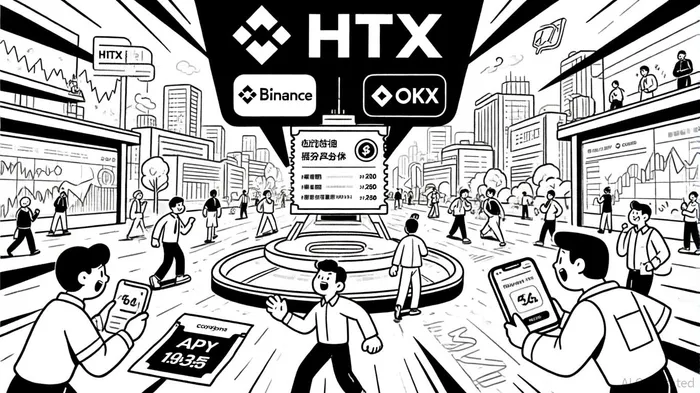
The crypto wealth management sector in 2025 is locked in a fierce subsidy-driven competition reminiscent of the "takeout wars" that reshaped food delivery markets in the 2010s. Platforms such as HTX, BinanceETH--, OKX, and Bybit are deploying aggressive user acquisition tactics—offering tiered interest rates, time-locked products, and flexible earning options—to capture liquidity and build long-term ecosystem dominance[1]. These strategies, while superficially similar to the high-subsidy models of traditional industries, are uniquely adapted to the decentralized and volatile nature of crypto markets.
The Mechanics of Subsidy-Driven Growth
At the core of this competition is the use of high-yield investment products to attract and retain users. For instance, HTX's 6% APY on ETH and other assets, coupled with no minimum deposit requirements, exemplifies how platforms are leveraging financial incentives to onboard both retail and institutional capital[1]. Such tactics mirror the "takeout wars" in food delivery, where companies like UberUBER-- Eats and DoorDashDASH-- used stacked discounts to cultivate habitual spending. However, crypto platforms face a dual challenge: not only must they retain users, but they must also ensure that retained capital remains liquid and engaged within their ecosystems.
This is achieved through layered product design. Platforms are introducing time-locked staking products, yield-bearing tokens, and hybrid models that blend traditional loyalty programs with blockchain-based incentives[1]. For example, decentralized finance (DeFi) platforms like AaveAAVE-- and Compound have integrated governance tokens, allowing users to vote on protocol upgrades while earning staking rewards[3]. This dual incentive—financial returns plus governance participation—creates a flywheel effect, where user retention drives deeper product adoption and, in turn, higher liquidity.
Ecosystem Expansion and the Role of Gamification
Beyond financial subsidies, crypto platforms are increasingly relying on gamification and community-driven strategies to sustain engagement. At ETHDenver 2025, PolkadotDOT-- contributors emphasized the importance of building "resilient communities" through decentralized governance and diverse team structures[1]. This approach aligns with the success of platforms like Ant Forest, which uses gamified sustainability challenges to embed user habits[2]. By applying similar principles—such as tokenized rewards for participation in governance or staking—crypto platforms are transforming passive users into active ecosystem participants.
Blockchain-based Multi-Level Marketing (MLM) software further amplifies this dynamic. These systems automate referral networks and commission structures, leveraging smart contracts to reduce disputes and accelerate growth[1]. According to a 2025 market analysis, such platforms have achieved 42% faster network expansion compared to traditional models[1]. AI-powered analytics also play a critical role, enabling platforms to personalize incentives and predict user behavior, resulting in 65% higher retention rates[1].
Financial Sustainability and Long-Term Risks
While subsidies have proven effective in scaling user bases, their long-term sustainability remains a concern. The 2025 Annual Report on Crypto Philanthropy notes that average donation sizes surged by 386% year-on-year, reflecting heightened user engagement[3]. However, this growth is contingent on market stability. Volatility in crypto asset prices and regulatory scrutiny could erode the profitability of subsidy models, particularly for platforms reliant on thin margins.
Historical parallels offer cautionary lessons. The "takeout wars" in food delivery eventually led to market consolidation, with smaller players unable to sustain subsidy costs[3]. Similarly, crypto platforms must balance aggressive spending with long-term value creation. Polkadot's focus on interoperability and real-world asset tokenization[3], and Aave's emphasis on transparent governance[3], suggest that platforms prioritizing utility over speculation are better positioned for sustained growth.
Conclusion: The Path to Ecosystem Dominance
The crypto wealth management subsidy wars are not merely about short-term user acquisition but about building ecosystems that thrive on liquidity, trust, and innovation. Platforms that succeed will be those that align financial incentives with long-term engagement—whether through gamification, governance participation, or hybrid loyalty models. As the industry matures, the focus will shift from "burning money" to "building value," with the most resilient platforms emerging as the new titans of decentralized finance.






Comentarios
Aún no hay comentarios