
Taka Jewellery Holdings (42L): A Case for Sustainable ROCE Growth in Singapore's Premium Jewellery Market
In the competitive landscape of Singapore's premium jewellery market, Taka Jewellery Holdings (42L) has emerged as a standout performer, driven by a combination of strategic expansion, operational efficiency, and a rising Return on Capital Employed (ROCE). As the company navigates macroeconomic headwinds and evolving consumer preferences, its ability to sustain ROCE growth-now at 10.5% as of FY2025, according to the AlphaSpread ROCE page-positions it as a compelling case study in capital-efficient growth within a fragmented sector.
Financial Performance: ROCE Trends and Profitability
Taka's FY2025 results underscore its financial resilience. Revenue surged 22% year-on-year to S$178.4 million, with net income following suit at S$12.5 million, maintaining a consistent 7.0% profit margin, as reported in Minichart's FY2025 results. The company's ROCE, a critical metric for assessing capital efficiency, has shown a marked improvement over the past five years, climbing to 10.5% in 2025 from 4.88% in June 2025, per Google Finance. This trajectory reflects effective reinvestment of capital, with EBIT reaching S$15.4 million against capital employed of S$147.3 million (AlphaSpread data for Taka also details the underlying figures).
Notably, Taka's ROCE outperforms both its peer Movado Group (3.8% as of 2025, per the AlphaSpread Movado page) and the industry average for the Specialty Retail sector, according to Yahoo Finance (7.0%). This disparity highlights Taka's superior ability to generate returns relative to its capital base, a testament to its diversified business model spanning retail, wholesale, and financial services, as shown on the company's Yahoo Finance profile.
Competitive Positioning: Strategic Expansion and Market Share
While exact market share figures for Taka in Singapore's premium jewellery segment remain undisclosed, its operational footprint and growth metrics suggest a strengthening position. The company expanded its retail network in 2025, with new store openings and a 20.8% year-on-year revenue increase in the retail segment (reported in Minichart's FY2025 results). E-commerce also played a pivotal role, contributing to a 21.6% overall revenue growth for FY2025, consistent with trends identified in a 6W Research report.
Taka's wholesale and exhibitions business further bolstered its market presence, reporting a 23.1% year-on-year revenue increase (Minichart's results). This diversification across domestic and international markets-spanning the Americas, Europe, and Asia-reduces reliance on any single region, a strategic advantage in volatile economic climates.
Operational Efficiency: Liquidity and Cost Management
Operational efficiency is a cornerstone of Taka's sustainable growth. Free cash flow rose by 32.56% in FY2025, while cash flow from financing activities surged 218.71% year-on-year, metrics reflected in the company's market data on Google Finance. These figures underscore the company's ability to manage liquidity and reinvest in high-return opportunities.
Cost discipline has also been a priority. Despite challenges such as gold price volatility and supply chain disruptions, Taka maintained a 7.0% profit margin in FY2025 (Minichart). Its chairman emphasized the importance of "operational discipline" in navigating macroeconomic uncertainties, a philosophy that aligns with its 50% year-on-year dividend increase proposal (also reported in Minichart).
Sustainable Growth: Challenges and Opportunities
Taka's long-term sustainability hinges on its ability to adapt to shifting consumer demands. The Singapore premium jewellery market, projected to grow at a 2.75% CAGR from 2025–2029 (per 6W Research), is increasingly influenced by lab-grown diamonds and digital commerce. Taka's e-commerce expansion and focus on bespoke offerings position it well to capture these trends.
However, the company must also contend with a shrinking market cap-down 50.71% since 2015 (Google Finance historical data)-and a ROCE that, while strong, lags behind luxury peers like Van Cleef & Arpels. Strategic investments in technology, such as virtualCYBER-- try-on tools, and further diversification into financial services (e.g., pawnbroking and secured lending, noted on the company's Yahoo Finance profile) could mitigate these risks.
Conclusion: A Capital-Efficient Play in a Resilient Sector
Taka Jewellery Holdings' ROCE growth trajectory, coupled with its strategic expansion and operational efficiency, paints a compelling picture for investors. While market share data remains opaque, its financial performance and competitive positioning in Singapore's premium jewellery sector suggest a company poised for sustainable growth. For investors seeking exposure to a capital-efficient business with a diversified revenue stream, Taka offers a balanced blend of resilience and innovation.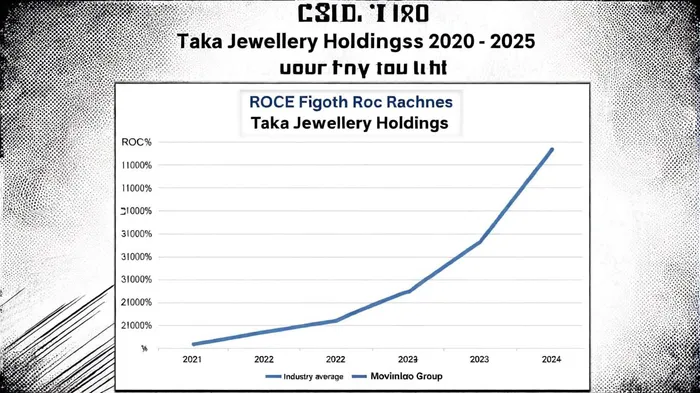







Comentarios
Aún no hay comentarios