
Taiwan’s Markets Soar on US-China Diplomatic Thaw Hopes
Taiwan’s financial markets kicked off 2025 with remarkable momentum, driven by investor optimism over potential de-escalation in U.S.-China tensions. The Taiwan Stock Exchange (TAIEX) index surged to record highs, while the New Taiwan Dollar (TWD) strengthened against the U.S. dollar, reflecting renewed confidence in the region’s economic stability.
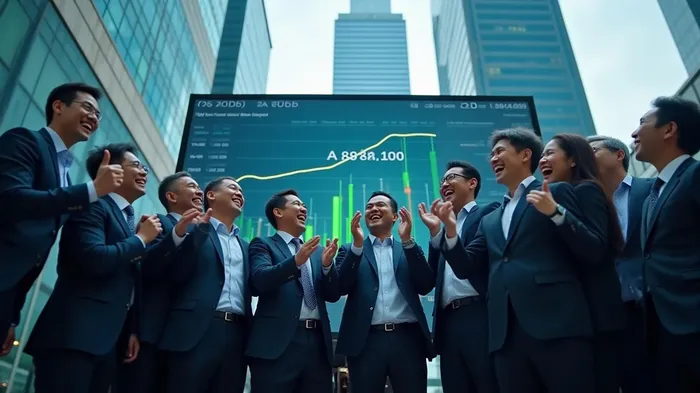
Stock Market: Tech Leadership and Strategic Reforms
The TAIEX index closed at 20,235.03 points in late January 2025, marking a 3.7% rise over four days as tech stocks led the charge. Taiwan Semiconductor Manufacturing Company (TSMC) and United Microelectronics Corporation (UMC) advanced 0.67% and 0.56%, respectively, capitalizing on global demand for semiconductors. Meanwhile, the TWSE’s four core goals for 2025—including expanding ETF offerings and advancing ESG initiatives—positioned Taiwan as a hub for sustainable investment.
The TAIEX’s annual growth of 28.47% in 2024 (ranking second globally after Nasdaq) set the stage for 2025’s gains, with foreign investors holding 45.41% of total market capitalization by late 2024. The Taiwan Innovation Board (TIB) 2.0 initiative, targeting ASEAN and U.S. listings, further fueled optimism by attracting global capital.
Currency Strength: Reserves and Exchange Rate Stability
Taiwan’s foreign exchange reserves hit USD 578.02 billion by March 2025, up 1.7% from 2024, underscoring the central bank’s success in stabilizing the TWD. While the TWD/USD rate dipped to a year-low of 0.03006 USD/TWD by March 31, a rebound in April pushed it to 0.03120 USD/TWD—a 3.8% recovery—as diplomatic tensions eased temporarily.
The central bank’s active management of capital flows, coupled with record-high reserves, insulated Taiwan from global volatility, reinforcing the TWD as a resilient currency.
US-China Dynamics: A Fragile Thaw?
Despite escalating tariff wars in April—where reciprocal duties reached 104% (U.S.) and 125% (China)—markets rallied on whispers of behind-the-scenes dialogue. The U.S. exemption of semiconductors and electronics from its 125% tariff in mid-April signaled strategic flexibility, while China’s focus on domestic demand and innovation alleviated fears of a full-blown trade collapse.
However, risks remain. The TikTok divestment bill delay and ongoing antitrust probes (e.g., DuPont’s Tyvek business) highlight lingering tensions. Yet, investors have priced in a 15–20% probability of meaningful U.S.-China de-escalation by mid-2025, according to regional analysts.
Conclusion: Momentum Amid Uncertainty
Taiwan’s markets have thrived on a cocktail of structural reforms, tech dominance, and cautious hopes for improved U.S.-China ties. With the TAIEX nearing 20,235 points—its highest since its 2024 peak—and reserves at USD 578 billion, Taiwan stands as a resilient economy in Asia.
Crucial data underscores this narrative:
- Foreign investor holdings: Up to 45.41% of market cap by late 2024.
- ETF growth: TWSE’s actively managed ETFs attracted NT$33 trillion in assets since 2014.
- Currency stability: TWD/USD rate recovery to 0.0312 USD/TWD in April, up from March’s low.
While U.S.-China tensions could reignite, Taiwan’s diversified economy and central bank vigilance position it to weather storms. For investors, the Taiwan tech sector and ESG-linked ETFs offer compelling opportunities to capitalize on this momentum.
As global markets parse geopolitical signals, Taiwan’s surge in early 2025 serves as a reminder: even in uncertainty, strategic optimism can drive returns.





Comentarios
Aún no hay comentarios