
Taiwan's Historical Standoff with China and Russia: Navigating Geopolitical Risks in 2025 Investment Strategies
In May 2025, Taiwan’s Ministry of Foreign Affairs (MOFA) issued a sharp rebuttal to Chinese President Xi Jinping’s claims that 2025 marks the 80th anniversary of Taiwan’s “restoration to China” following World War II. Xi’s article, published in Russia’s Rossiyskaya Gazeta, cited historical treaties like the Cairo Declaration (1943) and UN Resolution 2758 (1971) to bolster China’s sovereignty narrative. MOFAMO-- countered that these claims “confuse right and wrong,” emphasizing post-WWII treaties explicitly granting Taiwan’s sovereignty to the Republic of China (ROC), not the PRC. This dispute underscores a widening rift between Taipei and Beijing, with broader implications for global investors in tech, energy, and geopolitical risk management.
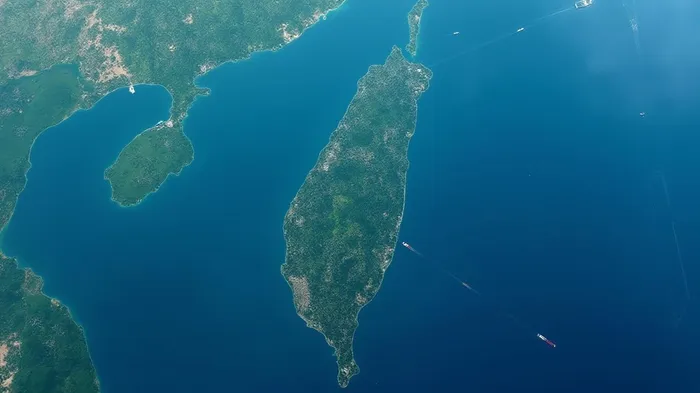
The Historical Dispute and Its Geopolitical Context
At the heart of the conflict is a legal battle over Taiwan’s status. MOFA argues that post-WWII treaties, including the 1951 Treaty of San Francisco and the 1952 Treaty of Taipei, resolved Taiwan’s sovereignty under the ROC, not the PRC. UN Resolution 2758, which recognized the PRC as China’s sole representative, did not mention Taiwan or grant it to Beijing. Taiwan’s stance aligns with its democratic identity and international legal frameworks, while China’s narrative seeks to legitimize its “one-China principle” through historical revisionism.
This clash occurs amid escalating U.S.-China competition and Russia’s alignment with Beijing. Xi’s participation in Russia’s 2025 Victory in Europe Day celebrations—marking Moscow’s victory over Nazi Germany—highlighted the strategic partnership between Russia and China, which increasingly challenges Western democratic norms. Taiwan’s commemoration of VE Day on May 8, 2025, framed its position as a defender of democratic values against what it calls a “new authoritarian bloc.”
Geopolitical Risks for Investors
The Taiwan-China-Russia nexus poses multifaceted risks to global supply chains and investment stability:
Semiconductor Supply Chain Vulnerabilities
Taiwan is the global hub for semiconductor manufacturing, with firms like Taiwan Semiconductor Manufacturing Company (TSMC) supplying 92% of advanced chips worldwide.
Escalating cross-strait tensions could disrupt production, as seen during the 2022 global chip shortage. Investors in tech, automotive, and AI must diversify supply chains to mitigate risks of geopolitical instability or sanctions.Energy and Critical Minerals Competition
The South China Sea—a critical shipping route for 30% of global trade—remains a flashpoint. China’s assertive naval activities risk supply chain bottlenecks for energy (oil, LNG) and critical minerals like lithium and cobalt, vital for EVs and renewables. Taiwan’s energy imports and its role in semiconductor-driven industries amplify its exposure to regional instability.Cybersecurity Threats
State-sponsored cyberattacks, such as Russia’s 2022 hack of the European Parliament, underscore vulnerabilities in tech infrastructure. Taiwan’s status as a tech leader makes it a prime target for cyber espionage, deterring investments without robust cybersecurity frameworks.
Opportunities Amid Geopolitical Turbulence
Despite risks, Taiwan’s strategic position offers opportunities for forward-thinking investors:
- Semiconductor Innovation: TSMC’s leadership in 3-nanometer chip technology positions it as a beneficiary of the global AI and 5G boom. The U.S. Inflation Reduction Act (IRA) and Japan’s subsidies for domestic semiconductor production could boost demand for Taiwanese expertise.
- Green Energy Transition: Taiwan’s solar and offshore wind projects align with global decarbonization goals. Investors in renewable energy stand to gain from subsidies and rising demand for clean power.
- Supply Chain Diversification: Companies are reshoring or nearshoring manufacturing to reduce reliance on Taiwan-China supply chains. This trend could benefit Southeast Asian markets like Vietnam or Indonesia, which are emerging as alternative hubs.
Conclusion: Balancing Risks and Rewards
Taiwan’s historical and legal disputes with China and Russia underscore the need for investors to adopt a nuanced risk-management strategy. Key data points reinforce this outlook:- Supply Chain Resilience: A 2024 S&P Global report warns that 70% of global supply chains remain vulnerable to geopolitical disruptions, with Taiwan’s semiconductor sector a top concern.- Market Sentiment: TSMC’s stock (TPE:2330) has shown resilience despite geopolitical headwinds, reflecting its irreplaceable position in the global tech ecosystem.- Critical Minerals Demand: Lithium prices are projected to rise by 15% in 2025, driven by EV adoption, while Taiwan’s semiconductor-driven demand for rare earth elements will remain robust.
Investors must prioritize diversification, monitor U.S.-China trade policies, and embed geopolitical risk analytics into decision-making. While Taiwan’s tech leadership offers growth opportunities, the cross-strait standoff and Russia-China alignment demand vigilance against supply chain shocks, cyber threats, and regulatory shifts. In 2025, success hinges on balancing exposure to Taiwan’s innovation ecosystem with hedging against the region’s escalating geopolitical volatility.







Comentarios
Aún no hay comentarios