
Taiwan's Defense Spending Surge: Unlocking Geopolitical-Driven Opportunities in Tech and Industrial Sectors
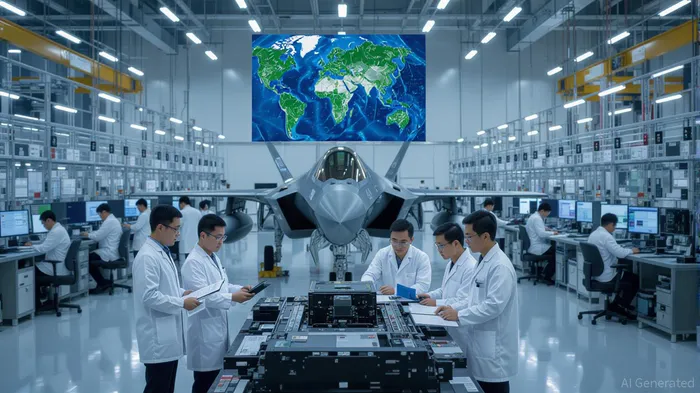
In an era of escalating geopolitical tensions and rapid technological advancement, Taiwan's 2026 defense budget announcement has ignited significant interest among investors and policymakers. According to a report by The Defense Post, Taiwan's defense spending is projected to rise by 22.9% in 2026, reaching 3.32% of GDP—a strategic pivot driven by both domestic security imperatives and U.S. pressure to bolster self-defense capabilities[2]. This surge in defense expenditure, coupled with Taiwan's robust economic performance, is poised to reshape regional tech and industrial sectors, creating a unique nexus of geopolitical risk and investment opportunity.
Economic Momentum from AI-Driven Exports
Taiwan's economic resilience underpins its ability to sustain this defense spending. The Office of the Chief Auditor of the Government (OCAC) recently revised its 2025 GDP growth forecast to 4.45%, fueled by a surge in AI-driven exports and private investment[3]. U.S. policy shifts, including relaxed restrictions on AI chip exports and accelerated data center construction, have further amplified demand for Taiwan's high-end ICT products. This economic tailwind is critical: as global supply chains reorient toward resilience, Taiwan's role as a semiconductor and advanced manufacturing hub becomes increasingly indispensable.
Defense-Linked Sectors to Watch
While the defense budget itself is a headline-grabber, its ripple effects on specific industries are where the investment story unfolds. Three sectors stand out:
Semiconductors and Advanced Manufacturing
Taiwan's defense modernization relies heavily on cutting-edge technologies, from radar systems to secure communication networks. The island's dominance in semiconductor production—particularly in foundry services for defense-grade chips—positions companies like TSMCTSM-- and UMCUMC-- to benefit from both commercial and military demand. Additionally, the resolution of supply bottlenecks for ICT products[3] suggests that firms involved in AI infrastructure (e.g., server manufacturers, materials suppliers) will see sustained growth.Aerospace and Defense Systems
Delays in U.S. arms deliveries—such as the M109A6 Paladin howitzers and F-16Vs—have exposed vulnerabilities in Taiwan's procurement timelines[3]. However, these challenges also highlight opportunities for local firms to develop indigenous capabilities. Companies engaged in maintenance, repair, and overhaul (MRO) services, as well as those producing subsystems for military platforms, are likely to gain traction.Logistics and Energy Security
The 2026 budget includes expanded funding for the Coast Guard Administration and military retirement benefits[2], signaling a broader emphasis on maritime security and personnel sustainability. This could drive demand for energy-efficient vessels, port infrastructure upgrades, and renewable energy solutions to power military bases—a sector where Taiwanese firms like Taipower and industrial conglomerates with green tech divisions may excel.
Challenges and Strategic Considerations
Investors must navigate risks, including U.S. supply chain delays and the inherent volatility of geopolitical tensions. As noted by War on the Rocks, prolonged delays in critical defense equipment deliveries could strain Taiwan's budgetary planning and force reliance on domestic alternatives[3]. However, this also incentivizes innovation in local supply chains, potentially creating long-term competitive advantages.
Investment Opportunities in a Geopolitical Context
The interplay between defense spending and economic growth offers a dual tailwind for investors. For instance, the 23.74% projected growth in real exports for 2025[3] underscores the importance of firms that cater to both defense and commercial markets. Additionally, the U.S. emphasis on “friend-shoring” aligns with Taiwan's strategic value, likely attracting foreign direct investment into its tech ecosystem.
Conclusion
Taiwan's defense spending surge is not merely a response to regional instability but a calculated strategy to fortify its position in global supply chains. For investors, the key lies in identifying firms that bridge the gap between national security and technological innovation. While challenges persist, the alignment of economic momentum and geopolitical necessity creates a compelling case for defense-linked investments in Taiwan and the broader Indo-Pacific region.







Comentarios
Aún no hay comentarios