
When the TACO Runs Out: Fiscal Fragility, Tariffs, and the Case for Defensive Investing
The global economy is playing a high-stakes game of chicken. As tariffs escalate and fiscal deficits balloon, investors are increasingly relying on the "TACO Trade" — a strategy built on the premise that markets will rebound when President Trump backpedals on threats — to navigate volatility. But the rules of the game are changing. With debt dynamics reaching crisis levels, geopolitical tensions simmering, and complacency masking deepening fragility, the TACO Trade may soon prove as risky as the policies it bets against. For investors, the time to pivot to defensive assets is now.
The TACO Trade: A Strategy Built on Chicken
The TACO Trade, short for "Trump Always Chickens Out," has been a profitable contrarian play since 2021. Investors buy dips triggered by tariff announcements, betting that markets will rebound when Trump delays or softens punitive measures. For example, after Trump's April 2025 "Liberation Day" tariffs on 60 countries sent the S&P 500 tumbling, buyers surged in, riding a 2.5% rebound when delays were announced. This pattern repeated as tariffs on Brazil (50%) and Canada (35%) failed to trigger lasting sell-offs.
Yet cracks are emerging. Critics like GMO's Ben Inker argue that overconfidence in TACO's predictability has inflated risks. The S&P's P/E ratio hit 35x trailing earnings — a level last seen in the dot-com bubble — while the VIX (volatility index) has dropped to 12, near historic lows. "Markets are pricing in perpetual TACO cycles," Inker warns, "but what if Trump doesn't retreat this time?"
Dalio's Warnings: A Systemic Storm Brewing
Ray Dalio's analysis frames the TACO Trade's risks as symptoms of a deeper crisis. The Bridgewater founder sees five converging forces threatening stability: unsustainable debt, political fragmentation, geopolitical realignment, climate risks, and AI-driven disruption.
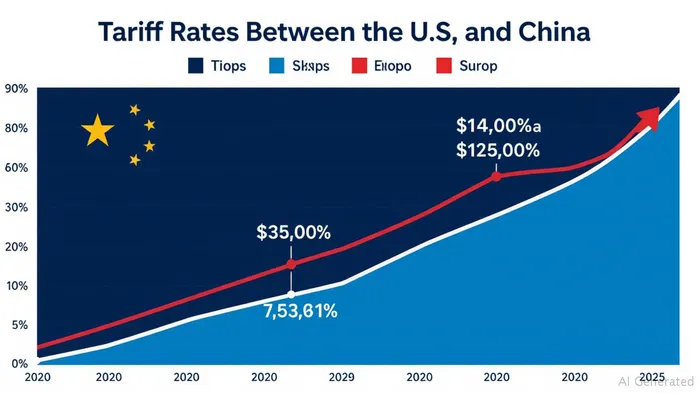
The U.S. national debt, now $36 trillion and growing by $1.5 trillion annually, is a ticking time bomb. Dalio warns that servicing this debt (interest payments alone hit $1.2 trillion in 2025) will force tough choices: spending cuts, tax hikes, or dollar devaluation. Meanwhile, U.S.-China trade tensions have spiraled, with tariffs averaging 125% on key goods. "This isn't just a trade war," Dalio says. "It's a sign of a collapsing monetary order."
Why the TACO Trade Could Backfire
The TACO Trade assumes markets will always rebound because Trump fears political fallout. But recent actions suggest this may no longer hold. In June 2025, tariffs on EU auto imports were delayed but not canceled, and China's 125% retaliatory tariffs remain in place. Even more concerning: the Fed's independence is under threat. Trump's repeated threats to fire Chair Powell — and his push to lower rates despite inflation — reveal a willingness to prioritize short-term gains over stability.
Investors who cling to TACO are betting on a repeat of past patterns. But as Dalio notes, markets often "reward the right behavior in the wrong way" until they don't. When the cycle breaks — perhaps when tariffs trigger a synchronized global recession — over-leveraged TACO players could face steep losses.
Building a Defensive Portfolio for the New Reality
The writing is on the wall: fiscal and geopolitical risks demand a shift from offense to defense.
1. Treasury Bonds as Ballast
U.S. Treasuries remain the ultimate "safe haven" despite low yields. The 10-year Treasury's 2.8% yield is unattractive, but its role as a liquidity anchor is unmatched. With the Fed likely to cut rates ahead of a recession, shorter-dated maturities (2–5 years) offer stability without excessive interest-rate risk.
2. Gold and Bitcoin: Hard Money for Hard Times
Dalio's call for "hard money" assets is prescient. Gold's $2,500/oz price (up 18% YTD) reflects its role as a hedge against dollar devaluation and systemic risk. BitcoinBTC--, while volatile, has surged to $95,000 amid its growing appeal as a "digital gold." ARK Invest's $2.4 million/coin prediction by 2030 underscores its potential as a store of value in a fragmented monetary system.
3. Sectors to Shelter In
Avoid trade-exposed industries like industrials and tech. Instead, focus on:
- Healthcare: Defensive demand for drugs and medical services is recession-proof.
- Utilities: Regulated cash flows and low correlation to equities provide stability.
- Critical Infrastructure: Sectors like cybersecurity and semiconductors are insulated due to their strategic importance.
4. Options and Hedging
Use put options on broad market ETFs (e.g., SPY) to cap downside risk. A "collar" strategy (long puts + short calls) can protect portfolios while limiting upside.
The Clock Is Ticking
The next 12 months will test investors' resolve. Key deadlines loom:
- July 9: Final decision on EU tariffs.
- September 2025: China's "Made in China 2035" plan, which could escalate tech trade wars.
- December 2025: U.S. debt ceiling debate, with default risks rising.
Dalio's warning that "this is worse than a recession" isn't hyperbole. The TACO Trade's success relied on a world where markets and politics could be reliably gamed. That era is ending. The time to move from betting on chicken to preparing for a crash is now.
Investment advice: Shift 30% of equity exposure to Treasuries, allocate 10% to gold/Bitcoin, and overweight healthcare/utilities. Use options to hedge the remaining 60% equity stake.






Comentarios
Aún no hay comentarios