
Systemic Risks and Opportunities in Digital Asset Treasury Companies (DATCOs)
The emergence of Digital Asset Treasury Companies (DATCOs) has introduced a novel asset class to global markets, blending traditional corporate structures with crypto-asset holdings. However, the recent proposal by MSCIMSCI-- to exclude DATCOs with over 50% of total assets in digital assets from its Global Investable Market Indexes has ignited a contentious debate about their systemic risks, regulatory challenges, and market implications. This analysis examines the structural vulnerabilities of DATCOs, the potential fallout from MSCI's exclusion criteria, and the broader implications for innovation and financial stability.
MSCI's Exclusion Criteria: A Double-Edged Sword
MSCI's proposed exclusion of DATCOs hinges on a 50% threshold for digital asset holdings, reclassifying such firms as investment funds rather than operating businesses. Critics, including StrategyMSTR-- Inc., argue this threshold is arbitrary and misaligns with the operational realities of DATCOs, which generate revenue through corporate activities rather than passive asset management according to Strategy Inc.. The exclusion, slated for implementation in February 2026, could trigger forced selling of $10–15 billion in crypto assets across 39 affected companies, creating liquidity shocks and destabilizing index tracking. JPMorgan analysts estimate that Strategy Inc. alone could face $2.8 billion in outflows, while the MSCI ACWI index may incur implementation costs of up to $225 million.
The debate extends beyond market mechanics. Strategy Inc. and others argue that the exclusion contradicts U.S. economic policy, including the Biden administration's push for a Strategic BitcoinBTC-- Reserve and expanded crypto access in retirement plans according to Bitcoin Magazine. Strive Asset Management has proposed an alternative "ex-digital asset treasury" index version to balance market exposure with selective avoidance, highlighting the need for nuanced classification frameworks.
Structural Vulnerabilities: Liquidity, Leverage, and Regulatory Gaps
DATCOs face inherent risks stemming from their reliance on volatile crypto assets and complex capital structures. The October 2025 cryptocurrency market crash erased $19 billion in leveraged positions within hours, exposing vulnerabilities in DATCOs' funding models. Many firms employ covered call strategies to generate income, but these strategies backfire during volatility spikes, as seen in the October crash. Additionally, DATCOs often depend on short-term credit facilities or private investment in public equity (PIPEs) to fund crypto acquisitions, creating fragility if market premiums collapse.
Regulatory uncertainty further compounds these risks. DATCOs operate in a legal gray area, subject to securities laws while holding assets in an unregulated crypto ecosystem. The lack of standardized disclosure frameworks for crypto holdings makes it difficult for investors and regulators to assess risk profiles. For example, companies like BitMine Immersion faced liquidity crises post-October 2025 crash, prompting board-sanctioned stock buybacks to stabilize valuations.
Operational dependencies also pose challenges. DATCOs require sophisticated risk management systems, including partnerships with prime brokers and custodians, to navigate crypto volatility. The absence of robust back-office infrastructure-such as valuation and settlement protocols-increases operational risk, particularly during market stress.
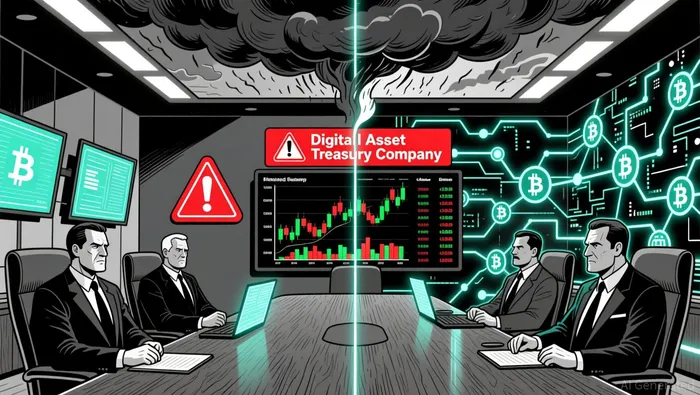
Regulatory Developments: A Shifting Landscape
Regulatory developments in 2025 have further complicated the DATCO landscape. The EU's Corporate Sustainability Reporting Directive and Sustainable Finance Disclosure Regulation (SFDR) have introduced stringent ESG reporting requirements, indirectly influencing MSCI's exclusion criteria. In the U.S., the GENIUS Act for payment stablecoins and the AI Action Plan signal a pro-innovation stance, yet DATCOs remain caught between regulatory ambiguity and market expectations according to Apex Group.
The International Sustainability Standards Board (ISSB) has also introduced global sustainability reporting standards, though regional divergences in green taxonomies create compliance challenges. These regulatory shifts underscore the need for DATCOs to adopt transparent, data-driven governance frameworks to align with evolving investor and regulatory expectations according to Sustainable Markets.
Systemic Implications and the Path Forward
The exclusion of DATCOs from major indices could have cascading effects. Forced selling of crypto assets may exacerbate market volatility, while tracking errors in institutional mandates could erode confidence in index-based investing. However, the crisis also presents opportunities for DATCOs to pivot toward active diversification strategies, such as yield generation through staking or revenue-generating operations, to reduce over-reliance on price appreciation.
For regulators and index providers, the challenge lies in balancing innovation with investor protection. A one-size-fits-all approach risks stifling technological progress, while lax oversight could amplify systemic risks. The debate over DATCOs' classification highlights the need for adaptive frameworks that recognize their hybrid nature-operational businesses with crypto-asset exposure-rather than rigid, balance-sheet-centric criteria according to Bitcoin Magazine.
Conclusion
Digital Asset Treasury Companies represent a transformative yet volatile segment of the financial ecosystem. MSCI's proposed exclusion criteria, while aimed at preserving index integrity, risk amplifying existing vulnerabilities in DATCOs' liquidity, leverage, and regulatory compliance. As the market navigates these challenges, stakeholders must prioritize transparency, innovation, and regulatory clarity to mitigate systemic risks while fostering sustainable growth in the digital asset space.





Comentarios
Aún no hay comentarios