
The Systemic Risks in DeFi: Lessons from Stream Finance's $93M Collapse
Operational Vulnerabilities: Leverage and External Fund Managers
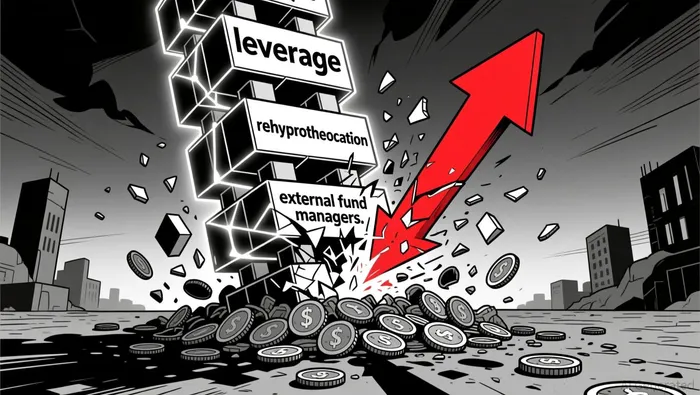
Stream Finance's collapse was rooted in its aggressive use of leverage and reliance on external fund managers. The protocol offered users yields of up to 12% by deploying a "four times exposure model," effectively borrowing and re-lending assets to amplify returns, according to a Deloitte outlook. However, this strategy created a precarious balance: when market conditions deteriorated, the protocol's liquidity mismatch-where short-term liabilities outpaced long-term assets-triggered a cascading failure, as documented in a Crypto.ro report.
The role of external fund managers further compounded the risk. While Stream Finance claimed to safeguard user deposits, on-chain data suggests these managers may have used customer funds to invest in leveraged strategies, exposing the protocol to volatile markets, as discussed in the Deloitte outlook. This lack of transparency and oversight highlights a critical flaw in DeFi governance: the assumption that decentralization inherently ensures security, without addressing the human and operational risks of centralized actors.
Structural Flaws: Rehypothecation and Interconnectedness
DeFi protocols often rely on rehypothecation-the practice of reusing collateral across multiple platforms-to maximize capital efficiency. Stream Finance's model exemplifies this: its synthetic assets (xUSD, xBTC, xETH) were backed by onchain collateral, which was then redeployed across protocols like EulerEUL--, Silo, and MorphoMORPHO--, according to the Crypto.ro report. While this approach optimizes liquidity, it creates systemic risk. A failure in one protocol can destabilize others, as seen when Stream Finance's debt spread across seven networks and involved counterparties like Elixir and MEV Capital, as noted in a Markets.com analysis.
The interconnectedness of these systems is particularly dangerous. Elixir's deUSD, for instance, held 65% of its reserves ($68 million) lent to Stream Finance, according to Markets.com. This interdependency means that a single point of failure-such as Stream Finance's liquidity crisis-can trigger a domino effect, eroding trust in the broader DeFi ecosystem.
Governance and Risk Management: A Missed Opportunity
Stream Finance's governance structure failed to mitigate these risks. The protocol suspended deposits and withdrawals after the $93 million loss, but this reactive measure came too late to prevent the depegging of XUSD, as Lookonchain reported. The incident underscores a broader issue in DeFi: protocols often prioritize innovation over risk management. While traditional finance employs rigorous stress testing and regulatory safeguards, DeFi's "code is law" ethos has left many protocols unprepared for real-world volatility.
Perkins Coie LLP's forensic investigation into Stream Finance's collapse is a step toward accountability, but it also highlights the need for proactive governance. As one analyst noted, "DeFi protocols must adopt automated controls, regular audits, and transparent reporting to rebuild trust," according to a OneSafe analysis. Without these measures, the ecosystem remains vulnerable to similar crises.
Broader Implications for DeFi
Stream Finance's collapse is a wake-up call for the DeFi community. It reveals that even protocols with high total value locked (TVL) can be fragile if they lack robust risk management and governance. The incident also raises questions about the sustainability of leveraged yield strategies, which have become a hallmark of DeFi but are inherently prone to volatility.
For investors, the lesson is clear: DeFi's promise of high returns comes with significant systemic risks. Protocols must prioritize transparency, diversify collateral sources, and limit leverage to avoid overexposure. Regulators, meanwhile, may need to step in to enforce minimum standards for risk management, particularly for stablecoins and protocols handling large volumes of user assets.
Conclusion
The collapse of Stream Finance is not just a cautionary tale-it's a blueprint for how DeFi's structural weaknesses can lead to catastrophic losses. As the industry matures, protocols must address these vulnerabilities head-on. The future of DeFi depends on balancing innovation with resilience, ensuring that the next generation of protocols can withstand the pressures of a volatile market.







Comentarios
Aún no hay comentarios