
Systemic Risks in the Crypto Asset Class Post-Terra Collapse: Fraud, Regulation, and Investor Protection
The Rise of Fraud Allegations and Legal Accountability
The Terra-Luna collapse was not merely a technical failure but a deliberate scheme orchestrated by its founder, Do Kwon. In August 2025, Kwon pleaded guilty to conspiring to commit commodities fraud, securities fraud, and wire fraud, admitting to fabricating claims about Terra's algorithmic stablecoin system and misrepresenting the independence of the Luna Foundation Guard (LFG). His actions included misappropriating LFG assets and disseminating a misleading third-party audit report to obscure the collapse's true causes.
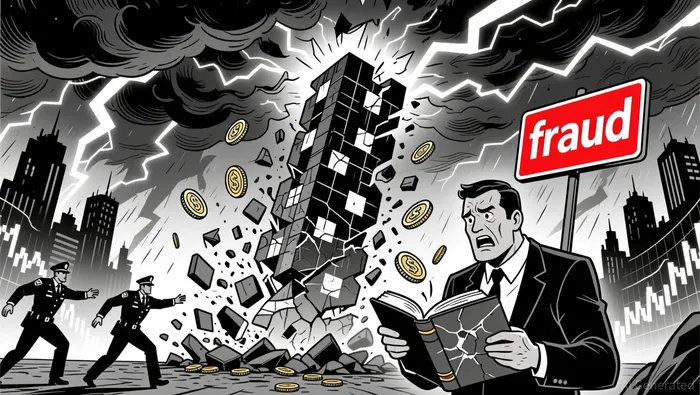
Parallel legal actions have targeted other actors. Galaxy Digital Holdings, for instance, agreed to a $200 million settlement with New York's Attorney General in 2025 to resolve allegations of market manipulation. The firm was accused of artificially inflating the value of Luna by concealing its sales of tokens previously purchased at a discount. These cases underscore a broader trend: regulators are increasingly holding crypto firms accountable for opaque practices and conflicts of interest that exacerbate systemic risks.
Regulatory Reforms to Mitigate Systemic Risks
The U.S. government has responded to the Terra crisis with a series of legislative and executive measures aimed at clarifying regulatory boundaries and enhancing transparency. In January 2025, the White House issued an executive order on digital financial technology, emphasizing responsible innovation while delineating roles for agencies like the SEC, CFTC, and FinCEN. This was followed by the passage of the GENIUS Act in July 2025, which established the first federal framework for stablecoin issuance. The act mandates that stablecoin issuers maintain 100% reserves in high-quality liquid assets and grants token holders priority claims in insolvency proceedings- directly addressing the risks exposed by Terra's algorithmic model.
The SEC has also recalibrated its approach, launching "Project Crypto" to modernize securities regulations and integrate blockchain technology into existing frameworks. While the agency paused high-profile enforcement actions in 2025 under the Trump administration, it simultaneously created a Crypto Task Force to balance innovation with investor protection. These efforts reflect a strategic pivot toward structured oversight, aiming to reduce ambiguities that allowed fraudulent schemes to flourish.
Investor Protection: From Reactive to Proactive Measures
Post-Terra reforms have prioritized investor protection through legislative clarity and global coordination. The CLARITY Act, enacted in 2025, distinguishes digital commodities from securities, placing the former under the CFTC's jurisdiction. This classification reduces regulatory arbitrage and provides clearer compliance guidelines for firms and investors. Additionally, the SEC's updated reporting standards for Registered Investment Advisers (RIAs) ensure that digital asset strategies align with evolving risk management protocols according to regulatory analysis.
Globally, jurisdictions like Hong Kong and Singapore have adopted proactive regulatory frameworks in 2025, moving beyond passive monitoring to enforce compliance with anti-money laundering (AML) and know-your-customer (KYC) requirements. These developments signal a broader institutionalization of crypto markets, where transparency and accountability are no longer optional but foundational.
Conclusion: A New Era of Risk Management
The Terra collapse served as a catalyst for systemic reforms in the crypto asset class. Fraudulent practices have been met with legal consequences, regulatory frameworks now address gaps in stablecoin governance, and investor protection measures are increasingly aligned with global standards. While challenges remain-such as cross-border enforcement and the adaptability of decentralized protocols-the post-Terra era demonstrates a maturing industry. For investors, the lesson is clear: systemic risks can be mitigated through robust regulation, but vigilance and due diligence remain essential in an asset class still defined by innovation and volatility.







Comentarios
Aún no hay comentarios