
Systemic Risk and Liability Shifting in Global Banking: Lessons from the Libor Scandal and Regulatory Evolution
The 2008 Libor scandal, in which major banks like BarclaysBCS--, UBSUBS--, and Royal Bank of Scotland (RBS) manipulated the London Interbank Offered Rate (LIBOR), exposed profound vulnerabilities in global banking systems. These institutions not only exploited operational and governance loopholes but also shifted legal and reputational risks onto individual traders and brokers, a strategy that underscored the challenges of holding corporations accountable for systemic misconduct. As the financial landscape evolves in 2025, the legacy of this scandal continues to shape regulatory frameworks, investor expectations, and the strategies banks employ to manage liability.
The Anatomy of Liability Shifting: From Traders to Institutions
Barclays' 2009 admission that it submitted artificially low Libor rates to mask its financial instability during the 2007–2008 crisis exemplifies how banks externalized blame. The bank's actions, which led to a £59.5 million fine from the Financial Services Authority (FSA), were framed as isolated trader misconduct rather than systemic institutional failure. Similarly, UBS and RBS were implicated in coordinated rate-rigging efforts, with traders like Tom Hayes leveraging their positions to generate profits while deflecting scrutiny from senior management.
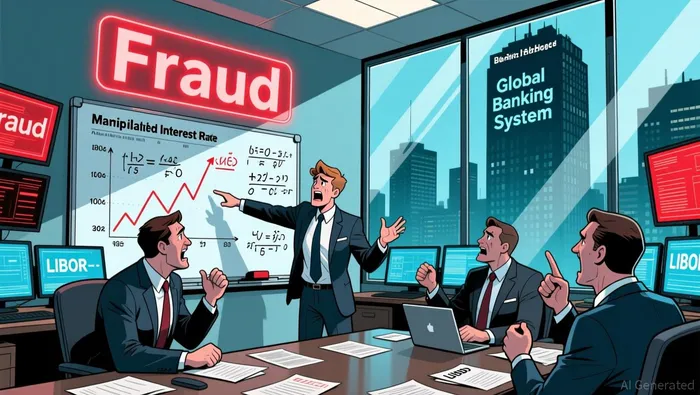 Regulators initially struggled to hold institutions accountable. Courts in the U.S. and U.K. overturned several convictions due to insufficient evidence of fraudulent intent, allowing banks to avoid full legal exposure. This legal ambiguity reinforced a pattern of liability shifting, where banks emphasized individual accountability over corporate governance failures. For instance, Barclays' leadership argued that rate adjustments were made to stabilize the bank during the crisis, framing its actions as prudent risk management rather than deliberate fraud.
Regulatory Reforms: From Libor to Systemic Resilience
The scandal catalyzed sweeping regulatory changes. The UK's Wheatley Review, which followed the scandal, recommended criminalizing false benchmark submissions and transferring Libor administration to the Intercontinental Exchange (ICE) in 2014. These reforms were part of broader efforts to address systemic risk, including the introduction of the Senior Managers and Certification Regime (SM&CR) in the UK and Australia's Banking Executive Accountability Regime (BEAR). These frameworks aimed to tie executive accountability to institutional outcomes, reducing the ability of banks to deflect blame.
The transition away from Libor itself marked a pivotal shift. By 2025, the financial system had largely moved to alternative rates like the Secured Overnight Financing Rate (SOFR) in the U.S. and the Sterling Overnight Index Average (SONIA) in the UK. This transition, driven by regulatory mandates and market distrust, reduced the vulnerability of benchmark rates to manipulation. However, the process revealed lingering operational and contractual risks, as banks had to renegotiate trillions in Libor-linked instruments.
2024–2025: New Frontiers in Systemic Risk and Accountability
Recent regulatory actions highlight the ongoing tension between institutional accountability and systemic resilience. The Financial Stability Board has maintained a list of 29 Global Systemically Important Banks (G-SIBs) for 2025, adjusting capital buffer requirements to reflect evolving risks. Meanwhile, U.S. regulators have proposed refocusing bank supervision on material financial risks, eliminating reputation risk as a supervisory factor-a move that aligns with broader deregulatory trends but emphasizes stricter governance in areas like AI and cybersecurity.
Emerging threats, such as geopolitical tensions and digital innovation, are reshaping liability landscapes. The European Central Bank (ECB) has updated its supervisory approach to address cross-border risks, including cyber threats and trade policy uncertainties. In the U.S., Basel 3.1 reforms are being implemented unevenly, creating compliance challenges for global banks. These developments underscore the need for robust governance frameworks, as institutions face heightened scrutiny over third-party dependencies and operational resilience.
Implications for Investors and the Path Forward
For investors, the post-Libor era underscores the importance of evaluating banks not just by their financial performance but by their governance structures and regulatory compliance. Institutions that have embraced reforms like SM&CR and invested in digital resilience are better positioned to navigate systemic risks. Conversely, those clinging to outdated liability-shifting tactics may face reputational and legal setbacks.
The Libor scandal's legacy is a cautionary tale: systemic risk cannot be mitigated through superficial accountability. As 2025 unfolds, the focus on institutional transparency, executive responsibility, and adaptive regulatory frameworks will remain critical to restoring trust in global banking.





Comentarios
Aún no hay comentarios