
Sysco's Labor Tensions and Supply Chain Risks: Operational Vulnerabilities and Stock Valuation Implications
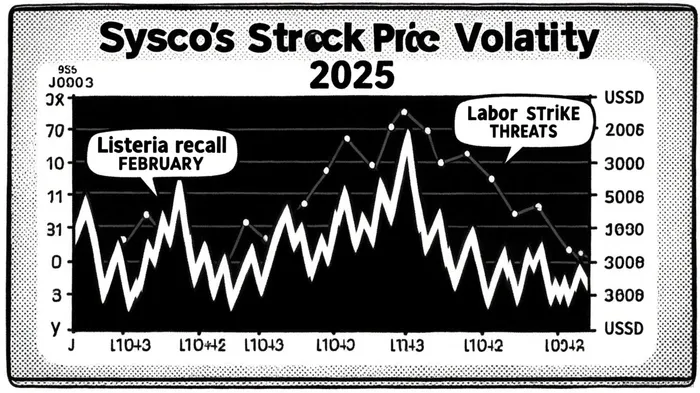
Sysco Corporation (SYY), a cornerstone of the U.S. foodservice industry, faces a confluence of operational and labor-related challenges that threaten to undermine its financial performance and investor confidence. As the company navigates escalating labor tensions, a high-profile Listeria outbreak, and macroeconomic headwinds, its ability to balance short-term risks with long-term growth strategies will be pivotal in determining its stock valuation trajectory.
Labor Tensions: A Looming Operational Disruption
The most immediate threat to Sysco's operations stems from its ongoing labor disputes with the International Brotherhood of Teamsters (IBT). In the Houston area, where the existing contract with warehouse and delivery workers expires on January 17, 2025, negotiations have reached a stalemate. SyscoSYY-- has offered an 8.5% wage increase for warehouse workers and over 9% for delivery personnel in the first year of a new contract, with cumulative increases reaching 20% over the agreement's duration. However, the union has dismissed these proposals as inadequate, citing poor healthcare coverage and unmet industry standards, according to a Nasdaq article.
A strike, if executed, would disrupt critical supply chains, including deliveries to hospitals, schools, and restaurants in the Houston metropolitan area-a market vital to Sysco's U.S. operations. This mirrors past strikes at other Sysco locations in 2022 and 2023, which forced the company to concede to significant contract improvements, according to the Teamsters. The current standoff reflects a broader trend of rising labor costs in the logistics sector, where companies like Sysco must balance competitive wages with profitability.
Supply Chain Risks: A Listeria Outbreak Exposes Weaknesses
Compounding these labor challenges is a severe supply chain crisis triggered by a Listeria monocytogenes outbreak in February 2025. Linked to frozen nutritional shakes supplied by a Lyons Magnus facility in Fort Wayne, Indiana, the outbreak resulted in 42 cases, 41 hospitalizations, and 14 deaths across 21 states, according to a Dexovise analysis. Sysco's swift recall of affected products-including Sysco Imperial and Ready Care brands-highlighted vulnerabilities in its supplier oversight. Despite the company's claims of "industry-leading food safety protocols," the incident revealed lapses in hygiene, validation of kill-steps, and HACCP compliance at the supplier facility, as noted in a StockTITAN report.
The financial fallout was immediate. Sysco incurred an estimated $100 million in losses from inventory write-offs, recall logistics, and legal liabilities, while its stock price dropped 4% following the announcement, according to Food Poisoning Bulletin. Analysts have since tempered their expectations, with Jake Bartlett of Truist Securities lowering the price target for SYYSYY-- shares from $85 to $83, citing concerns over the company's ability to sustain growth amid such disruptions, as reported in a Monexa blog post.
Macroeconomic Headwinds and Strategic Responses
Beyond labor and supply chain issues, Sysco faces broader macroeconomic pressures. Tariff risks, particularly for key imports like tomatoes from Mexico, and weak consumer confidence have dampened demand. In Q3 2025, revenue grew by 1.1% year-over-year but fell short of Wall Street expectations, partly due to adverse weather and declining restaurant traffic, as detailed in a Distribution Strategy article. To mitigate these risks, the company has established a tariff management task force and accelerated investments in new distribution centers and cost-saving measures, according to a Monexa analysis.
However, these initiatives come at a cost. Enhanced supplier monitoring, third-party certifications, and traceability technologies-recommended by industry experts to prevent future outbreaks-will likely increase short-term operating expenses; the Dexovise analysis also warned of such incremental costs. For a company reporting adjusted EPS of $0.93 in Q2 2025, these added expenses could pressure margins in the near term, a point the Monexa blog post also highlighted.
Stock Valuation Implications
The interplay of these risks suggests a mixed outlook for Sysco's stock. On one hand, the company's strong sales growth ($20.2 billion in Q2 2025) and international expansion efforts provide a foundation for long-term resilience (as noted in the Distribution Strategy article). On the other, the combination of potential strikes, supply chain disruptions, and macroeconomic headwinds creates significant near-term uncertainty.
Investors must weigh the likelihood of operational disruptions against Sysco's proactive measures. For instance, the company's tariff task force and supplier diversification strategies could mitigate some external risks. Yet, the labor disputes and Listeria incident underscore a pattern of operational vulnerabilities that may persist unless systemic changes are implemented.
Conclusion
Sysco's operational vulnerabilities-rooted in labor tensions and supply chain risks-pose a clear threat to its financial stability and stock valuation. While the company's long-term growth initiatives and international expansion offer hope, the immediate challenges of potential strikes, regulatory scrutiny, and macroeconomic pressures cannot be ignored. For investors, the key question is whether Sysco's management can execute its mitigation strategies effectively enough to offset these risks. Until then, the stock remains a high-risk, high-reward proposition.





Comentarios
Aún no hay comentarios