
The Syrian Renaissance: Capitalizing on Post-Sanction Rebuilding and Regional Integration
The U.S. decision to lift sanctions on Syria in 2024 has ignited a geopolitical and economic firestorm, opening the door to one of the most ambitious reconstruction booms in modern history. With Syria’s new government under Ahmed al-Sharaa signaling alignment with U.S. and Gulf interests, the stage is set for strategic investors to seize opportunities in energy, infrastructure, and regional trade. But the prize comes with risks—a high-stakes game where timing, due diligence, and geopolitical foresight will separate winners from losers.
Infrastructure: The Backbone of the New Syria
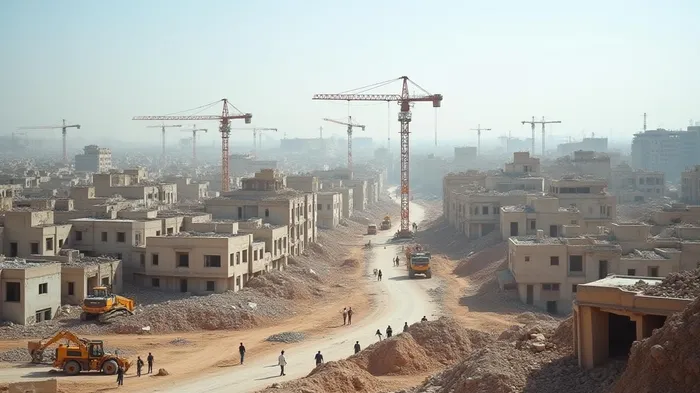
Syria’s infrastructure lies in ruins after over a decade of war, with estimates of $400 billion needed to rebuild roads, ports, power grids, and public utilities. The removal of U.S. sanctions unlocks access to global financing channels like SWIFT, enabling Gulf-backed firms to lead the charge. Saudi Arabia’s Al-Ghad Industrial Group and Turkey’s Yüksel Construction are already positioning to secure contracts in transportation and urban development.
Syria’s reconstruction boom could mirror Iraq’s post-2003 recovery, with annual infrastructure spending surging to 15–20% of GDP. Investors should prioritize firms with expertise in rapid urbanization and public-private partnerships, as al-Sharaa’s government seeks to fast-track projects.
Energy: Black Gold in the Levant
Syria’s energy sector, once paralyzed by sanctions, holds vast untapped potential. With proven oil reserves of 2.5 billion barrels and natural gas reserves exceeding 240 billion cubic meters, the country could become a regional energy hub. The U.S. sanctions removal paves the way for majors like ExxonMobil and TotalEnergies to partner with local firms such as Syria Petroleum Company, leveraging Gulf financing to revive production.
Critically, Syria’s geographic position between the Mediterranean and Gulf markets positions it to export energy via pipelines to Lebanon, Jordan, and Turkey—a strategic play for firms in logistics and cross-border infrastructure.
Real Estate: A Gold Mine in Wartorn Cities
Damascus and Aleppo, once thriving metropolises, now stand as prime real estate opportunities. With diaspora remittances expected to surge and Gulf sovereign wealth funds targeting high-yield markets, developers like Arabtec Holding (UAE) and Emaar Properties are eyeing residential and commercial projects. Al-Sharaa’s government has already announced plans to rezone war-damaged areas for mixed-use developments, with tax incentives for foreign investors.
Early movers can secure land at depressed prices, especially in strategic locations near border crossings with Jordan and Turkey—key nodes for regional trade corridors.
Risks: Navigating the Minefield
- Geopolitical Volatility: Israel’s opposition to Iranian influence in Syria remains a flashpoint. Any escalation could destabilize investments. Monitor U.S.-Israel relations and track sanctions on Iran-linked entities via the OFAC database.
- Governance Uncertainty: Al-Sharaa’s militant past and exclusion of minorities from power raise concerns. Investors must pressure the regime to adopt inclusive policies and commit to minority rights.
- External Dependency: Syria’s reliance on Gulf and U.S. funding creates vulnerability. Diversify portfolios with firms operating in multiple regional markets (e.g., Jordan, Egypt).
The Call to Action: Move Now or Miss the Boom
The window for early-stage capital allocation is narrowing. The U.S. sanctions removal is a irreversible shift, and Gulf states are already mobilizing:
- Energy Plays: Invest in firms with Syria exploration licenses or joint ventures with Gulf partners.
- Infrastructure Funds: Target private equity vehicles focused on Levant reconstruction.
- Regional Trade Hubs: Back logistics firms building cross-border warehouses and ports in Jordan-Turkey-Syria corridors.
The risks are real, but the upside is colossal. Syria’s reopening represents a once-in-a-generation opportunity to shape a nation’s economic destiny—and profit handsomely in the process. For investors, hesitation is the greatest peril. Act swiftly, or watch others reap the rewards of the Syrian Renaissance.
The clock is ticking. The moment to position for Syria’s comeback is now.







Comentarios
Aún no hay comentarios