
Syria’s European Gambit: A New Era of Investment or a Minefield?
The visit of Syria’s interim leader Ahmad al-Sharaa to Paris in May 2025 marked a seismic shift in the nation’s diplomatic trajectory—and a potential goldmine for investors daring enough to bet on its chaotic rebirth. This historic tripTRIP--, the first by Syrian leadership to Europe since the fall of Bashar al-Assad, signals a calculated gamble to reset ties with Western powers, secure sanctions relief, and attract capital to rebuild a shattered economy. But as 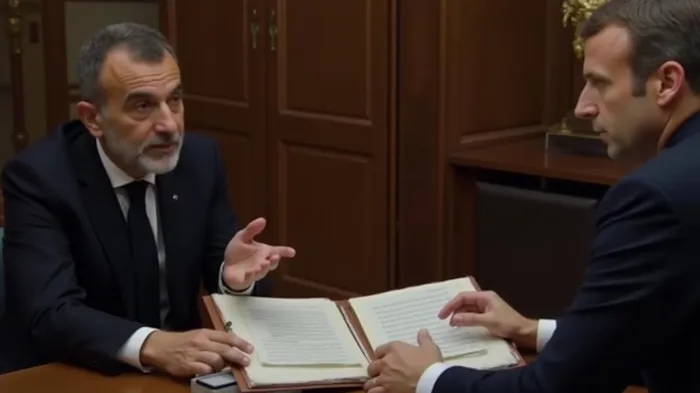 , the question remains: Is this a once-in-a-lifetime opportunity or a trap riddled with political and financial explosives?
Geopolitical Reset: France’s Bold Play for Influence
France’s embrace of al-Sharaa—despite his ties to Hayat Tahrir al-Sham (HTS), an al-Qaeda-linked group—reflects a stark pragmatism. Macron’s government sees Syria as a geopolitical vacuum to fill, countering Russian and Iranian influence while positioning France as a broker of Middle Eastern stability. The payoff? A slice of Syria’s $500–600 billion reconstruction market.
Take French logistics giant CMA CGM, which sealed a landmark 30-year deal to manage Syria’s vital port of Latakia. The stock has surged 20% since January 2025 on rumors of Syrian contracts, illustrating how even whispers of reconstruction can electrify markets. But investors must ask: Will Syria’s new leaders deliver the stability needed to turn these contracts into profit?
Economic Opportunity: The “Ground Zero” Playbook
Syria’s economy, ravaged by 14 years of civil war, offers a blank slate for sectors starved of investment. Key opportunities include:
- Infrastructure Rebuilding: Roads, bridges, and utilities lie in ruins. The World Bank estimates Syria’s GDP at just $10 billion in 2023—85% below 2010 levels. A recovery could supercharge demand for construction materials, energy systems, and urban planning.
- Energy Revival: Pre-war, Syria produced 380,000 barrels of oil daily. Post-Assad, it aims to attract Gulf investors to revive production. Qatar’s recent electricity deal and revived gas pipeline projects with Turkey hint at a Middle Eastern energy renaissance.
- Tourism Turnaround: Pre-war, tourism contributed 12% of GDP. Iconic sites like Palmyra and the Citadel of Salahuddin could attract adventurous travelers—if security improves.
Risks: The Minefield Beneath the Mirage
Beneath the surface lies a minefield of risks:
- Sanctions Volatility: While the EU and U.S. have eased restrictions, full relief depends on Syria’s progress on counterterrorism and minority protections. A single sectarian clash or al-Qaeda-linked attack could freeze the process.
- Geopolitical Turf Wars: Turkey’s $2 billion annual trade with Syria and its support for HTS give it outsized influence. Meanwhile, Israel’s annexation of the Golan Heights and strikes against Syrian government forces complicate territorial claims.
- Internal Instability: Over 1,000 died in recent Sunni-Alawite clashes, and HTS’s extremist past fuels distrust. The interim government’s control over armed factions remains unproven.
Investment Strategy: Proceed with Extreme Caution
For investors, Syria is a “high-risk, high-reward” proposition. Here’s how to approach it:
- Avoid Direct Exposure: Steer clear of Syrian equities (there are none) or debt until governance reforms and sanctions relief are locked in.
- Play the Proxies: Back companies like CMA CGM or Turkish firms like Yapi Merkezi (a major Syrian infrastructure player) that stand to benefit from reconstruction contracts.
- Monitor Benchmarks: Track Syria’s progress on U.S./EU conditions—e.g., dismantling Captagon drug networks or disarming militias. A breakthrough here could trigger a flood of capital.
- Wait for the Green Light: Watch for World Bank/IMF involvement as a sign of international confidence. Their return would validate Syria’s economic turnaround.
Conclusion: The Calculated Gamble
Syria’s potential is undeniable: a young population, strategic location, and $500 billion in pent-up demand. But the risks are existential.
The numbers tell the story:
- 90% of Syrians live below the poverty line, per UN data.
- Over 90% of pre-war GDP has been lost, with reconstruction costs exceeding five times current GDP.
- CMA CGM’s stock has risen 20% on Syria-related deals, showing how even incremental progress can spark investor euphoria.
For now, Syria is a “wait-and-see” play. Investors should treat it like a stock in the “too risky” portfolio—until the minefield is cleared. A single misstep by al-Sharaa’s government or a geopolitical flare-up could derail everything. But if stability takes root, the payoff could rival post-WWII Germany or postwar South Korea. Stay vigilant, stay patient, and pray for peace.







Comentarios
Aún no hay comentarios