
Synthetix's Ethereum Perpetual DEX: A Game-Changer for On-Chain Derivatives and DeFi Liquidity
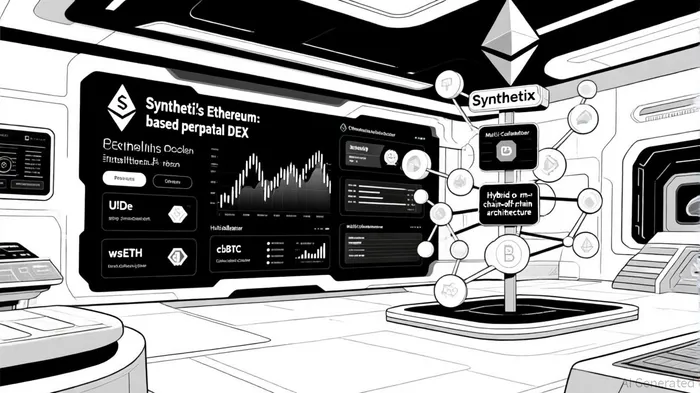
Synthetix's upcoming launch of Ethereum's first perpetual decentralized exchange (DEX) in Q4 2025 represents a seismic shift in the decentralized finance (DeFi) landscape. By addressing critical gaps in on-chain derivatives trading and unlocking new liquidity avenues, this innovation could redefine how traders, institutions, and DeFi protocols interact with crypto assets. Let's dissect the implications.
The Problem: Ethereum's Derivatives Gap
Ethereum, despite its dominance in DeFi total value locked (TVL), has long lacked a native perpetual futures market. This absence has forced liquidity to migrate to Layer 2 (L2) solutions and other chains, fragmenting the ecosystem and limiting capital efficiency. According to a report by Synthetix's blog, “Ethereum needs a perp DEX to unify liquidity and enable institutional-grade trading on Layer 1” [1]. The chain's deep stablecoin liquidity and regulatory clarity make it an ideal foundation for high-performance derivatives, yet the lack of native perpetuals has left a void that centralized exchanges and L2 DEXs have partially filled.
The Solution: Gasless Trading and Multi-Collateral Flexibility
Synthetix's DEX introduces a hybrid on-chain/off-chain architecture to mitigate Ethereum's high gas costs and latency while ensuring secure settlement. Traders can execute gasless trades with zero settlement fees, a critical feature for retail participation [2]. The platform supports multi-collateral margin trading, allowing users to deposit assets like Ethena's sUSDe, Lido's wstETH, and Coinbase's cbBTC without selling their underlying holdings. This design not only preserves yield-generating exposure but also enables complex strategies such as basis trading—where users short ETH perpetuals while earning staking rewards on wstETH [3].
Market Impact: Stress-Testing and Liquidity Unleashed
To validate the platform's robustness, SynthetixSNX-- is hosting a $1 million trading competition in October 2025, inviting 100 top traders and pre-depositors to trade BTCBTC--, ETH, SOL, and DOGEDOGE-- [4]. This initiative serves as both a stress test and a liquidity incentive, with winners receiving SNXSNX-- token rewards and other benefits. Analysts at OneSafe Blog argue that the DEX's integration with protocols like AaveAAVE-- will amplify Ethereum's composability, creating a flywheel effect for DeFi liquidity [5].
Strategic Reforms and TVL Growth
Synthetix's May 2025 staking reform—a dynamic incentive model and multi-collateral framework—has already driven a 23% increase in SNX staking and boosted TVL to $4.2 billion [6]. These reforms, combined with the DEX's launch, position the platform to attract both retail and institutional capital. By eliminating taxable events through non-cash collateral and offering yield-earning opportunities, Synthetix is addressing key pain points for traders and investors [7].
The Bigger Picture: Reunifying DeFi Liquidity
The DEX's launch could reunify liquidity that has splintered across L2s and other chains. Ethereum's security and composability, when paired with Synthetix's hybrid infrastructure, create a compelling value proposition for institutional players. As noted in Capwolf's analysis, “This move could shift market dynamics, increasing Ethereum's share in derivatives and enabling new DeFi strategies that leverage hedging and leverage without cross-chain coordination” [8].
Conclusion: A New Era for On-Chain Derivatives
Synthetix's EthereumETH-- perpetual DEX is more than a product—it's a catalyst for redefining on-chain derivatives. By solving gas costs, enabling multi-collateral flexibility, and stress-testing liquidity through real-world incentives, the platform is poised to unlock trillions in dormant DeFi capital. For investors, this represents a high-conviction opportunity to participate in a foundational shift in crypto infrastructure.






Comentarios
Aún no hay comentarios