
The Synergy Play in Post-Acquisition Retail: Dick's Sporting Goods' Strategic Move and Its Implications
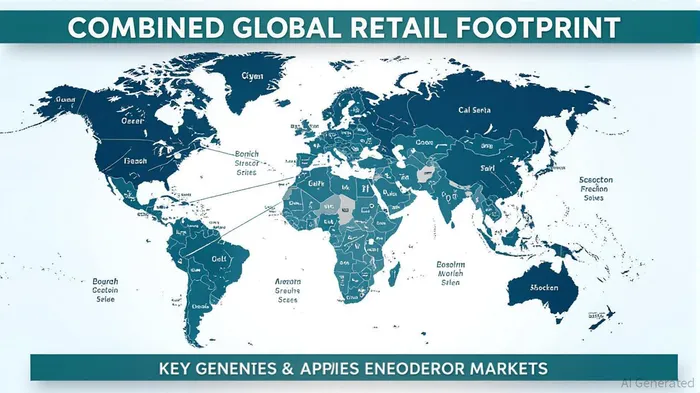
The acquisition of Foot Locker by Dick's Sporting GoodsDKS-- for $2.4 billion in May 2025 represents one of the most audacious bets in recent retail history. By merging the suburban sporting goods expertise of Dick'sDKS-- with Foot Locker's entrenched presence in urban sneaker culture, the combined entity now commands a global retail footprint of over 3,200 stores across 20 countries. This move, however, raises critical questions about M&A-driven value creation, integration risks, and the long-term sustainability of synergies in an industry where past megadeals have often underperformed.
Strategic Rationale: Consolidating Power in a $300 Billion Market
The acquisition is a calculated play to dominate the confluence of sport and culture. Dick's, long a leader in traditional sporting goods, sought to bridge the gap with the younger, fashion-forward consumer—a demographic Foot Locker has courted for decades. According to a report by Market Report Analytics, the combined entity now operates within the $300 billion global sports retail market, leveraging Foot Locker's mall-based retail model and Dick's disciplined inventory management to create a “best-of-both-worlds” proposition [1].
The deal also strengthens relationships with key suppliers like NikeNKE--, Adidas, and Puma, whose product lines are central to both brands. As stated by Dick's management in its investor presentation, the acquisition allows for “enhanced data insights and targeted marketing strategies” to capitalize on consumer trends [3]. This is particularly significant in an era where sneaker culture has evolved into a multibillion-dollar subindustry, driven by limited-edition drops and social media virality.
Financial Synergies: Promises and Pitfalls
The financial case for the acquisition hinges on $100–125 million in cost synergies and earnings-per-share (EPS) accretion by fiscal year 2026. Data from Reuters indicates that Dick's raised its full-year 2025 comparable sales growth outlook to 2.0–3.5% following the deal, signaling confidence in the integration [4]. However, skeptics point to Foot Locker's recent financial struggles—a 2.6% sales decline and a $363 million loss in Q2 2025—as red flags.
Analysts at Forbes caution that integrating Foot Locker's lower-margin international operations could dilute Dick's profitability, particularly in markets where the acquired brand relies heavily on markdowns to clear inventory [6]. Moreover, the structural challenges of merging two distinct retail models—Dick's suburban, full-price strategy versus Foot Locker's mall-based, discount-driven approach—pose operational risks. As one industry observer noted, “This isn't just about combining balance sheets; it's about reconciling cultural and operational DNA” [5].
Analyst Sentiment: A Tale of Two Stock Reactions
The market's initial reaction to the deal was telling. Foot Locker's shares surged over 80% on the acquisition announcement, while Dick's stock plummeted more than 16%—a stark divergence reflecting divergent investor sentiment. According to a report by Investing.com, this disparity underscores concerns about the risks of overpaying for a struggling brand and the complexities of integration [2].
While management insists the deal is “accrual-free” and will deliver synergies without one-time costs [3], critics argue that the retail sector's poor track record with M&A—exemplified by failed deals like the Gymboree acquisition—casts doubt on such optimism. A CNBC analysis highlights that “consumer retail M&A often destroys value due to integration missteps and brand dilution” [6], a cautionary note for Dick's shareholders.
Leadership and Execution: The X Factor
The success of this merger may ultimately depend on execution. Ann Freeman, a former Nike executive, has been appointed President of Foot Locker North America, signaling a strategic pivot toward revitalizing the brand's cultural relevance. Her appointment suggests a focus on leveraging her experience in athletic footwear to bridge the gap between Dick's and Foot Locker's customer bases.
However, maintaining brand identity while achieving operational efficiency is a delicate balancing act. As stated in Dick's definitive proxy statement, the company plans to operate Foot Locker's portfolio—Kids Foot Locker, Champs Sports, and atmos—as standalone units [2]. This approach aims to preserve the distinctiveness of each brand but could complicate cost synergies if integration is limited.
Conclusion: A High-Stakes Bet on Synergy
Dick's acquisition of Foot Locker is a bold, high-stakes bet on the future of sports retail. If executed well, the deal could position the combined entity as a global leader, capitalizing on sneaker culture's enduring appeal and omnichannel innovation. Yet, the path to value creation is fraught with challenges: integrating disparate retail models, managing Foot Locker's financial liabilities, and proving that M&A can deliver on its promise in a sector where it often falls short.
For investors, the key will be watching whether Dick's can transform this acquisition from a strategic vision into a tangible, profitable reality. The next 12–18 months will be critical—not just for the company, but for the broader debate about the role of M&A in retail's evolving landscape.







Comentarios
Aún no hay comentarios