
The Synergy of Free Markets and Veteran Talent in the AI Era
The U.S. free-market system is undergoing a transformative shift as artificial intelligence (AI) reshapes industries and redefines economic resilience. At the heart of this evolution lies an often-overlooked yet critical force: U.S. veterans. Their unique skill sets-honed through military service-align seamlessly with the demands of AI-driven innovation, creating a powerful synergy that is bolstering both private-sector growth and national security.
Veteran Entrepreneurship and AI-Driven Economic Resilience
States like Florida, Pennsylvania, and South Carolina are leading the charge in leveraging veteran talent for AI innovation. According to a report by the National Invest In Veterans Week (NIVW), veteran-owned businesses in these states have surged by 27% over the past five years, with 67% of veteran entrepreneurs expressing a strong interest in integrating AI tools into their operations. This enthusiasm is not merely aspirational: 42% of these businesses have already experimented with AI-driven automation, demonstrating a tangible commitment to leveraging technology for competitive advantage.
Digital platforms such as FloridaVeterans.com and SouthCarolinaVeterans.com are pivotal in this transition. These platforms provide training in AI and cybersecurity, equipping veterans with the technical expertise needed to thrive in high-demand fields. For example, veterans with military supply chain experience are applying AI to optimize logistics and inventory management, while those with security backgrounds are deploying AI-driven threat detection systems in cybersecurity roles. Such adaptations underscore how veterans' mission-driven mindset and leadership skills translate into AI-centric problem-solving.
The Free Market's Role in National Security and AI Innovation
Beyond entrepreneurship, the free-market system is a cornerstone of U.S. military AI capabilities. A report by emphasizes that private-sector innovation is essential for rapidly developing AI systems to counter emerging threats, such as Houthi attacks in the Red Sea. By fostering competition and agility, the free market accelerates the development of real-time data analysis tools, autonomous systems, and cyber defense mechanisms-capabilities critical to maintaining national security.
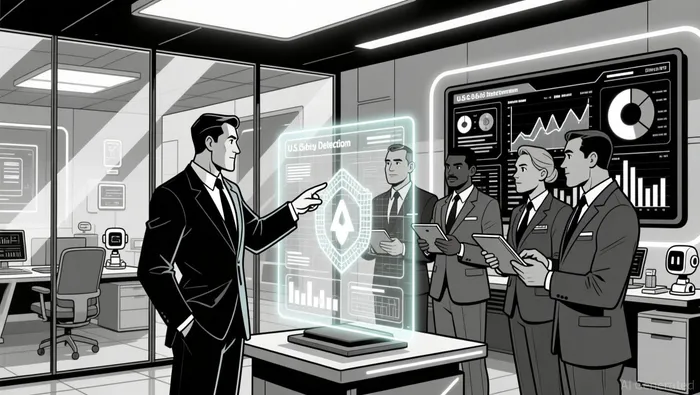
This dynamic is reflected in the military AI market, projected to grow from $14.3 billion in 2024 to $29 billion by 2030. Veterans, many of whom transition into defense contracting or AI-related roles, are integral to this expansion. Their firsthand understanding of military operations ensures that AI solutions are not only technologically advanced but also operationally relevant.
Institutional Support and the Future of Veteran Integration
The Department of Veterans Affairs (VA) is also embracing AI to enhance service delivery. As stated in the VA's strategic plan, AI-powered digital assistants and clinical tools are streamlining benefit transactions and healthcare services, reducing administrative burdens. This institutional adoption of AI not only improves veteran outcomes but also serves as a training ground for veterans entering the broader AI workforce.
Initiatives like Operation Civilian Success further bridge the gap between military and civilian AI careers. By targeting fields such as logistics, cybersecurity, and data analysis, the program ensures veterans can apply their expertise in sectors where AI is a game-changer. For instance, AI-driven route optimization in logistics-a field veterans often dominate-reduces costs and enhances efficiency, directly contributing to economic resilience.
Strategic Implications for Investors
For investors, the intersection of free-market dynamism and veteran adaptability presents compelling opportunities. States prioritizing AI readiness, such as Florida and South Carolina, are creating ecosystems where veteran-led startups can thrive. These regions are attracting capital by offering targeted training, digital infrastructure, and partnerships with AI-focused corporations.
Moreover, the military AI market's projected growth signals long-term value in companies that collaborate with veterans to develop defense-related AI solutions. Investors who align with this trend are not only capitalizing on technological advancement but also supporting a workforce that embodies resilience, discipline, and innovation.
Conclusion
The U.S. free-market system's ability to harness AI and veteran talent is a testament to its adaptive strength. By empowering veterans with the tools to excel in AI-driven industries, the nation is not only fostering economic resilience but also securing its strategic edge in an increasingly complex global landscape. As the lines between military and civilian innovation blur, the synergy between these forces will remain a defining feature of America's economic and technological future.







Comentarios
Aún no hay comentarios