
Switzerland's Tariff Negotiation Breakthrough: Implications for Export-Driven Sectors
Strategic Positioning in Global Trade
The 15% tariff rate, if finalized, would align Switzerland with the European Union's existing tariff structure, effectively neutralizing a key competitive disadvantage against its European peers, according to DevDiscourse. For instance, Germany's machinery and pharmaceutical sectors have maintained resilience under the 15% EU-wide tariff, . despite a 14% year-over-year decline, according to Tekedia. Japan, meanwhile, has leveraged a July 2025 bilateral trade agreement to cap U.S. tariffs on its machinery and automotive exports at 15%, , according to AFS Law.
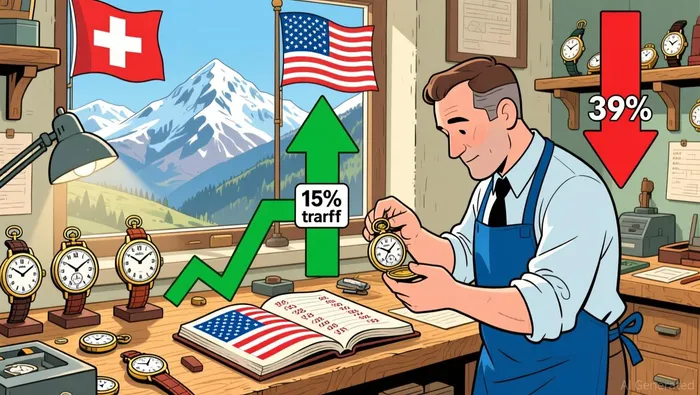
Switzerland's unique value proposition lies in its precision engineering and brand equity. The , for example, commands a premium in the U.S. market, where luxury goods remain a resilient category. However, . in September 2025, according to Monochrome Watches, underscoring the sector's vulnerability to trade policy shifts. A 15% tariff would not only restore pricing flexibility but also reinforce Switzerland's position as a leader in high-margin, craftsmanship-driven exports.
Sector-Specific Rebound Projections
The pharmaceutical sector offers the most immediate upside. Swiss companies like Roche and NovartisNVS-- have already demonstrated agility, , according to Reuters. A 15% tariff would stabilize this momentum, particularly as U.S. demand for biologics and specialty drugs grows. In contrast, Germany's pharmaceutical sector, while benefiting from EU-level protections, faces challenges from U.S. policies targeting patented drugs, according to Tekedia.
For machinery, Switzerland's niche in precision instruments and automation equipment positions it to outperform broader competitors. Japanese machinery exports, for example, have declined 13.3% year-on-year in September 2025, according to Reuters, reflecting the sector's sensitivity to global supply chain shifts. Switzerland's focus on high-tech, low-volume exports could allow it to maintain margins even as tariffs normalize.
Near-Term Market Implications
The Swiss economy, , according to BAG, stands to gain from the tariff reduction's stimulative effects. , , according to Bloomberg. However, challenges persist: a strong Swiss franc and shifting global demand patterns could temper gains. Investors should monitor the 's policy response, as well as 's final approval of the deal, which remains a wildcard.
Conclusion
Switzerland's tariff breakthrough represents a strategic recalibration in global trade dynamics. By aligning with the EU's tariff framework, the country can preserve its competitive edge in high-value sectors while mitigating the risks posed by U.S. protectionism. For investors, the key takeaway is clear: Swiss exporters, particularly in pharmaceuticals and , are poised to outperform in a post-tariff environment-provided the 15% rate is finalized without further delays.





Comentarios
Aún no hay comentarios