
U.S.-Switzerland Tariff Deal and Its Implications for Global Trade and U.S. Investors
Short-Term Market Ripple Effects
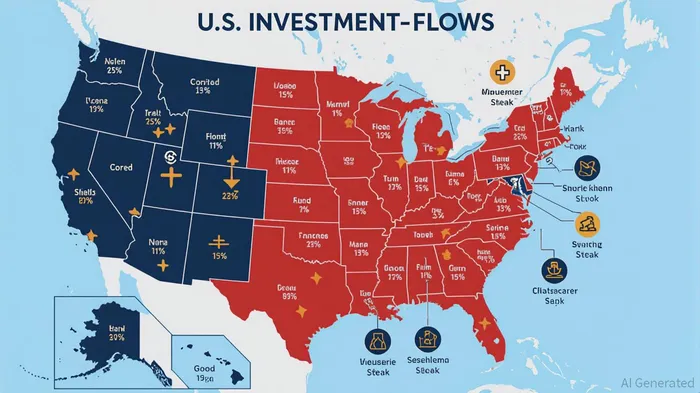
The immediate market reaction to the tariff reduction has been cautiously optimistic. Swiss exporters, particularly in pharmaceuticals, gold refining, and watchmaking, face reduced costs and renewed access to a critical U.S. market. According to a report by , Switzerland's commitment to invest $200 billion in the U.S. by 2028-$67 billion of which is slated for 2026-has bolstered confidence in sectors like pharmaceuticals and aerospace. This influx of capital is expected to create thousands of U.S. jobs and reduce the bilateral trade deficit.
However, the benefits are not evenly distributed. While gold refiners like Valcambi and PAMP are evaluating U.S. greenfield projects, the 15% rate still imposes a moderate economic burden. Swiss pharmaceutical giants, including Roche and NovartisNVS--, are recalibrating their U.S. manufacturing and R&D strategies to align with the new framework. Meanwhile, U.S. agricultural exports-beef, bison meat, and poultry-gain rare duty-free access to Swiss markets under bilateral quotas as reported by Bloomberg, signaling a recalibration of trade flows.
Long-Term Strategic Opportunities
The deal's long-term value lies in its sector-specific incentives. In pharmaceuticals, the 15% tariff cap paired with Swiss commitments to U.S. R&D investments creates a fertile ground for innovation. As noted by Bloomberg, companies like Roche and Novartis are likely to mirror the strategies of U.S. peers such as PfizerPFE--, prioritizing domestic production to avoid potential Section 232 tariffs. This could reshape global supply chains, with Switzerland's precision manufacturing capabilities complementing U.S. innovation hubs.
Gold refining, another focal sector, presents both challenges and opportunities. Swiss refiners are exploring U.S. facilities to mitigate transportation costs and delivery delays, though high construction and regulatory hurdles remain. For U.S. investors, partnerships with Swiss firms in this space could yield stable returns, particularly as demand for physical gold persists amid macroeconomic uncertainty.
The agreement also hints at broader opportunities in technology and energy infrastructure. While specific Swiss tech firms investing in the U.S. under the deal remain unnamed, the framework explicitly mentions energy infrastructure as a priority. This aligns with Switzerland's broader trade diversification strategy, including negotiations with India and Mercosur. U.S. investors should monitor Swiss engineering firms like ABB, which has pledged to expand its U.S. operations, as potential partners in renewable energy projects.
Global Trade Implications and Investor Considerations
The U.S.-Switzerland deal has broader implications for global trade dynamics. By aligning Swiss tariffs with EU rates, the U.S. has inadvertently leveled the playing field for European competitors. However, Switzerland's pursuit of trade agreements with non-EU partners-such as India and Thailand-signals a strategic pivot to reduce reliance on the U.S. market. For U.S. investors, this underscores the importance of diversifying exposure to Swiss assets beyond traditional sectors.
The 15% tariff rate, while a relief, still lags behind the zero-tariff rates enjoyed by some EU members. This gap could incentivize Swiss companies to further localize production in the U.S., particularly in high-value sectors like medical devices and precision instruments. Investors should also weigh the risks of Swiss franc appreciation, which may erode some of the competitive advantages gained under the deal as reported by Al Jazeera.
Conclusion
The U.S.-Switzerland tariff deal represents a recalibration of economic priorities under the Trump administration's "America First Trade Policy." For U.S. investors, the short-term benefits-reduced tariffs, increased Swiss investments, and sector-specific opportunities-offer compelling entry points. However, the long-term success of these opportunities will depend on how effectively Swiss firms navigate regulatory hurdles and how U.S. policymakers balance protectionism with open trade. As the $200 billion investment pledge materializes, sectors like pharmaceuticals, gold refining, and energy infrastructure will be critical to watch.







Comentarios
Aún no hay comentarios