
Swiss National Bank on the Brink: Negative Rates Loom as Inflation Stalls
The Swiss National BankNBHC-- (SNB) faces an increasingly precarious balancing act. With inflation dropping to zero in April 2025—the lowest level in over four years—the central bank is under mounting pressure to slash interest rates further, potentially below zero, to avoid prolonged disinflation. This decision, however, carries significant risks, from currency volatility to global trade headwinds.
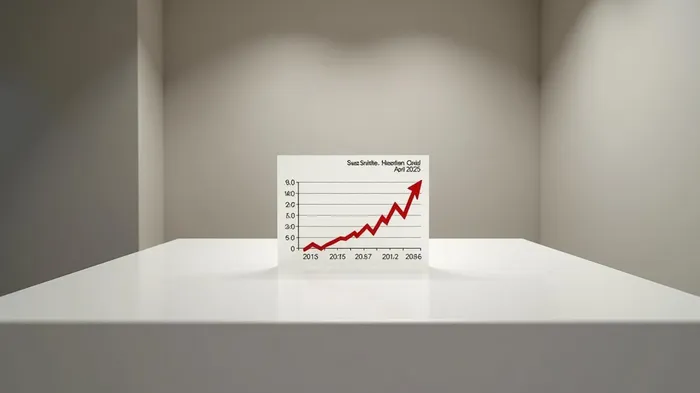
The Inflation Crisis Deepens
Switzerland’s headline inflation has collapsed, driven by the Swiss franc’s relentless appreciation. The currency’s safe-haven status, bolstered by geopolitical tensions, has pushed the CHF/EUR exchange rate to multiyear highs. This appreciation has slashed import costs, particularly for energy and fuels, while domestic demand remains tepid. Core inflation—a better gauge of underlying price trends—has also weakened, falling to 0.6% in April, underscoring the breadth of the deflationary pressures.
The SNB’s March 2025 rate cut to 0.25% now appears insufficient. Analysts now widely expect a further reduction to 0% by June, with some speculating about an eventual descent into negative rates. “The SNB is cornered,” says UBS economist Maxime Botteron. “Zero inflation with a strengthening franc leaves little room for error. Negative rates may soon be inevitable.”
The Case for Negative Rates
The SNB’s toolkit is limited but potent. Negative interest rates, last deployed between 2015 and 2023, aim to discourage cash hoarding and spur lending and spending. Historical data shows this strategy can weaken the franc, as investors flee negative-yielding assets.
This chart reveals yields hovering near zero, suggesting markets already price in aggressive easing. If the SNB follows through, it could push short-term rates into negative territory, deepening the yield curve inversion and pressuring banks further.
Risks and Trade-offs
The path to negative rates is fraught with challenges. A weaker franc would boost export competitiveness but could spark retaliation from trading partners. Meanwhile, the eurozone’s uneven recovery—driven by Germany’s fiscal stimulus—adds uncertainty.
The SNB also faces a dilemma with foreign exchange interventions. Though it hinted at renewed purchases of foreign currencies to suppress the franc, its 2024 interventions totaled a meager CHF 1.2 billion. Such actions may now prove insufficient against speculative flows.
Investment Implications
For investors, the SNB’s next moves will reshape markets:
1. Currencies: A return to negative rates could weaken the CHF, benefiting exporters like Nestlé (NESN.SW) but hurting franc-denominated bonds.
2. Equities: The Swiss MSCI index (SXXP) may gain as rate cuts boost liquidity, though trade-sensitive sectors remain vulnerable to global slowdowns.
3. Bonds: The Swiss government bond market (e.g., 10YCHF) will test investor patience as yields flirt with zero.
Conclusion: A Tightrope Walk
The SNB’s decision to cut rates below zero hinges on data. With inflation at 0%, GDP growth projected at just 1–1.5%, and the franc near record highs, the case for further easing grows compelling. However, the risks—currency overshooting, trade conflicts, and bank profitability—are immense.
If the SNB acts, investors should brace for heightened volatility. A June rate cut to 0% is now a near-certainty, with negative rates likely by year-end. The stakes are high: failure to reignite inflation could push Switzerland into a prolonged stagnation, while overaggressive easing risks destabilizing the franc.
In this climate, investors must remain nimble, monitoring not only the SNB’s next moves but also geopolitical developments and eurozone growth. The SNB’s balancing act will define Swiss markets for years to come.
This chart highlights the franc’s 6% surge against the euro since early 2024—a key driver of Switzerland’s deflationary spiral.







Comentarios
Aún no hay comentarios