
SWIFT's Blockchain and Its Strategic Implications for Stablecoins and Global Banking Infrastructure
SWIFT's strategic pivot toward blockchain-based infrastructure marks a seismic shift in global finance, with profound implications for stablecoins, cross-border payment platforms, and traditional forex systems. By integrating a shared digital ledger into its core operations, SWIFT is notNOT-- merely modernizing its messaging network but redefining the architecture of international transactions. This transformation, driven by collaborations with over 30 financial institutions-including Bank of AmericaBAC--, CitiC--, and HSBC-positions SWIFT to bridge the gap between legacy systems and the tokenized future, according to a Coindesk analysis.
A Technological Shift: From Messaging to Settlement
SWIFT's blockchain initiative, unveiled at Sibos 2025, leverages Ethereum-based technology, including Consensys' Linea Layer 2 solution, to enable real-time, 24/7 cross-border transactions, as Coinlineup reported. Unlike its traditional role as a messaging utility, the new ledger functions as a settlement layer, allowing banks to tokenize balances and execute smart contract-driven transfers, according to a Mordor Intelligence report. This shift addresses critical inefficiencies in correspondent banking, where intermediaries inflate costs and delay settlements. By 2025, SWIFT aims to reduce reliance on correspondent networks, offering a direct, secure alternative that aligns with the growing demand for instant payments, as noted in a FinancialContent article.
The platform's design emphasizes interoperability, ensuring seamless integration with both fiat rails and emerging digital systems. For instance, SWIFT's pilot with UBS Asset Management and ChainlinkLINK-- demonstrated how tokenized fund subscriptions could be settled via off-chain cash transfers, bypassing the need for global on-chain adoption, according to Payments Cards & Mobile. Such innovations underscore SWIFT's dual-track strategy: upgrading existing infrastructure while building future-ready digital rails, as detailed in a SWIFT press release.
Stablecoins and the Race for Regulatory Clarity
SWIFT's blockchain ledger is poised to accelerate the adoption of regulated stablecoins, particularly USD-backed tokens like USDCUSDC-- and USDTUSDT--. By November 2025, the system will fully integrate tokenized assets and smart contracts, enabling banks to move regulated value with enhanced security and scalability, according to the Mordor Intelligence report. This development aligns with the rapid growth of stablecoin transactions, which already process $20–30 billion daily, as reported by Payments Cards & Mobile. However, SWIFT's role as a neutral infrastructure provider-refusing to dictate which tokens are used-addresses regulatory concerns about monopolization and compliance, a stance outlined in the SWIFT press release.
The platform's emphasis on smart contracts also introduces programmable money features, such as conditional settlements and automated compliance checks. For example, ANZ and BBVA have highlighted how these tools could streamline cross-border trade finance, reducing fraud and operational overhead, as noted in the FinancialContent article. Yet challenges persist: global compliance standards remain fragmented, and SWIFT's historical role in enforcing sanctions has raised questions about neutrality in a tokenized world, a point also discussed in the FinancialContent coverage.
Displacing Traditional Forex Systems
SWIFT's blockchain initiative directly challenges legacy forex systems, which rely on correspondent banking and real-time gross settlement (RTGS) networks. Traditional cross-border transfers, often taking 2–5 days and costing 6–10% of the transaction value, are increasingly uncompetitive against stablecoin-driven alternatives, according to the Coindesk analysis. For instance, in Argentina-where inflation exceeds 100%-stablecoins now account for 30% of digital payments, offering a hedge against local currency instability, as also reported by Coindesk.
SWIFT's ledger mitigates this threat by combining the speed of blockchain with the trust of its established network. By November 2025, the system will support tokenized cash, enabling faster, cheaper transactions than both traditional forex and unregulated stablecoins, a result highlighted by Payments Cards & Mobile. This hybrid model could standardize stablecoin ecosystems while addressing technical and regulatory hurdles, such as those outlined in the EU's MiCA framework, according to the Coindesk analysis.
Investment Opportunities in a Tokenized World
The cross-border payment market, valued at $222.23 billion in 2025, is projected to grow at a 7.24% CAGR through 2030, as reported by Payments Cards & Mobile. SWIFT's blockchain integration is a key driver of this growth, with investments in real-time payment technologies surging by 25% in 2024 alone, per the Mordor Intelligence report. For investors, three areas stand out:
- Blockchain-Enabled Payment Platforms: Startups and incumbents leveraging SWIFT's infrastructure-such as Visa's Tokenized Asset Platform and PayPal's PYUSD-offer exposure to the tokenization boom, a trend detailed in the Coindesk analysis.
- Tokenized Investment Funds: The rise of tokenized money market funds (MMFs) and private equity funds, facilitated by SWIFT's ledger, creates liquidity and secondary trading opportunities, as Payments Cards & Mobile has reported.
- Interoperability Solutions: Firms developing cross-chain bridges or PvP (payment-versus-payment) systems, like Chainlink and HederaHBAR--, are critical to SWIFT's vision of a unified financial ecosystem, a point noted by Coinlineup.
Conclusion: A New Era for Global Finance
SWIFT's blockchain initiative is not merely a technological upgrade but a strategic repositioning in a world where stablecoins and tokenized assets are reshaping finance. By addressing inefficiencies in correspondent banking and aligning with regulatory frameworks, SWIFT aims to preserve its relevance while fostering innovation. For investors, the convergence of blockchain, stablecoins, and institutional infrastructure presents a unique opportunity to capitalize on the next phase of financial globalization.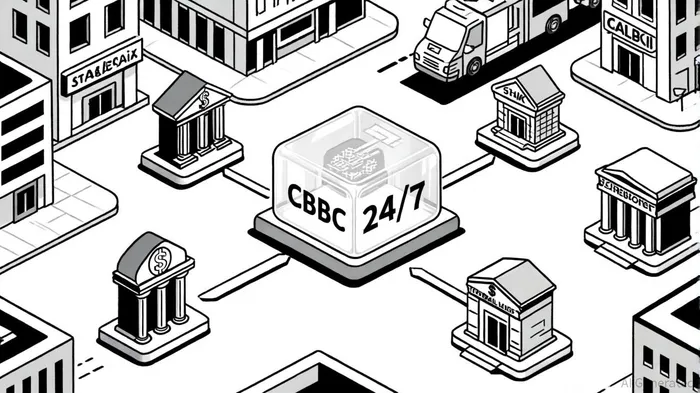





Comentarios
Aún no hay comentarios