
Is Sweetgreen (SG) a Buy for Long-Term Investors Amid Operational and Market Headwinds?
Operational Struggles and Strategic Overhauls
Sweetgreen's Q3 2025 results underscored a deepening crisis. Same-store sales fell 9.5%, driven by an 11.7% decline in foot traffic, particularly in key markets like the Northeast and Los Angeles, which account for 60% of its comparison base. The company's core demographic-25- to 35-year-olds-has also pulled back spending, a trend exacerbated by the discontinuation of its former loyalty program and the transition to a simplified points-based SG Rewards system. Unit economics have deteriorated further: average unit volume (AUV) dropped to $2.8 million in Q3 2025, while restaurant-level profit margins contracted from 20.1% to 13.1% due to rising costs for protein portions, packaging, and operational inefficiencies.
In response, Sweetgreen has launched the "Sweet Growth Transformation Plan," a multifaceted strategy to stabilize its operations. 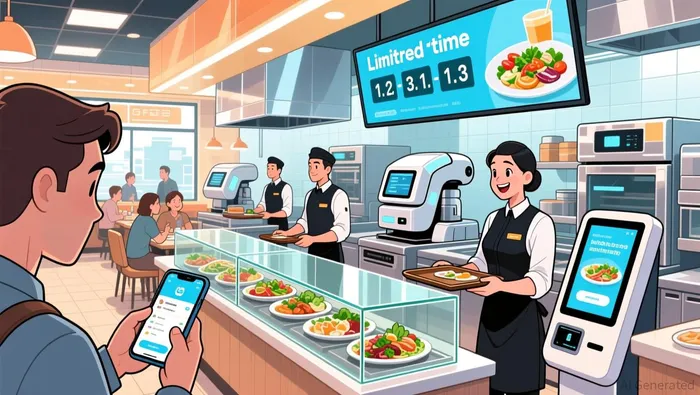 The plan includes menu innovation (e.g., steak bowls and plates to boost dinner traffic), automation via the Infinite Kitchen platform, and a renewed focus on value-driven promotions. The sale of its robotics unit, Spyce, for $186.4 million to virtual food hall company Wonder is a critical step, providing $100 million in liquidity and reducing general and administrative costs. CEO Jonathan Neman has emphasized scaling automation in partnership with Wonder to lower operating costs, a move that could improve margins if executed effectively.
However, the path to recovery is fraught. The company's Q3 2025 net loss of $36.1 million and adjusted EBITDA of -$4.4 million highlight ongoing financial strain. While Sweetgreen plans to open 15–20 new locations in 2026, half of which will feature automation, this cautious expansion reflects a lack of confidence in its ability to reverse declining sales.
Broader Market Dynamics: A Two-Tiered Economy and Intensifying Competition
The challenges facing Sweetgreen are not isolated to its operations. The healthy fast-casual segment is navigating a "two-tier economy," where affluent consumers continue to spend while lower-to-middle-income households prioritize affordability. This has led to a "trade-down" effect, with customers seeking value-oriented promotions and avoiding premium add-ons. Competitors like Chipotle and CAVA have also faced pressure from value-oriented grocers offering high-quality, affordable grab-and-go meals, siphoning traffic from traditional fast-casual chains.
CAVA Group, for instance, reported 20.0% year-over-year revenue growth in Q3 2025, supported by 17 new restaurant openings and a 24.6% restaurant-level profit margin, underscoring its operational efficiency. Meanwhile, casual dining brands like Chili's and Applebee's have outperformed by offering bundled meals and promotions that appeal to budget-conscious diners. For Sweetgreen, competing in this environment requires not only cost optimization but also a compelling value proposition that differentiates it from both premium and value rivals.
Macroeconomic factors further complicate the outlook. Inflationary pressures and shifting consumer preferences toward at-home dining have strained profitability across the restaurant sector. Sweetgreen's stock, down over 80% in 2025, reflects investor skepticism about its ability to navigate these headwinds.
Is Sweetgreen a Buy for Long-Term Investors?
The calculus for long-term investors hinges on two key questions: Can Sweetgreen's operational overhauls reverse its declining sales and margins? And can it adapt to a market increasingly defined by affordability and convenience?
On the positive side, the Spyce sale and automation partnerships offer a path to cost reduction, while menu innovations and digital engagement strategies aim to attract a broader customer base. The fast-casual segment itself is projected to grow at a 7.4% CAGR through 2030, reaching $230 billion in market size, driven by demand for healthier, customizable meals. If Sweetgreen can execute its transformation plan effectively, it may reclaim a foothold in this expanding market.
However, the risks are substantial. The company's Q3 2025 results and revised 2025 guidance (revenue of $682–688 million and same-store sales declines of 7.7–8.5%) suggest a lack of immediate momentum. Without a clear rebound in foot traffic or margin improvement, the stock's valuation remains precarious.
For investors with a long-term horizon, Sweetgreen could be a speculative buy if its transformation plan succeeds and the market rewards its pivot toward affordability and automation. But given the current trajectory, patience-and a high tolerance for risk-will be essential.







Comentarios
Aún no hay comentarios