
Sweden's Bitcoin Reserve Ambitions: Strategic Diversification in a Fractured Global Order
In an era marked by geopolitical fragmentation, inflationary pressures, and the erosion of trust in fiat currencies, nations are re-evaluating their reserve strategies. Sweden, a country long known for prudent financial stewardship, is now at the forefront of a bold experiment: considering BitcoinBTC-- as a strategic reserve asset. This move, driven by lawmakers and informed by global trends, reflects a growing recognition of digital assets as tools for diversification and financial resilience.
The Case for Diversification
Sweden's foreign exchange reserves, managed by the Riksbank, have traditionally prioritized liquidity and stability. As of April 2025, these reserves totaled approximately SEK 424.8 billion, with a significant portion allocated to U.S. dollar assets (70%) and eurozone government bonds, including newly added holdings from France, Spain, and Italy, according to a Riksbank press release. The Riksbank's hedging strategy, which covers 25% of its reserves, aims to mitigate currency risk while balancing return expectations. However, the central bank's mandate-encompassing liquidity support, foreign exchange interventions, and SDR obligations-has notNOT-- traditionally included digital assets, according to the Riksbank reserve overview.
The push for Bitcoin stems from a desire to further diversify these reserves. Proponents argue, according to a Cryptonews article, that Bitcoin's unique properties-its decentralized nature, capped supply of 21 million units, and global accessibility-make it an attractive hedge against inflation and geopolitical risks. Rickard Nordin, a Swedish MP, has framed Bitcoin as a "digital gold," emphasizing its potential to insulate Sweden's reserves from the monetary policies of any single nation, as reported by Cointelegraph. This aligns with broader global trends: the U.S. has begun building a Bitcoin reserve from seized assets via the GENIUS Act, while countries like Kazakhstan and the Czech Republic are exploring similar strategies, a pattern noted in the Cryptonews coverage.
A Budget-Neutral Approach
A key innovation in Sweden's proposal is its budget-neutral model. Lawmakers Dennis Dioukarev and David Perez have suggested that seized Bitcoin from law enforcement operations-rather than being liquidated-could be transferred to the Riksbank or a designated authority, as described in a Deepnewz piece. This approach mirrors the U.S. model, where confiscated Bitcoin is retained as part of a national reserve, avoiding additional public spending. By leveraging existing assets, Sweden could diversify its reserves without straining fiscal resources, a critical consideration in a climate of rising public debt and economic uncertainty.
Geopolitical and Economic Rationale
The urgency for diversification is amplified by the current geopolitical landscape. Conflicts in Eastern Europe, Middle Eastern volatility, and the U.S.-China trade tensions have heightened risks for traditional reserve currencies. Bitcoin, with its decentralized infrastructure, offers a degree of immunity from these dynamics. As Nordin noted in a formal inquiry to Finance Minister Elisabeth Svantesson, Bitcoin's value is "not tied to the monetary policies of any single country," making it a potential safeguard against systemic shocks (reported by Cointelegraph).
Moreover, Bitcoin's role as a tool for financial sovereignty is gaining traction. In authoritarian regimes, it enables transactions outside state control, a feature that Swedish lawmakers argue could enhance global financial freedom, according to a Bitcoinleef article. While this application is speculative, it underscores Bitcoin's broader appeal as a medium for cross-border resilience.
Challenges and Skepticism
Despite the momentum, significant hurdles remain. The European Central Bank (ECB), under President Christine Lagarde, has expressed reservations about Bitcoin's liquidity, safety, and association with illicit activities; these concerns were highlighted in reporting by Cryptonews. These concerns are not unfounded: Bitcoin's price volatility and limited institutional adoption pose risks for central banks prioritizing stability. Additionally, Sweden's regulators have maintained a cautious stance on cryptocurrencies, emphasizing tax compliance and financial stability, as noted by Deepnewz.
The Riksbank itself has not yet endorsed the proposal, and the Finance Committee's review of the parliamentary motion (Motion 2025/26:793) remains pending, according to the Deepnewz coverage. Critics argue that Bitcoin's nascent infrastructure-lack of regulatory clarity, cybersecurity vulnerabilities, and energy consumption debates-could outweigh its benefits as a reserve asset.
Strategic Implications
If Sweden proceeds, it would signal a paradigm shift in how nations approach reserve management. A Bitcoin allocation could enhance diversification, reduce reliance on traditional currencies, and position Sweden as a leader in digital finance. However, the decision will hinge on balancing innovation with prudence. As the Riksbank navigates this debate, its approach will likely influence other nations weighing similar strategies in an increasingly unpredictable world. 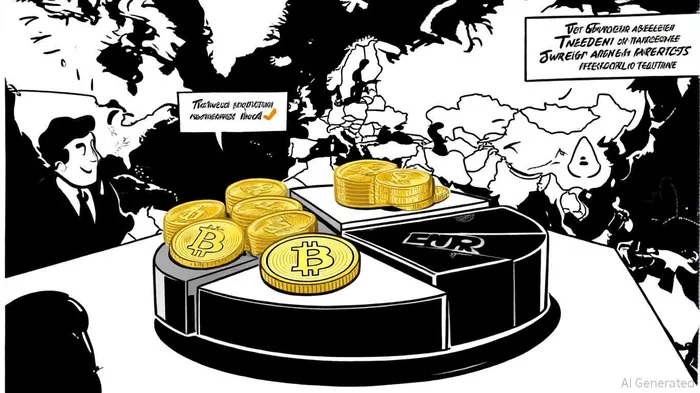






Comentarios
Aún no hay comentarios