
Sustained Wage Growth Challenges Fed's Pause Strategy, Shifts Equity Market Dynamics
The U.S. labor market remains a paradox. Despite moderating payroll gains—May's 139,000 new jobs fell short of the 149,000 monthly average over the past year—wage growth has held firm at a 3.9% year-over-year (YoY) pace, outpacing inflation for the 14th consecutive month. This divergence between cooling job creation and resilient wage inflation creates a critical crossroads for monetary policy and equity markets. For investors, the implications are clear: sectors benefiting from stable labor costs will outperform those squeezed by margin pressures, while the Federal Reserve's pause strategy faces mounting uncertainty.
The Wage Growth Conundrum
Recent data highlights the tension. While May's payroll report showed gains concentrated in healthcare (+62,000) and leisure/hospitality (+48,000), federal government jobs declined by 22,000—a sign of fiscal tightening. Yet, average hourly earnings for private-sector employees rose 0.4% month-over-month to $36.24, maintaining a 3.9% YoY increase. This resilience, even as job creation slows, suggests that wage pressures are structural, not cyclical.
The Employment Cost Index (ECI), a Fed favorite for gauging labor costs, offers context. For the 12 months ending March 2025, civilian wages rose 3.5%, a modest slowdown from 2024's peak but still elevated by historical standards. However, inflation has moderated further, with the March 2025 CPI at 2.4%, creating a 150-basis-point wage-inflation spread—the largest since 2000.
Fed's Dilemma: Pause or Pivot?
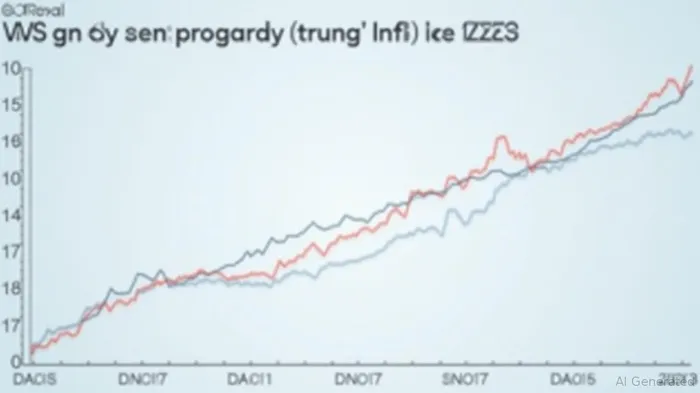
The Fed's “data-dependent” mantra faces a test. A **** visual would show the central bank's reluctance to cut rates despite slowing economic activity. With unemployment stuck at 4.2% for 14 months, policymakers fear that easing too soon could reignite inflation. However, the June jobs report—due July 3—could force a decision. If payroll growth remains tepid while wages stay sticky, the Fed may signal an extended pause, keeping rates near 5.0% through 2025.
This uncertainty creates a headwind for equities. Rate-sensitive sectors like technology and utilities, which thrived during 2023's dovish pivot, now face a risk of disappointment. Meanwhile, financials (e.g., banks) benefit from sustained rate differentials, as **** demonstrates.
Sectoral Winners and Losers
The wage growth story splits the market into two camps:
1. Wage Insensitive Sectors:
- Financials: Banks and insurers with strong fee income (e.g., Visa, Allstate) and those benefiting from sticky consumer demand (e.g., Amex) will outperform.
- Healthcare: Rising wages correlate with higher demand for services (e.g., UnitedHealth, Humana), while regulatory tailwinds protect margins.
- Wage Sensitive Sectors:
- Manufacturing: Higher labor costs squeeze margins for firms like General Motors and Boeing, especially amid tepid global demand.
- Technology: Companies with high labor intensity (e.g., Microsoft, Oracle) face pressure unless they automate aggressively.
Investment Strategy: Shorten Duration, Target Labor-Resilient Stocks
Investors should adopt a tactical approach:
- Equities: Overweight consumer staples (e.g., Procter & Gamble, Coca-Cola) and financials, which profit from stable demand and high rates. Avoid cyclical sectors like industrials and tech unless valuations reflect margin risks.
- Fixed Income: Shift to shorter-duration bonds (e.g., 1–3 year Treasuries) to hedge against Fed rate volatility. Avoid long-dated maturities, which remain sensitive to inflation expectations.
The illustrates this strategy: KBE's 8% return contrasts with SHV's 2% gain, highlighting the value of sector and duration discipline.
Conclusion: Bracing for a New Normal
The Fed's challenge is to navigate a labor market where job growth is uneven but wages remain resilient. Investors must position for a prolonged period of “high but stable” wage growth—a scenario favoring sectors insulated from margin pressures. With the June ECI report (due July 31) likely to confirm this trend, now is the time to act.
Final Takeaway: Shift toward labor-cost insulated equities and short-duration bonds. Avoid sectors where wage inflation cannot be passed through. The Fed's pause is here to stay—position accordingly.







Comentarios
Aún no hay comentarios