
Sustainable Retailers and Community Engagement: A Strategic Growth Lever
In the evolving landscape of consumer goods, natural food retailers are redefining success by intertwining corporate social responsibility (CSR) with financial strategy. For investors, the question is no longer whether CSR initiatives yield returns but how they can be optimized to drive long-term value. Recent data and case studies underscore that sustainability and community engagement are not peripheral activities but core components of competitive advantage in the natural food sector.
Financial Performance: From Waste Reduction to Profitability
The financial benefits of CSR in natural food retail are tangible. A UK-based supermarket chain's three-phase project to repurpose surplus food into animal feed reduced waste by 40% while generating significant rebates and carbon footprint reductions [4]. This initiative exemplifies how operational efficiency and environmental stewardship can align with profitability. Similarly, Natural GrocersNGVC-- by Vitamin Cottage Inc. reported a 9.4% year-over-year revenue increase in Q1 2025, with net sales reaching $330.2 million and a 29.9% gross margin, driven by sustainability-focused strategies like energy-efficient refrigeration systems and private-label product expansion [5].
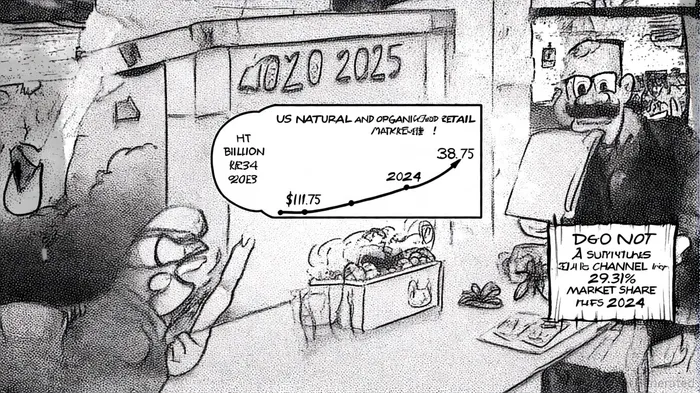
The broader market reflects this trend: in 2024, the U.S. natural and organic food retail sector hit $110.75 billion in sales, with the “supernatural” channel (e.g., Whole Foods, Sprouts) capturing 29.31% of the market [1]. United Natural FoodsUNFI--, a key distributor, saw revenue surge to $30.98 billion in 2024, a testament to the scalability of CSR-aligned supply chains [2]. These figures suggest that natural food retailers leveraging sustainability are outpacing peers, with the industry projected to grow at a 5% compound annual growth rate (CAGR), reaching $384 billion by 2028 [6].
Reputational Capital and Community Trust
Beyond financial metrics, CSR initiatives bolster brand loyalty and community trust. A 2025 study found that 65% of consumers feel more loyal to brands engaged in community service, while 51% are more likely to purchase from such companies [3]. Natural Grocers' $4 million in in-kind food donations to local food banks and its 2024 Sustainability Report—highlighting regenerative agriculture and nutrition education—reinforce its reputation as a socially responsible retailer [1]. Similarly, Target Corporation's 5% profit-sharing model for communities and its Target Scholars Program have strengthened ties with underserved populations, enhancing brand equity [4].
The Independent Natural Food Retailers Association (INFRA) further illustrates this dynamic. Through its Global Organic Month campaigns, INFRA members enabled in-store donations to support organic farming transitions and disaster recovery, fostering a sense of collective purpose among shoppers [5]. Such initiatives not only align with consumer values but also create sticky relationships, as evidenced by a 6% increase in store trips by natural product shoppers in 2024 [6].
Strategic Alignment with Consumer Trends
The natural food sector's success hinges on its ability to meet rising consumer expectations for transparency and sustainability. Research indicates that 54% of global consumers consider a company's social and environmental efforts when making purchases [2]. For natural retailers, this demand is not hypothetical: it is operationalized through practices like ethical sourcing, zero-waste packaging, and partnerships with local farmers.
Academic analysis reinforces this alignment. A 2025 bibliometric review of ESG/CSR studies found that governance structures, market maturity, and firm strategy moderate the relationship between CSR and financial performance [1]. Natural food retailers, with their inherent focus on ethical supply chains and community engagement, are uniquely positioned to capitalize on these variables. For instance, the Healthy Food Financing Initiative (HFFI), which allocated $22.6 million to improve food access in underserved areas, demonstrates how CSR can drive both social impact and market expansion [5].
Conclusion: A Dual-Track Strategy for Investors
For investors, the natural food retail sector offers a compelling case study in dual-track value creation. Financial returns are not sacrificed for ethical goals but amplified through operational efficiencies, customer retention, and brand differentiation. As the sector grows, companies that integrate CSR into their core strategies—rather than treating it as a compliance exercise—will outperform peers.
Natural Grocers' 28.1% net income surge in Q1 2025 and the supernatural channel's 6.3% year-over-year sales growth underscore this reality [1][5]. Meanwhile, INFRA's collaborative model and HFFI's community-driven financing highlight the scalability of CSR initiatives. In an era where sustainability is a baseline expectation, natural food retailers that lead in CSR are not just meeting consumer demands—they are redefining the rules of the market.







Comentarios
Aún no hay comentarios