
The Sustainability of Big Oil Dividends in a Falling Price Environment
The oil and gas sector is at a crossroads. With Brent crude trading below $65 per barrel in late September 2025-its lowest level since 2021-investors are scrambling to assess whether Big Oil's dividend machine can survive this price slump. For years, energy giants like ExxonMobil, ChevronCVX--, and TotalEnergiesTTE-- have showered shareholders with record-breaking payouts, but the math is no longer adding up. According to a Reuters report, most oil majors require prices above $80 a barrel to sustain current dividend and buyback levels, a threshold now firmly out of reach.
The Dividend Risk Matrix: Who's in the Danger Zone?
Let's start with the cold, hard numbers. Since 2022, Big Oil has doled out over $272 billion in dividends and buybacks, according to a Morgan Stanley outlook. But as prices crater, the pressure on free cash flow is intensifying. TotalEnergies, for instance, has slashed its buyback program and announced $7.5 billion in cost reductions by 2030 to manage debt. BPBP-- and Chevron have followed suit, while Shell-despite a 4% dividend hike in early 2025-has avoided cutting buybacks for now, according to a Nasdaq article.
The risk here is twofold: solvency and sustainability. Analysts at Rystad Energy warn that if prices stay below $80 for six months, share buybacks will be the first casualty, in a CNBC report. ExxonMobil and Chevron, with their robust cost discipline and strong balance sheets, may hold the line on dividends, but European peers like BP face sharper headwinds. As a Deloitte report notes, "Capital discipline and operational efficiency will be the difference between survival and collapse."
Sector Rotation: The New Playbook for Energy Investors
If Big Oil's dividends are under threat, where should investors pivot? The answer lies in sector rotation-a strategy that shifts focus from volatile crude producers to sub-sectors with stronger fundamentals.
- Natural Gas and LNG Infrastructure: With global demand for cleaner energy surging and U.S. exports hitting record highs, natural gas utilities and liquefied natural gas (LNG) operators are thriving. Firms like Cheniere Energy and Kinder Morgan are benefiting from long-term contracts and inflation-linked pricing.
- Energy Equipment & Services: As international oil projects ramp up in the Middle East and Africa, companies like Schlumberger and Halliburton are seeing renewed demand for drilling and production services.
- Midstream MLPs: Master limited partnerships (MLPs) like Enterprise Products Partners offer steady, inflation-protected yields, insulated from the price swings of upstream producers.
This isn't just speculation. Morgan Stanley's 2025 energy outlook explicitly recommends rotating into these sub-sectors, noting their resilience amid crude's volatility.
The Bottom Line: Play Defense, But Stay Invested
Big Oil's dividends aren't dead, but they're definitely on life support. For now, ExxonMobil and Chevron remain the safest bets, with payout ratios below 40% of free cash flow, according to a Substack post. However, investors should prepare for a world where buybacks shrink and dividend growth stalls.
If you're holding energy stocks, it's time to ask: Are you buying for income or growth? If it's the former, consider hedging with high-yield MLPs or natural gas plays. If it's the latter, stick with the majors-but keep a close eye on their balance sheets. As the old Wall Street adage goes, "Know thy risk." In this market, that means knowing when to hold and when to fold.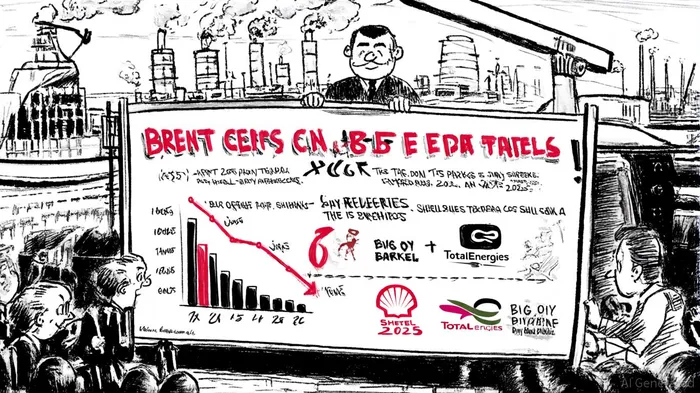





Comentarios
Aún no hay comentarios