
Surveillance Capitalism, the Industrial Metaverse, and Political Tensions: Emerging Trends in 2026
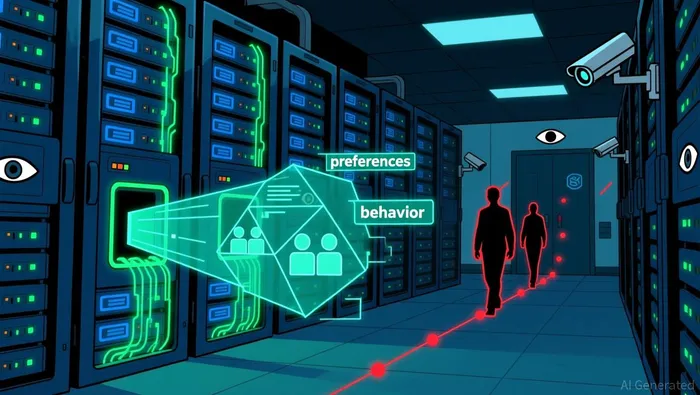
The growing influence of surveillance capitalism is reshaping corporate and government behavior. Shoshana Zuboff's theory of surveillance capitalism highlights the commodification of personal data and its impact on privacy and democratic processes. This model has expanded into various sectors, including energy and digital advertising, creating new challenges for regulation and consumer rights according to the theory.
The rise of the industrial metaverse is another major development. Companies like Siemens are leveraging digital twin technology to simulate and optimize real-world operations. PepsiCoPEP--, for example, has integrated Siemens' Digital Twin Composer to improve manufacturing efficiency and reduce capital expenditure as reported.
Political tensions are also emerging in the energy sector. Democratic Senator Ed Markey has criticized Donald Trump for engaging in crony capitalism through a Venezuelan oil deal. The accusations involve allegations of favoring private interests over public policy, a move that could influence future regulatory actions in the energy market according to CNN.
Why Did Surveillance Capitalism Expand in 2026?
The expansion of surveillance capitalism is tied to advances in artificial intelligence and big data analytics. The generative AI media software market is forecasted to reach $27.99 billion by 2029, driven by companies like MicrosoftMSFT--, AlibabaBABA--, and NVIDIANVDA--. These firms are leveraging data to improve personalized marketing and targeted advertising according to market research.
At the same time, privacy regulations are becoming more stringent. The European Union's General Data Protection Regulation (GDPR) has imposed significant constraints on how companies can collect and use personal data. These regulatory changes are expected to slow the expansion of surveillance capitalism but not halt it entirely as noted.
How Did Markets React to the Industrial Metaverse Adoption?
The industrial metaverse is attracting significant investment from both private and public sectors. Siemens' Digital Twin Composer is already being deployed in manufacturing and logistics, with reported improvements in design validation and capital expenditure reductions. PepsiCo's early adoption has led to a 20% increase in throughput and nearly 100% design validation according to industry reports.
Market participants are closely watching how this technology scales across industries. Expand Energy, for instance, is leveraging AI and digital tools to optimize its gas production and reduce operational costs. The company is projected to benefit from structural changes in the energy market, including increased demand for natural gas and supportive federal policies as analysts project.
What Are Analysts Watching in the Political and Energy Sectors?
Analysts are focusing on how political actions could impact energy markets. The recent Senate criticism of Trump's Venezuelan oil deal raises concerns about potential regulatory changes in the U.S. energy sector. Such changes could affect the profitability of energy companies like Vistra and Oklo, which have secured long-term power agreements with Meta according to investment analysis.
Additionally, nuclear energy stocks are being closely monitored following Meta's investment in new reactor technologies. The tech giant's partnerships with Vistra, Oklo, and TerraPower could lead to a significant shift in energy production and consumption patterns, with long-term implications for investors in the sector as reported.
What Are the Investment Implications of These Trends?
For investors, the convergence of surveillance capitalism, digital transformation, and political dynamics is reshaping the investment landscape. Companies that adapt to these changes—such as Siemens and Pluxee—are reporting strong Q1 2026 financial performances. Pluxee, for example, recorded a 9.0% organic revenue growth, driven by its Employee Benefits and Float revenue segments according to earnings reports.
The industrial metaverse is also opening new investment opportunities. The integration of AI and digital twins is expected to drive innovation and efficiency gains in manufacturing and logistics. Analysts at Antique have initiated a 'Buy' rating on Studds Accessories, citing structural changes in consumer behavior and strong growth visibility in FY27-28 as stated by analysts.
What Are the Broader Economic Implications of These Trends?
On a macroeconomic level, the rise of surveillance capitalism and digital transformation is contributing to a more interconnected and data-driven global economy. This shift is supported by increased federal land access and eased regulations, as highlighted in Deloitte's report. The energy sector is particularly poised to benefit from these changes, with U.S. LNG exports expected to drive growth in 2026 according to market analysis.
At the same time, the expansion of digital advertising and AI-driven marketing is influencing consumer behavior and economic patterns. The generative AI media software market is expected to grow at a 34.3% compound annual growth rate, reaching $27.99 billion by 2029. This growth will likely have broader economic implications, including shifts in employment and skill requirements according to market forecasts.
Conclusion: What Should Investors Watch Next?
Investors should closely monitor regulatory changes, technological advancements, and political developments in the coming months. The integration of the industrial metaverse into mainstream operations and the continued expansion of surveillance capitalism are likely to influence both corporate and public policy decisions.
Market reactions to these trends will be crucial indicators for investors. Companies that adapt quickly to these changes—such as Siemens, Expand Energy, and Pluxee—are expected to outperform in the long run. Analysts are particularly watching for regulatory responses and shifts in consumer behavior, which could have far-reaching economic implications as reported.
The coming months will provide further clarity on how these trends will shape the investment landscape in 2026 and beyond. Investors who stay ahead of these developments will be better positioned to capitalize on emerging opportunities and mitigate potential risks.







Comentarios
Aún no hay comentarios