
The Surging Stablecoin Market: A New Pillar of Global Finance
The stablecoin market has emerged as a transformative force in global finance, with its market capitalization surging past $300 billion in Q3 2025-a 324% increase from the previous quarter, according to Advisor Perspectives. This meteoric rise, driven by inflows into major stablecoins like Tether's USDTUSDT-- ($19.6 billion), Circle's USDCUSDC-- ($12.3 billion), and Ethena's USDe ($9 billion), underscores their growing role as a bridge between traditional and digital finance, according to Coinspaid Media. As institutions and regulators grapple with the implications of this shift, stablecoins are increasingly being positioned as both a strategic asset and a tool for mitigating systemic risks in a fragmented financial landscape.
Strategic Allocation: From Cash Equivalents to Yield-Generating Assets
Stablecoins are no longer mere short-term parking spots for crypto capital. Institutional investors and financial institutions are integrating them into core infrastructure, leveraging their programmability and speed for cross-border settlements, treasury management, and yield generation, according to AssetInvesting. JPMorganJPM-- and BlackRockBLK--, for instance, have adopted stablecoins to streamline international transactions, reducing settlement times from days to minutes (AssetInvesting). Meanwhile, the U.S. Treasury's exploration of stablecoins for purchasing U.S. debt signals a broader strategic shift, as these assets-often backed by liquid reserves like Treasury bills-offer a novel avenue for government financing, as reported by Advisor Perspectives.
For retail and institutional investors alike, stablecoins are becoming a hedge against inflation and a low-risk alternative to cash. In emerging markets, where hyperinflation and currency instability are persistent challenges, stablecoins enable faster, lower-cost transactions, bypassing traditional banking bottlenecks (AssetInvesting). This dual utility-serving as both a stable store of value and a medium of exchange-has attracted over $45.6 billion in inflows this quarter alone, per Coinspaid Media.
Systemic Risks and Regulatory Guardrails
Despite their promise, stablecoins are not without risks. The 71% of Q3 2025 transfers driven by automated bots raises concerns about speculative activity, reports CoinTribune, while the potential for "runs" on stablecoin reserves-exemplified by the 2022 TerraUSD collapse-highlights vulnerabilities in reserve management (Advisor Perspectives). To address these challenges, regulators are tightening frameworks. The U.S. GENIUS Act, enacted earlier this year, mandates transparency in reserve backing and imposes licensing requirements, fostering confidence among investors and financial institutions, according to Coinspaid Media.
Europe, by contrast, emphasizes sovereign control, prioritizing regulatory oversight to prevent private stablecoins from undermining central bank authority (Advisor Perspectives). These divergent approaches reflect broader tensions in global finance: innovation versus stability, decentralization versus control. Yet, both frameworks aim to mitigate systemic risks by ensuring stablecoins remain resilient to liquidity shocks and cyberCYBER-- threats (Advisor Perspectives).
The Road Ahead: A $3.7 Trillion Future?
Analysts project the stablecoin market could reach $500–750 billion in the near term, with Citi forecasting a staggering $3.7 trillion by 2030 (Coinspaid Media). Such growth hinges on continued regulatory clarity, technological advancements in blockchain infrastructure, and the integration of stablecoins into global payment systems. For example, Ethereum's dominance in hosting $161 billion of stablecoins underscores the platform's role in facilitating decentralized finance (DeFi) and cross-border remittances (Coinspaid Media).
However, the market's expansion also demands vigilance. As stablecoins become systemically important, their integration into traditional finance must be accompanied by robust risk management protocols-such as multi-person approval workflows and real-time blockchain monitoring tools (Advisor Perspectives).
Conclusion
Stablecoins are reshaping the financial ecosystem, offering a unique blend of stability, scalability, and innovation. While their strategic allocation in portfolios and systemic risks remain contentious, the data from Q3 2025 suggests a maturing market poised for mainstream adoption. For investors, the key lies in balancing yield opportunities with regulatory compliance, ensuring stablecoins fulfill their promise as a new pillar of global finance.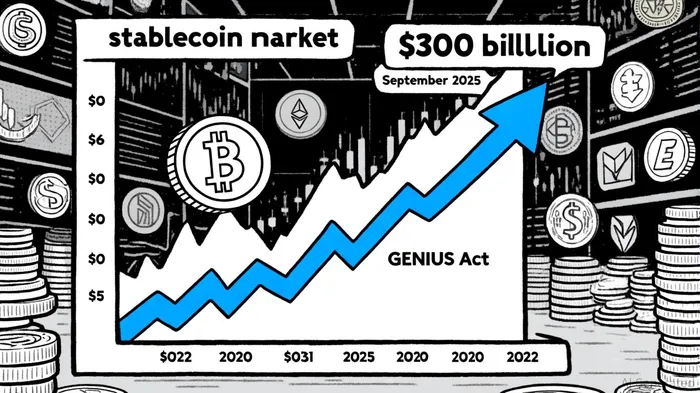





Comentarios
Aún no hay comentarios