
The Surging Risks and Opportunities in the Post-Hack Crypto Landscape
The cryptocurrency sector in 2025 faced an unprecedented wave of cyberattacks, with over $3.4 billion in stolen funds, marking a record year for systemic vulnerabilities. These breaches, concentrated in high-impact incidents like the $1.5 billion Bybit hack, underscored the fragility of both centralized exchanges and decentralized finance (DeFi) protocols. Yet, amid the chaos, a new era of strategic investment resilience is emerging, driven by advanced custody technologies, insurance innovations, and regulatory evolution. For investors, understanding this duality-risk and opportunity-is critical to navigating the post-hack landscape.
The Escalating Threat Landscape
The 2025 breach landscape was defined by sophistication and scale. North Korean threat actors, particularly the Lazarus Group, dominated the scene, leveraging tactics such as IT worker infiltration and phishing campaigns to compromise hot wallets and private keys. Centralized exchanges like Bybit, Phemex, and Nobitex bore the brunt of these attacks, while DeFi platforms faced targeted exploits, including a $223 million liquidity drain on Cetus. Despite these losses, DeFi breaches accounted for a smaller share of total thefts compared to previous years, suggesting that long-standing protocols had adopted improved security measures.
Personal wallet compromises also surged, with 158,000 incidents affecting 80,000 unique victims. While the total value stolen from these incidents declined from 2024, the frequency of attacks highlighted the growing accessibility of social engineering tactics. Meanwhile, North Korean hackers refined their laundering strategies, favoring Chinese-language services and mixing protocols to obscure stolen funds.
Market Responses and Systemic Risks
The financial impact of these breaches extended beyond direct losses. Markets reacted with heightened volatility, as seen in the 20% drop in Bitcoin's price following the Bybit hack. Sell pressures intensified, while demand for robust custody solutions-such as multi-party computation (MPC) and cold storage- surged in response to market instability. Regulatory scrutiny also intensified, with institutions facing legal and reputational risks due to compliance failures.
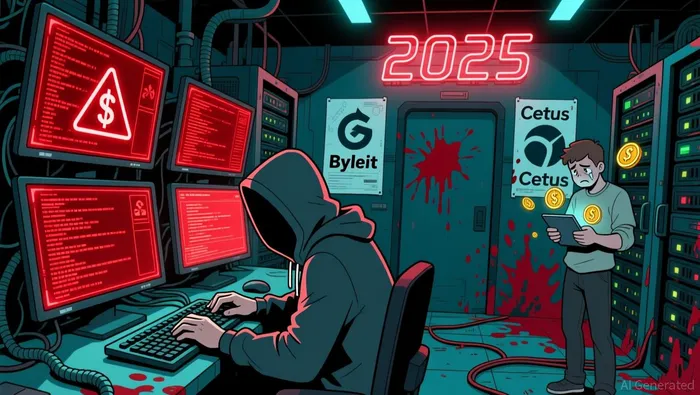 Systemic risks were further compounded by macroeconomic pressures, including liquidity constraints and geopolitical tensions. These factors created a volatile environment where cascading liquidations and leveraged positions exacerbated market instability. The year's events underscored the urgent need for a paradigm shift in how investors and institutions approach crypto security.
Strategic Investment Resilience: A New Framework
In response to these threats, strategic investment resilience has evolved around three pillars: advanced custody technologies, insurance solutions, and regulatory compliance.
Advanced Custody Technologies
Institutions are increasingly adopting MPC wallets, which distribute private key control across multiple parties, eliminating single points of failure. The 2025 Skynet Digital Asset Treasuries (DAT) report highlights that firms like Strategy Inc. (MSTR) have achieved high security scores by integrating MPC with regulated custodians. Cold storage remains a cornerstone for long-term holdings, but recent breaches have shown that even these systems require layered security, such as hardware-based encryption and multi-signature protocols.Insurance Solutions
The rise of crypto custody insurance has become a critical risk-mitigation tool. Policies now cover hot wallet and cold storage theft, crime coverage for social engineering attacks, and business interruption insurance. For example, Relm Insurance's 2025 report emphasizes that institutions with comprehensive coverage can recover from catastrophic losses while maintaining operational continuity. Investors should prioritize custodians offering transparent insurance frameworks, as these reduce counterparty risk.Regulatory Compliance
Global regulatory frameworks, such as the EU's Markets in Crypto-Assets (MiCA) and the U.S. CLARITY Act, are enforcing stricter custody and compliance standards. The U.S. SEC and FINRA have also increased scrutiny of crypto custodians, pushing institutions to adopt third-party audits and robust internal controls. The Skynet DAT Security & Compliance Framework, which allocates 30% of its score to custodian diligence, exemplifies the growing emphasis on regulatory alignment.
The Path Forward: Balancing Risk and Opportunity
While 2025's breaches exposed systemic weaknesses, they also catalyzed innovation in security and compliance. For investors, the key lies in adopting a risk-aware strategy that prioritizes institutional-grade custody, insurance, and regulatory adherence. As the crypto ecosystem matures, resilience will no longer be optional-it will be a prerequisite for long-term success.
Institutional-grade custodians are now offering integrated solutions that combine trading, staking, and compliance, reducing operational burdens. This evolution signals a shift toward a more mature market, where security and scalability coexist. For retail investors, the lesson is clear: diversify custody methods, vet custodians for insurance and regulatory compliance, and avoid overexposure to unsecured platforms.
The post-hack landscape is fraught with challenges, but it also presents a unique opportunity to build a more secure and resilient crypto ecosystem. By embracing strategic investment resilience, stakeholders can transform systemic threats into competitive advantages.






Comentarios
Aún no hay comentarios