
The Surging Minting of USDC: Implications for Stablecoin Markets and DeFi Exposure
Institutional Adoption: A Pillar of Stability and Yield
The institutional embrace of USDC is underpinned by its regulatory compliance and transparency. Circle's reserve-backed model, audited quarterly, has made USDC the preferred stablecoin for North American fintech apps, with 80% of such platforms integrating it for payments, per USD Coin statistics. This adoption extends to institutional treasuries, where USDC's borrowing rates averaged 5.7% in Q3 2025, offering a compelling alternative to volatile altcoins, according to the Stablecoin Insider report. The stablecoin's role in hybrid strategies-such as pairing with liquid staking derivatives (LSDs) for dual yield-further cements its utility.
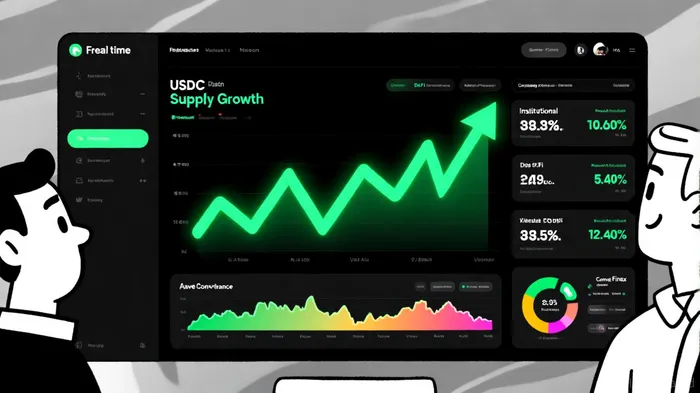
DeFi Integration: Beyond AaveAAVE-- to Advanced Yield Strategies
While Aave remains the dominant player in institutional stablecoin lending (41.2% market share), Q3 2025 saw a diversification of strategies. Protocols like Convex Finance, Frax, and Balancer enabled governance-driven rewards, generating 7–10% APY in yield enhancement layers, as detailed in the AlphaStake analysis. Meanwhile, delta-neutral stablecoins like sUSDe (Ethena) and Sky Protocol's USDS offered 8–12% and 5–7% returns, respectively, by hedging against price volatility, a point also highlighted in the AlphaStake analysis. These innovations highlight DeFi's evolution from speculative experimentation to institutional-grade infrastructure.
For investors, the key lies in identifying protocols that balance innovation with risk mitigation. Tokenized U.S. Treasuries, such as BlackRock's BUIDL Fund and Ondo Finance's OUSG, provide regulatory-compliant yields of 4.5–6%, appealing to risk-averse institutions, as discussed in the AlphaStake analysis. Structured products like Pendle and Ribbon Finance further enable customized risk/reward profiles, blending traditional and crypto-native strategies.
Strategic Positioning: Key Assets and Risks
The surging minting of USDC-exceeding 250 million units in Q3-reflects broader liquidity demand, but it also raises questions about supply-side dynamics. As USDC's market share grows, so does its exposure to regulatory scrutiny and reserve transparency. However, for now, the stablecoin's dominance presents opportunities in three areas:
1. Lending Protocols: Aave, Convex FinanceCVX--, and Frax remain core holdings for yield generation.
2. Delta-Neutral Instruments: sUSDe and USDS offer asymmetric returns in a volatile market.
3. Tokenized Assets: BUIDL and OUSG bridge the gap between traditional and crypto markets.
Investors must also monitor secondary risks, such as the rise of competitors like USDe (9.3% market share), which the Stablecoin Insider Q3 report identifies as a potential fragmenter of the market. Yet, the underlying demand for stable, high-yield assets suggests that USDC's ecosystem will remain a cornerstone of institutional crypto strategies.
Conclusion
The surging minting of USDC is not an isolated event but a symptom of a larger shift: stablecoins are becoming the bedrock of both traditional and decentralized finance. For investors, the priority is to align with protocols and strategies that leverage this momentum while mitigating regulatory and operational risks. As Q3 2025 data shows, the most successful portfolios are those that combine USDC's liquidity with DeFi's innovation and tokenized assets' compliance. The window for proactive positioning is narrowing-now is the time to act.







Comentarios
Aún no hay comentarios