
The Surging German Investor Confidence: A Strategic Opportunity in Export-Driven Sectors
Germany's export sector has long been the backbone of its economic resilience, and recent developments suggest that this foundation is being reinforced by a renewed wave of investor confidence. As global trade dynamics stabilize post-2020, the country's robust infrastructure, linguistic advantages, and industrial expertise position it as a prime destination for capital seeking growth in export-oriented industries. This analysis explores how these factors intertwine to create a compelling investment narrative.
Economic Infrastructure: The Bedrock of Export Resilience
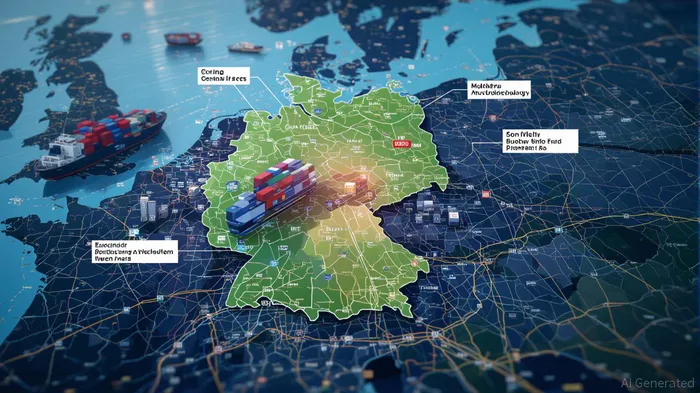
Germany's economic infrastructure remains a cornerstone of its export success. The country's extensive transportation networks—including its high-speed rail systems, major ports like Hamburg and Bremen, and strategically located highways—ensure the efficient movement of goods across Europe and beyond[2]. This logistical prowess has enabled German manufacturers to maintain competitive delivery timelines, even amid global supply chain disruptions.
Moreover, Germany's focus on innovation has elevated the quality of its exports. Advanced manufacturing sectors, such as automotive, machinery, and renewable energy, benefit from cutting-edge research and development (R&D) ecosystems. For instance, the automotive industry's pivot toward electric vehicles (EVs) and hydrogen technologies has not only future-proofed its export offerings but also attracted foreign direct investment (FDI) from global partnersGLP-- seeking to collaborate on next-generation solutions[1].
Linguistic Cohesion: A Competitive Edge in European Markets
Germany's linguistic advantages further amplify its export capabilities. While the German language remains a unifying force within the domestic market, the country's workforce is exceptionally proficient in English and other European languages. Over 90% of German citizens speak at least one foreign language, with English fluency exceeding 60%[3]. This multilingual capability facilitates seamless communication with international clients, particularly in neighboring EU markets where language barriers often hinder trade.
The educational system plays a pivotal role in sustaining this advantage. German universities and vocational training programs emphasize language acquisition alongside technical skills, producing a workforce adept at navigating cross-border business negotiations. This linguistic agility has been critical in maintaining Germany's dominance in sectors like engineering and pharmaceuticals, where precision in communication is paramount[3].
Industrial Strength: A Legacy of Quality and Innovation
Germany's industrial heritage is a testament to its export-driven success. As Europe's largest economy and the world's fourth-largest by nominal GDP, the country has leveraged its manufacturing expertise to dominate global markets[1]. The Mittelstand—a network of family-owned, specialized firms—has been particularly instrumental in this regard, producing high-quality niche products that command premium prices worldwide.
Recent investments in Industry 4.0 technologies, such as automation and digital supply chain management, have further enhanced productivity. For example, the integration of AI-driven analytics in manufacturing processes has reduced waste and improved customization capabilities, aligning with global demand for tailored solutions[1]. These advancements not only sustain existing export markets but also open new avenues in emerging economies seeking reliable partners.
Investor Confidence and the Global Trade Recovery
While direct data on investor confidence for 2023–2025 remains elusive, indirect indicators suggest a positive outlook. Germany's ability to maintain export growth despite global headwinds—such as inflationary pressures and geopolitical tensions—signals underlying confidence in its economic model. For instance, the country's trade surplus with China and the U.S. has remained resilient, reflecting the enduring demand for German goods[1].
Investors are increasingly recognizing the strategic value of Germany's export sectors. The government's commitment to green energy transitions and digital infrastructure projects has attracted capital from both domestic and international sources. For example, the National Hydrogen Strategy has drawn partnerships with countries like Japan and South Korea, creating new export opportunities for German energy technologies[1].
Conclusion: A Prime Investment Destination
Germany's export-driven industries are poised for sustained growth, underpinned by its infrastructure, linguistic agility, and industrial innovation. While recent investor confidence metrics are sparse, the country's historical performance and forward-looking policies provide a strong case for investment. As global trade recovers, Germany's ability to adapt to evolving market demands—while maintaining its reputation for quality—ensures its position as a strategic hub for capital seeking long-term returns.







Comentarios
Aún no hay comentarios