
Surging East Asian Coal Demand: Strategic Investment Opportunities in a Shifting Global Energy Landscape
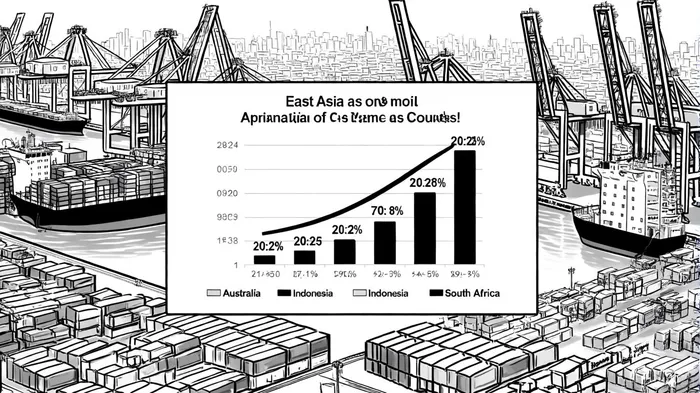
The global energy landscape is undergoing a paradoxical transformation: while the world races toward decarbonization, coal demand in East Asia has surged to record levels in 2025. China, Japan, and South Korea—accounting for over 56% of global coal consumption in 2023—have driven a 19% monthly increase in thermal coal imports in August 2025, reversing a nine-month decline in global shipments[1]. This resurgence, fueled by reduced domestic production in China, industrial activity, and winter heating needs, has created a unique window for strategic investments in coal-exporting economies and energy infrastructure.
The Drivers of East Asia's Coal Surge
China's coal consumption rose by 6% in 2024 to 4,883 million metric tons (Mt), with its power sector accounting for the majority of demand[2]. Despite its pledge to peak emissions by 2030, China's coal imports increased by 5.3 million tons in August 2025 alone, driven by mine output restrictions and a 2.5% rise in coal-fired power generation[3]. Japan and South Korea followed suit, with thermal coal imports rising by 0.6 million and 1.8 million tons, respectively, as they grapple with energy security concerns amid geopolitical tensions[4].
This demand surge has tightened regional coal markets, pushing Newcastle thermal coal prices to five-month highs in August 2025[5]. While long-term trends toward renewables and nuclear energy are expected to curb coal use in these countries, immediate-term pressures—such as winter heating and industrial activity—suggest sustained demand through 2025.
Key Exporting Nations and Infrastructure Developments
Australia remains the dominant player in the global coal market, with exports valued at $83.3 billion in 2023-24[6]. Despite falling prices and funding challenges, major projects like Whitehaven's Winchester South and Blackwater South in Queensland are advancing, supported by the Queensland government's Low Emissions Investment Partnerships (LEIP) program, which funds methane abatement in metallurgical coal mining[7]. Meanwhile, New South Wales coal mines expanded operations, with sales from the largest six mines rising by over 20% in early 2023[8].
Indonesia has defied global coal phase-out trends, adding 1.9 gigawatts of captive coal capacity in 2024 to power EV battery material production in Sulawesi and North Maluku[9]. These plants, though controversial for their environmental impact, align with Indonesia's ambition to dominate the EV supply chain. The government's 2034 energy plan includes 6.3 gigawatts of new coal capacity, signaling a strategic pivot to meet industrial demand[10].
South Africa has revitalized its coal export infrastructure, with the Richards Bay Coal Terminal (RBCT) reporting 52.1 million tons of shipments in 2024—a 10% increase from 2023[11]. State-owned Transnet's rail modernization efforts have improved logistics, enabling South Africa to capture 84.5% of its 2024 exports for East Asian markets, particularly India[12].
Strategic Investment Opportunities
- Infrastructure-Linked Coal Projects:
- Australia's Queensland Greenfields: Projects like Olive Downs and Vulcan South offer high-calorific thermal coal for East Asian markets, supported by government methane abatement programs[13].
- Indonesia's Captive Plants: Investments in industrial coal infrastructure for EV battery materials present a niche opportunity, despite environmental risks[14].
South Africa's Rail Upgrades: Private partnerships with Transnet to fund $21.9 billion in rail infrastructure could enhance export capacity and reliability[15].
Export Terminal Modernization:
Upgrading terminals like RBCT and Australia's Newcastle Port to handle increased volumes and reduce bottlenecks is critical for sustaining export growth[16].
Diversification into Metallurgical Coal:
- With India and Southeast Asia expanding steel production, metallurgical coal exports from Australia and the U.S. could offset declining thermal coal demand[17].
Challenges and Long-Term Considerations
While short-term demand is robust, long-term risks loom. The World Bank projects a 27% annual decline in coal prices in 2025 and 2026, driven by slowing global growth and renewable energy adoption[18]. Additionally, China's push for renewables and Japan's nuclear revival could reduce coal dependency by 2030[19]. Investors must balance immediate gains with the sector's decarbonization trajectory.
Conclusion
The surging coal demand in East Asia presents a compelling, albeit temporary, investment opportunity. For coal-exporting nations like Australia, Indonesia, and South Africa, strategic infrastructure upgrades and targeted projects can capitalize on this window. However, investors must remain vigilant about the sector's long-term viability in a decarbonizing world. As the IEA notes, “Coal's role in energy markets is increasingly constrained by policy and technology shifts—but not yet obsolete[20].”







Comentarios
Aún no hay comentarios