
The Supreme Court Tariff Ruling and Its Implications for Import-Export Firms and the Broader Economy
The U.S. Supreme Court's impending decision in Learning Resources, Inc. v. Trump has become a focal point for import-export firms and investors, with far-reaching implications for trade policy, market stability, and the balance of federal powers. At the heart of the case is a constitutional question: Does the International Emergency Economic Powers Act (IEEPA) authorize the president to impose sweeping tariffs on imports? A ruling against the executive branch could invalidate billions in tariffs, trigger refund claims, and reshape the legal framework for future trade actions. For firms navigating this uncertainty, strategic positioning is critical to mitigate financial exposure and capitalize on potential market shifts.
Legal Context and Key Arguments
The case, consolidated with Trump v. V.O.S. Selections, Inc. and Oregon v. US Department of Homeland Security, challenges the scope of presidential authority under IEEPA. The Trump administration argued that the statute permits emergency tariffs to address national security threats, such as supply chain vulnerabilities. However, lower courts ruled that IEEPA does not explicitly authorize tariffs, violating the constitutional principle that Congress holds exclusive power over trade policy.
During oral arguments on November 5, 2025, justices appeared divided. Justices Sotomayor, Kagan, and Jackson expressed skepticism toward the administration's interpretation, emphasizing that IEEPA's language does not clearly empower the president to regulate imports. Conversely, conservative justices hinted at deference to executive authority in emergency scenarios, raising concerns about unchecked power. The Court's decision, expected by year-end or early 2026, will determine whether the tariffs remain in force or are struck down as an unconstitutional delegation of legislative authority.
Strategic Positioning for Potential Refunds
If the Court invalidates the tariffs, importers face a critical window to secure refunds. According to legal analysts, companies that paid tariffs under IEEPA may be eligible for reimbursements, but administrative processes for recovery remain unclear. Firms must act swiftly to preserve their claims, as customs liquidation timelines can close the door on refunds if not navigated carefully.
Practically, this requires:
1. Documentation: Maintaining detailed records of tariff payments and compliance efforts.
2. Legal Precedent: Leveraging ongoing lawsuits to establish standing for refund claims.
3. Proactive Litigation: Filing motions to stay liquidation processes, as seen in recent cases.
For example, companies like Learning Resources, Inc. have already initiated legal actions to safeguard their rights, a move analysts recommend for firms exposed to high-value imports. Investors should monitor these developments, as successful refund claims could improve corporate cash flows and stock valuations.
Market Volatility and Investment Strategies
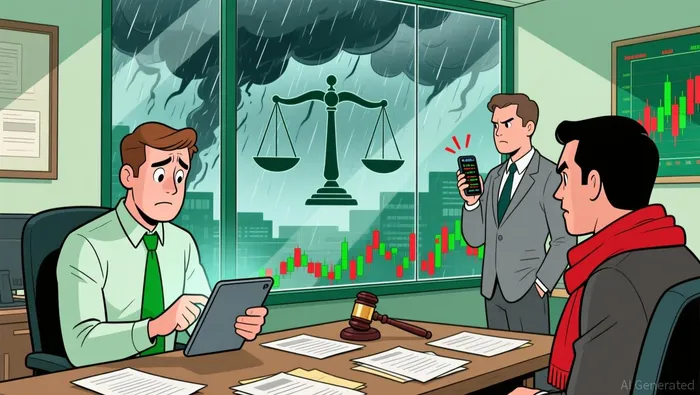 The ruling's broader economic impact hinges on its outcome. A loss for the administration would likely trigger market volatility, as trade policies shift abruptly. Tariff-dependent industries-such as manufacturing and agriculture-could face price corrections, while currency markets may react to changes in trade balances. Conversely, a victory for the executive branch could embolden future administrations to impose emergency tariffs, creating long-term uncertainty for global trade.
Investors should consider hedging strategies to mitigate these risks:
- Diversification: Balancing portfolios with firms less reliant on U.S.-China trade, such as regional suppliers or service-based industries.
- Derivatives: Using futures contracts or options to offset potential losses in tariff-sensitive sectors.
- Geopolitical Exposure: Reducing exposure to markets where U.S. tariffs could disrupt supply chains, such as electronics or automotive imports.
Historical precedents, like the 2018 steel and aluminum tariffs, show that market reactions are often swift and severe. A similar scenario could unfold if the Court's decision disrupts current trade dynamics.
Conclusion
The Learning Resources case represents a pivotal moment for U.S. trade law and economic policy. For import-export firms, the stakes are twofold: securing refunds if the tariffs are invalidated and preparing for regulatory shifts if the ruling upholds executive authority. Investors, meanwhile, must navigate a landscape of heightened volatility by adopting agile strategies that account for both legal and market uncertainties. As the Court's decision looms, proactive positioning-backed by legal foresight and financial prudence-will be essential to weather the coming storm.







Comentarios
Aún no hay comentarios